Click here to [close]
Showing posts sorted by relevance for query Halvorson. Sort by date Show all posts

Wednesday, October 8, 2014

Mary Halvorson: Reverse Blue (Relative Pitch, 2014)

A rare triple review ...


Mary Halvorson: Reverse Blue (Relative Pitch, 2014) ****

By Paul Acquaro

It was a couple of summers ago now when I made my way to Barbes in Brooklyn to hear a new group with guitarist Mary Halvorson called Reverse Blue. The name, she said, was inspired by her father who seemed to be toying with the possibilities of the word blue in song titles. It was a great show and I came away thinking two things: this was compositionally different than Mary's other work and that I'd love to have an album of it.

A few years later and we have Reverse Blue's first recording on Relative Pitch. The group is a who's who of forward thinking musicians: guitarist Halvorson, woodwind player Chris Speed, bassist Eivind Opsvik and percussionist Tomas Fujiwara, and all musicians frequently featured on this blog. The composition credits are half to Halvorson, then distributed among the other members, but the overall approach to the music is very much identifiable as a group. Musically, it's engaging, nimble and exciting. Tandem melodies and counter melodies pass quickly between Halvorson and Speed and strong rhythmic grounding from Opsvik and Fujiwara give them the room to maneuver.

The opening "Torturers Delight" starts off as an intricate dance between a baroque 8th note melody against and elongated tones from Speed, buts builds up to a muscular climax of distortion and even some shredding. Tracks like "Hako" feature Speed's warm tenor sound and rounded lines. The short "Ordered Thoughts Ceased" is a slow moving highlight, fraught with tension and hanging together on a bass-line that develops into an extended solo. The closing "Resting on Laurels" is a long tonal exploration that gives Fujiwara a lot of space to fill.

Might some of the tunes seem a bit straight ahead for some listeners? Perhaps. But to my ears, the delicate nature of some of these songs cleverly mask the depth and strength of the music. There is a lot to enjoy here, in the compositions, the colors, and the musicianship.

Enough from me, you can tell where my sentiments lie. I have the pleasure of sharing impressions from a similarly satisfied Martin Schray and a somewhat skeptical Stefan Wood...


Mary Halvorson - Reverse Blue (Relative Pitch, 2014 ) ****½

By Martin Schray

Recently I saw Mary Halvorson as part of Ingrid Laubrock’s extraordinary quintet Anti-House and when I talked to another visitor about her performance after the show he said that he likes her much more as a sidewoman than as a leader. Well, I wouldn’t say that – albums like Bending Bridges, Ghost Loop, Sifter or Illusionary Sea belong to the best music which has been released in the last three years. On my last radio show about women in free jazz, host Julia Neupert asked me what it was that is so great about Halvorson that everybody wants to play with her and that even mainstream media have started to become aware of her.

To me the answer is relatively simple: She has created a completely unique sound with a high recognition value. It is clear and spikey and she likes to use a Line 6 delay pedal and the whammy bar, which create the typical Halvorson bent note sound. Not many guitarists have such a distinctive style, which is why she is on a level with Bill Frisell, Thurston Moore, and Robert Fripp.

But there is more to Halvorson’s sound, it is raw and inventive in a way that eludes the classic categories like jazz or rock. There is a component of friction and angularity to it, almost as if the compositions refuse to be played. It’s a kind of fearless, unheard, puzzling and hybrid sound that you can’t get enough from if you addict yourself to it.

And “Reverse Blue” (with Chris Speed on sax and clarinet, Eivind Opsvik on bass and Tomas Fujiwara on drums) gives you a lot of this sound – but the album also presents Halvorson as a versatile composer. There are a lot of pieces which are structured very differently and lead the listener in unexpected directions - like Torturer’s Reverse Delight, which presents two counter-rotating melodies by sax and guitar before Halvorson joins the staccato bass with distorted rock riffs and before the sax drops out and guitar and drums get completely lost. The following title track is a typical Halvorson composition starting from a sax/guitar unison melody, then the two instruments seem to lose track just to begin to dance around each other.

There are a lot of highlights on this album like the Arabian influences on Hako, a very introspective and even jazzy tune, or Ego Man, which lives from Fujiwara’s “out in the left field” drumming (in general “Reverse Blue” consists mostly of ballads and mid-tempo numbers). But my favorite one is the spooky closing piece Resting on Laurels, a track based on Halvorson’s crystal clear arpeggios, Speed’s sax that reminds of Waclaw Zimpel’s great moments and Opsvind’s gloomy bowed bass supported by Fujiwara using clappers instead of sticks to build up a huge percussive wall.

“Reverse Blue” is really beautiful and varied album, it’s another great achievement of a great instrumentalist and a prolific composer.


Mary Halvorson: Reverse Blue (Relative Pitch, 2014 ) ***

By Stefan Wood

"Reverse Blue" is the debut cd of Mary Halvorson's newest group, with Chris Speed on saxophone and clarinet, Elvind Opsvik on bass, and Tomas Fujiwara on drums. While one can argue that Halvorson is the leader, this is clearly a group collaborative effort. "Torturer's Reverse Delight" begins the album with a Giuffre like interplay between Halvorson and Speed, lightly dancing, springlike, before Halvorson hunkers down, kicks the pedal and unleashes a heavy riff, which the others respond with a more prog rock based dirge, while Halvorson solos frenetically a la Hendrix. Unusual, and a bit uneven in mood, as the track ends with a bit of self indulgent skronk that feels thoughtless, considering what preceded it.

This is followed by the title track, "Reverse Blue," again the main focus on Speed's clarinet playing and Halvorson's plucking, evoking Giuffre and Jim Hall's collaboration from the late 50's, but decidedly more modern, the interplay a little more atonal, the phrasing tightly intertwined, in keeping with both artists' voicings. It is even toned, moderate, not frenetic nor soft, and this mood is maintained through most of the album. "Insomniac's Delight" has Speed leading with the saxophone, lower register, sounding off key but probably not, creating a theme which is later echoed by Halvorson's electric guitar, building to a climax.

A highlight on the album. "Rebel's Revue, " another highlight, is a tight, faster paced track that again, emphasizes the intertwining of instruments, combined notes that complement in register. "Hako" is a slow mood piece, Speed's sax caressing notes over a lurking yet soft bass and swirling cymbals, Halvorson's guitar providing counterpoint. "Old Blue" has clarinet and guitar thoughtfully weaving a difficult theme which spins and turns in different forms -- Speed issuing a seemingly haphazard solo which Halvorson replies, then they combine voices and weave another pattern. "Really OK," the most straight forward track on the album, comes across as a low key Grant Green tune. "Resting On Laurels" concludes the album with almost two minutes of near silence, that builds suddenly into a soft sonic storm of notes, before receding back into silence.

The twists and turns of "Reverse Blue" make the album fairly enjoyable, but there is a sameness to many of the tracks, in tone, phrasing and mood, that makes it a little bland. The solos seem constrained and not very imaginative, as if they are pulling from a limited bag of tricks to play. Shouldn't be the case, considering the quality of the musicians involved. A decent debut by this group, who I am sure will be smoking live, but on this recording, there is a restraint and overthinking of process that prevents the album from being wholly enjoyable.


Watch their debut show at Barbes from August 2012:


Tuesday, November 7, 2017

Mary Halvorson - Paimon: The Book of Angels Volume 32 (Tzadic, 2017) ****


By Brian Kiwanuka

Those who pay close attention to the more avant-garde leaning portion of the jazz scene, particularly the musicians based in New York City, will know that Mary Halvorson stays extremely busy. On top of constantly performing, be it with groups like the Tom Rainey Trio or her fantastic Octet, the guitarist has recently showed up on studio releases by Jason Moran (BANGS) and Tomas Fujiwara (Triple Double). This June, while in residency at City of Asylum in Pittsburgh, Thumbscrew, a band she is in with Fujiwara (drums) and Michael Formanek (bass) announced that they were recording two new albums to be released next year. Despite all this, Halvorson still managed to make some time to form a quartet to record the final volume of John Zorn's Book of Angels series: Paimon: The Book of Angels Volume 32.

Zorn is a ridiculously prolific multi-instrumentalist and composer, whose presence and work, which includes the hectic and heralded Naked City, has been an important force in the world of experimental music for decades. The Book of Angels series, which started with Astaroth: Book of Angels Volume 1 by the Jamie Saft Trio in 2005, is the second of Zorn's Masada songbooks. Masada is a project which the composer undertook as a fusion of the musical legacy of his jewish heritage and his more modern, jazz-influenced experimental tendencies. As both musicians are frequently connected to hubs of avant-garde music like The Stone, where Zorn is the artistic director, it is extremely fitting that Halvorson, one of the most unique jazz guitarists today, was selected to provide the final pages to the Book of Angels. As the leader of the last volume of the Book of Angels, Halvorson is the closing act for over a decade of albums which have featured a wide range of musicians, including guitarist Pat Metheny and saxophonist Joe Lovano. When put in historical context it may seem a bit daunting, however, the performance on Paimon: The Book of Angels Volume 32, shows that Fujiwara (drums), Miles Okazaki (guitar), Drew Gress (bass) and Halvorson were more than up to the task.

Although odds are that a portion of the fanbase intersects, those who have come to Paimon more familiar with Halvorson's catalogue than with the Book of Angels are in for a treat. The Eastern-European-Klezmer-based compositional style that Zorn brings to his Book of Angels is radically different from the angular, occasionally hectic and searching style Halvorson brings to her own work on records like Away With You or Illusionary Sea. Zorn's compositions are generally shorter and more overtly structured than Halvorson's, with many songs here having themes that are brief, repeated phrases of notes that are often restated to close out the piece. The completely different compositional context Halvorson has inserted herself in here, combined with her idiosyncratic and adventurous way of playing guitar, makes for an extremely compelling listen.

One of the most interesting aspects of Paimon is the interplay between Halvorson and Okazaki, who has a distinctly more slick, clean and relatively traditional guitar style in comparison to the band-leader's tendency to use her note-bending delay pedal and other effects. The sounds coming out of her guitar on this record range from ghastly, hazy tremolos ("Phul") to distorted walls of sound with electronic bleeps and bloops ("Beniel"). The clash of styles between the two guitarists creates a great juxtaposition, which is arguably at its peak when Halvorson takes a secondary role and comps behind Okazaki on tracks like "Ruhiel" and "Yeqon".

At times, Halvorson's seemingly sporadic and impressive comping approach seems to suggest that the guitarist has taken a page out of the book of Thelonious Monk. On "Ruhiel" Halvorson takes the first solo, brilliantly bending and weaving her way around the main theme of the song, before lightly accompanying Okazaki's solo with a gorgeous distant echo effect. Whereas on "Yeqon", she accompanies Okazaki's hypnotic central theme at first by sliding up and down her guitar, giving the song a languid atmosphere. Halvorson eventually decides to comp more erratically on "Yeqon", occasionally quoting and warping the motif before breaking out into a strong solo in the third minute.

Paimon is consistently engaging throughout its 42 minute run-time. The rhythm section of Fujiwara and Gress, although it is almost never in the spotlight, provides a solid backing for the two guitarists to express themselves. Fujiwara has a brief moment in the spotlight during a high-energy solo at the end of "Beniel", however, how the drummer gradually drives the tempo to extremely high-speed during "Dahariel" may be his finest moment on the record. Gress is featured during the calm "Verchiel", stepping into focus for a quality solo in the third minute of the tune. Although the brevity of the songs here means that Halvorson has less room to experiment with than usual, she is still no less interesting and the addition of Okazaki's highly accomplished playing makes certain that the space is used extremely well. Even though her eccentric style may still be an acquired taste for some, Halvorson's Paimon is an engrossing end to Zorn's Book of Angels.

Friday, November 24, 2017

Ribbons of Euphoria, Music Unlimited 31 Festival, Wels, Austria, Nov. 10-12, 2017 (Part 1 of 2)

Mary Halvorson’s Sound of Love 

Mary Halvorson. Photo by Cristina Marx.
By Eyal Hareuveni

The 31st edition of the Austrian Unlimited Festival, curated by American guitarist Mary Halvorson, was titled Ribbons of Euphoria, a quote from the Jimi Hendrix song “Bold as Love”. But after fellow-guitarist Liberty Ellman began to play on the last night of the festival the first notes of Charles Mingus’ classic “Duke Ellington’s Sound of Love” I thought that this edition of the Unlimited festival may be have been called as easily as Mary Halvorson’s Sound of Love.

The program of the Unlimited festival is curated every two years by a guest musician. Two years ago it was local hero Christoph Kurzmann and four years ago cellist Okkyung Lee curated the program. This year it was the turn of another female musician, as Unlimited festival is one of leading festivals when it comes to featuring women musicians in leading roles.

Halvorson’s program represented beautifully her musical persona - bold and opinionated, modest and shy, generous and humane. When the festival ended with a standing ovation for one of Halvorson’s most forward-thinking groups, Illegal Crowns, she simply smiled and covered her head with a hoodie, clearly embarrassed by the love of the audience. Besides, she is one of the very few guitar heroes who needs not more than one guitar to express their full, rich vocabulary.

Halvorson’s program for Unlimited 31 focused on guitar-oriented groups, mainly groups of Halvorson’s close circle of collaborators and a surprising selection of local outfits. All of them presented a more composed and quite different aesthetic in comparison to the more eclectic and wilder spirit of recent editions of the Unlimited Festival. But this is the beauty and the strength of the festival. Its audience, with many happy returning guests, trusts the festival’s artistic director Wolfgang Wasserbauer and the curators choices.

Friday, First Night, November 10

The first night of the festival, Friday, opened with the first of three Halvorson’s outfits that played in the festival, drummer Toms Fujiwara’s Triple Double, featuring another drummer, Tom Rainey (who replaced Gerald Cleaver who played on the Triple Double album (Firehouse 12, 2017)), two guitarists - Halvorson and Brandon Seabrook, and two trumpeters Ralph Alessi and Taylor Ho Bynum (who played the flugelhorn and the cornet). The Triple Double musicians have been working closely in many formats and groups in the recent years. Ho Bynum, Halvorson, Fujiwara and Rainey have been working with Anthony Braxton; Fujiwara and Halvorson work together in the collective Thumbscrew trio and the Illegal Crowns quartet, in cellist Tomeka Reid quartet, and in double bass player Michael Formanek’s Ensemble Kolossus and many of their own groups. The close rapport between the six musicians enabled all to form multiple and multi-layered combinations. Fujiwara and Rainey created a percolating rhythmic basis, sometimes referencing to the electric-funky groups of Miles Davis and on other times locked in such a powerful groove, almost as the one of the Grateful Dead’s Rhythm Devils - Mickey Hart and Bill Kerutzmann; Halvorson and Seabrook deepened and colored the rhythmic ideas - Halvorson in more subtle, brief manner and Seabrook with more condensed, eruptive solos, on top of this, Alessi and Ho Bynum soloed. Alessi playing more ‘inside’ the themes while Ho Bynum clearly enjoyed soloing with completely ‘outside’ sounds. The addictive rhythm did not stop for a minute and Triple Double showed how modern jazz can be witty, powerful, and most of all fun.

Pianist Kaja Draksler and trumpeter Susana Santos Silva
As it happens often in this festival the second performance offered a totally different experience. The extroverted tone of Fujiwara’s Triple Double was replaced by the intimate, cryptic duo of Slovenian pianist Kaja Draksler and Portuguese trumpeter Susana Santos Silva. These classically-trained musicians have been playing together for about ten years and recently recorded the beautiful This Love (Clean Feed, 2015). Their set explored adventurous ideas when both Draksler and Santos kept investigating the sonic spectrum of their instruments, inside the piano and with assorted objects on its strings and without the trumpet mouthpiece, close to each other and throughout the stage space. Their intimate, conversational duos suggested provocative thoughts, fond memories, delicate and fragile sounds and profound, rich languages.

The first local group - the trio Schmieds Puls, featuring vocalist-songwriter-guitarist Mira Lu Kovacs, double bass player Walter Singer, and drummer Christian Grobauer - was the first of many surprising choices of Halvorson. The trio has released two albums and Lu Kovacs has collaborated with local jazz group Kompost 3. Schmieds Puls’ songs are somehow influenced by the music of Tom Waits, dealing with themes of lost feelings and troubled relationships, brightened by the touching, emotional delivery of Lu Kovacs and her personal playing on the acoustic guitar which she named ‘trixie’.

The first night was closed with the quartet of American double bass player Stephan Crump’s Rhombal, that released its debut album last year (Papillon Records, 2016). Rhombal is Crump, who collaborates with Halvorson in the Secret Keeper Duo, tenor sax player Ellery Eskelin, trumpeter Adam O’Farrill, and drummer Richie Barshay (replacing Tyshawn Sorey who has played on the Rhombal Album). Rhombal convened to explore Crump’s body of work dedicated to his late brother Patrick and the performance in the festival was in the middle of their first European tour. This set was the most jazz-oriented one of the festival, structured along clear storylines and coherent development of the strong rhythmic themes by Eskelin and O’Farrill, both choosing a reserved, contemplative tone that fitted the emotional, mourning spirit of Crump’s compositions.

Wednesday, April 4, 2018

Mary Halvorson - Code Girl (Firehouse 12, 2018) ****

By Martin Schray

At the moment Mary Halvorson is one of the most prolific and interesting musicians at the interface of improv, jazz, rock and avant-grade. Apart from playing in various ensembles by Anthony Braxton, Trevor Dunn, Ingrid Laubrock and Taylor Ho Bynum, she has recorded several albums as a leader. Among others she has released outstanding albums as different as Away With You (with her Octet), Paimon: Book of Angels Vol. 32 (the final chapter of John Zorn’s Book of Angels series, with her Quartet) and Crop Circle, her duo with Sylvie Courvoisier in 2017 alone.

For Code Girl she has expanded her Thumbscrew trio (with drummer Tomas Fujiwara and bassist Michael Formanek) to a quintet, adding trumpeter Ambrose Akinmusire (one of the new stars of the Blue Note label) and vocalist Amirtha Kidambi, which follows a certain pattern Halvorson has used when it comes to her song-orientated projects: the integration of additional instrumentalists to her basic rhythm group. Halvorson has made considerable progress as a composer over the past years, blending different styles to create a music beyond any genres, in which melodies and harmonies are the basis for extensive improvisation and harmonic expansions. Warped contortions, compositions that consist of seemingly incoherent fragments, surprising twists, ricocheting unison lines and lush arrangements are fundamental elements of this system. The music is generally rooted in jazz, mostly because of the freely swinging rhythm section and Akinmusire’s trumpet, even if Halvorson’s improvisations reflect a certain admiration for rock guitarists like Robert Fripp and Jimi Hendrix, as well as Bill Frisell and Marc Ribot.

However, the actual sensation on Code Girl is Amirtha Kidambi, who lifts Halvorson’s compositions to a new and different level. Kidambi has a wide range of influences: Trained in the South Indian Carnatic tradition, she also integrates blues, folk, Brecht/Eisler songs and European free jazz vocalists like Irene Aebi or Maggie Nichols to her style. Kidambi’s singing can be expressive and passionate, but also pleasantly baroque if necessary, sometimes engaging in improvisatory yodeling and spiraling. She has a unique conjuring power that perfectly counters Halvorson and Akinmusire when they tend to go astray. “Storm Cloud”, a song reminiscent of Robert Wyatt (“Drop the Needle“ is another one), highlights Halvorson’s hallmark sound (created quite simply by a volume pedal, and a Line 6 delay modeler and expression pedal). At the beginning it’s just Halvorson, Kidambi and Formanek's arcoing which creates a very intimate atmosphere close to a rock ballad (in a positive sense) before Akinmusire shares a cool jazz solo, which is a perfect support for Kidambi’s forlorn and dreamy performance.

Finally, another quality of Kidambi is that she knows when she has to wait. “The Unexpected Natural Phenomenon“, the longest and best song on the album, starts like a lost Ennio Morricone song for “Once Upon a Time in the West“. Halvorson throws in dramatic tremolos and picking, while Akinmusire’s playing a sad melody which Kidambi foils with cool serenity. Halvorson hurls out expressive guitar phrases slaloming in front of Fujiwara’s off-the-wall drumming but then the guitar and trumpet drop out almost unnoticed.  Kidambi doesn’t even bother to take the initiative here, a perfect decision, since it’s the trumpeter who keeps the track alive with controlled frenzy. It’s one of the magical moments of the album.

Halvorson’s poetic lyrics are, as the album title suggests, highly encoded. Their strange elusiveness sets a counterpoint to the accessibility of the music. The term “code girl” is said to have been coined randomly by Anthony Braxton, but it makes sense to apply it to Halvorson herself and her idea of composition and songwriting: a brittle, intellectual approach, yet warm and challenging. Unlike the common songwriting method, the lyrics were written first and the music was built around it, with the effect that the vocals are highlighted.

Code Girl is an excellent album confirming Mary Halvorson’s reputation as one of the most interesting composers these days. And I’m sure that we’ll hear more from Amirtha Kidambi soon.

Code Girl is available as a double CD and a digital album.


Sunday, September 8, 2013

Sifter - A Deep Listening Weekend Review

Sifter: Self-titled (Relative Pitch, 2013) ****½ 

 
By Tom Burris

Mary Halvorson is involved in so many side projects it's hard to pick a favorite – until now.  Sifter, her trio with Kirk Knuffke (cornet) and Matt Wilson (drums), has created one of the most inviting discs of the year with its self-titled debut.  The compositions are concise.  The themes are hummable.  The solos never venture too far from home, and yet conversely it's a highly adventurous recording. 

The album opens with a country shuffle (“Cramps”) that features the main theme played in unison by Halvorson and Knuffke, a common setup for the heads throughout the disc.  Halvorson plays single notes on the bass strings until the distortion pedal stomps on the proceedings like Pappy's unruly grandson barged into the room and tried to wrestle the guitar out of Aunt Mary's hands.  Unfazed, Wilson's brushes shuffle onto the finish line.

“Dainty Rubbish” opens with a strong melody from Knuffke, accompanied by Halvorson's unmistakeable riffing on a two chord vamp.  Wilson plays with the snare off, tapping out a minimal chug Mick Fleetwood would be proud to claim.  Interestingly, Wilson gets even more minimal on the next track, “Always Start,” where his playing becomes so understated he sounds like a Moe Tucker disciple.  His perfectly sublime pulse compliments Knuffke's unwinding broken blooze lines and Halvorson's seriously warped chordal smears so that the track comes off sounding like honor students about to become dropouts. 

“Absent Across Skies” features gorgeous melancholy lines from Knuffke as Wilson's brushes, once again, are beautifully understated accompaniment.  I finally missed having a bass line around, but it only lasted for about twelve bars.  Mary's riffing and warping, so good it distracts from Knuffke's brilliant melodic lines, rides on top of Wilson's perfect pulse waves on “Original Blimp” with such humor it will make you laugh out loud.  I promise! 

Echoes of Tropicalia open the breezy “Doughy” with a beautifully understated melody from Knuffke and sweet, full Brazilian chords from Halvorson.  When she takes a tremelo-laden solo, the bass-less space underneath provides the perfect canvas.  This minimalistic approach is warm and very approachable, as on “Proper Motion,” when Wilson plays time on two cymbals for almost one minute with no other audible sound within earshot.  It draws you in like a secret.

Wilson is an ace improviser, knowing when to merely keep time and knowing when to astound by cutting loose, as on “Free Jazz Economics,” where his skills reveal him to be as equally gifted technically as he is intuitively. 

This album is loaded with surprises, as on “Back and Forth,” where the main theme goes up and down and Knuffke plays in and out.  “Forever Runs Slow In Cold Water” features Sonic Youth-esque crescendos and chord progressions.  “Vapor Rub” features Knuffke and Halvorson in a short duet that appears to be completely improvised; and a robot rock stomper called “Utility Belt” closes the disc in dramatic fashion.  Above all, this disc is Fun.  It contains a track called “Don Knotts”.  This band is called Sifter.  They have just released one of the best albums of the year.


Sifter: Self-titled (Relative Pitch, 2013) **** ½ 

By Martin Schray

After I had come across Mary Halvorson for the first time (I saw her with Anthony Braxton’s Diamond Curtain Wall Trio) I looked for her on youtube and immediately found some absolutely excellent clips. That’s why I was wondering all the more why some of the comments below the clips were harshly offensive: “Horrible garbage! Sounds like they have never met or rehearsed”; “I can't believe this crap is subsidized!”, “Her command over the guitar is very amateur and weak” or “I don't know how any jazz fan can defend this utter shit” – and this is just the peak of the contributions.

Since then I have seen and heard Mary Halvorson quite often and it is obvious that these commentators have no idea what a great guitar player is. She is one because her approach to use the tremolo, with which she warps chords or melodies before they get too convenient, is absolutely unique and above all she has a tremendous, yet special technique.

These typical Halvorson elements run like a thread through this album. “Cramps”, the first track, starts with an alienated, abstract country/rockabilly riff which is elegantly and sparsely accompanied by Matt Wilson (dr) and Kirk Knuffke (tr) can throw in a very light-handed melody in front of this background. Yet after two minutes Halvorson steps on the distortion module and puts the track through the mill before they all come back to the theme from the beginning. This is almost classic modern jazz songwriting.

Additionally, Halvorson has a great command of almost every style. In “Dainty Rubbish” she brings in flamenco pieces, country elements, and rock chords, all played in a very minimalist way, there is no note too much. In general there are a lot of typical (post) modern jazz tunes on the album, there is a lot of unison playing between Halvorson and Knuffke, as in “Don Knotts” with its eerie swinging theme, “Proper Motion” with its chopped post-rock beginning or the classic hard bop “Free Jazz Economics” which soon changes to classic harsh jazz chords, the other returning structural element of the album because Halvorson’s chords and riffs prepare the ground for Knuffke’s varied and virtuosic playing, the interplay between the three musicians is simply sensational.

Hidden between all these great tracks there are two gems: “Absent Across Skies” and “Forever Runs Slow in Cold Water”, two angular ballads. Both show Halvorson in a Bill Frisell tradition at the beginning, before she executes what she can do best – using the tremolo to distract the way the nice melody is going, leading it to dissonant and unexpected grounds before bringing them back on the right track again.

You can say a lot about Mary Halvorson but you cannot vilify her claiming she cannot play. These negative comments only prove that these people have a preconceived opinion of what music should be like.

Watch the trio live here:


Can be purchased from Instantjazz.


Monday, October 7, 2013

Mary Halvorson Septet – Illusionary Sea (Firehouse 12, 2013) ****½


After the Mary Halvorson Quintet released its stellar recording last year, Bending Bridges, there were a lot of folks wondering how guitarist extraordinaire Halvorson could top it.  I’m not sure if she’s done that here, but she’s certainly taken her compositional ability in even more interesting directions, largely due to a couple recent additions to the group that now have her working with a septet.  The result expands the palette available to Halvorson, and she takes full advantage of it to produce seven intricate, multi-layered pieces that reward—no, demand—repeated listening, lest one miss out on the subtle touches that are abundant here.

The two new players here, Ingrid Laubrock (tenor sax) and Jacob Garchik (trombone) are perfect complements to Halvorson’s regular partners: Jonathan Finlayson (trumpet), Jon Irabagon (alto sax), John Hébert (bass), and Ches Smith (drums).  They are terrific soloists, to be sure—but Halvorson is especially smart in weaving them into the rest of the ensemble, allowing additional aspects of her knotty compositions to reveal themselves.  This is evident from the first cut, “Illusionary Sea (#33),” which begins with a terrific opening passage from just the horns before the rest of the band comes in to further develop the melodic base of the tune.  Then once Garchik begins his solo, the rest of the horns surge and recede underneath, gradually sustaining the momentum with the rhythm section to keep the song going in ever-surprising and interesting directions.  Halvorson’s strong sense of structural integrity is always present; even during a freer section about midway through the song, the sense of forward-moving propulsion is always present, largely thanks to Ches Smith’s solid anchor underneath the rest of the band.  It’s one of the strongest cuts on the record, and announces convincingly that Halvorson has hit this one out of the park.

Fortunately, the rest of the release is just as compelling.  With a judicious balance of more groove-oriented, full-bore pieces like the second track, “Smiles of Great Men (#34),” where Halvorson in particular gets to rock out, and slower, more deliberate and textured tracks like “Red Sky Still Sea (#31),” the record strikes the perfect balance between individual freedom for each musician and the kind of rich, full ensemble voicings that only a larger band can produce.  It is remarkable, actually, how much Halvorson is able to get out of these musicians; at times this sounds like a much larger band.

I should also add a word about the recording quality: it’s outstanding.  This music should be heard on a nice stereo or a good set of headphones.  Each musician is captured brilliantly and distinctly, and for listening to a band this tight, this good, doing it justice really requires hearing what everyone’s doing—and in this case, it’s all captured wonderfully.

Halvorson has been on a roll lately, and she shows no signs of letting up.  This is another fine addition to her impressive (and rapidly-growing!) catalog.  For anyone putting together a short list of improvising artists producing music that is at the same time complex, challenging, and remarkably accessible as well, Halvorson should be on it.

You can buy from  Instantjazz.com.


Wednesday, December 27, 2017

Greg Saunier, Mary Halvorson & Ron Miles - New American Songbooks, Volume 1 (Pleasure Of The Text, 2017) ****

By Brian Kiwanuka

It would not be an exaggeration to say that it is literally impossible to find someone who genuinely loves jazz - be it a musician, fan or critic - that hasn't had some type of exposure to the songs in what has come to be known as the Great American Songbook. Famous numbers like Vernon Duke's "April In Paris", Cole Porter's "What Is This Thing Called Love?" and many other show tunes that became jazz standards are still regularly played to this day. New American Songbooks, Volume 1, a Sound American release which features a collaboration between Greg Saunier (drums), Mary Halvorson (guitar) and Ron Miles (cornet), takes the past format - adapting music to the idiom of jazz that may not have been written with extended improvisation in mind - and applies it to more contemporary compositions.

Unlike the Great American Songbook, the majority of the repertoire here is not made up of songs that many jazz fans may know by ear, with John William's "Luke and Leia (From Return of The Jedi)" being the most ubiquitous track by far due to the immense popularity of the Star Wars series. Saunier, who normally operates as part of the indie-rock band Deerhoof, commented in an interview with Sound American that:
"[the band] didn't end up choosing "Happy Birthday" or "We Will Rock You" or whatever American song is the most requested at karaoke. Instead I think we went for a Fantasy New American Songbook, a surreal wishlist. We gave ourselves a perverse thrill by choosing under-appreciated gems."
These gems include overlooked Beach Boys (Brian Wilson) tracks ("Little Pad"), songs by singer/songwriters like Elliot Smith ("Everything Means Nothing to Me / Last Call") and Fiona Apple, whose "Jonathan" was released in 2012. The trio also wades into classical waters in Vincent Persichetti's "Symphony No. 6 Mvt. II", 70s pop with "I Woke Up In Love This Morning (from The Patridge Family)", and revisits an underrated Duke Ellington/Billy Strayhorn collaboration in "Day Dream."

The energetic "Jonathan" is an album highlight. The band takes Apple's tune into overdrive, with Halvorson's rapid guitar, which takes the place of Apple's piano, and Saunier's ferocious, cymbal filled runs driving the track. After Miles finishes the playful melody, he lets loose, the cornet becoming forceful and free around the 1:50 minute mark. Halvorson has a brief moment in the spotlight towards the end of the song, playing knotty abstractions of the previously relatively controlled accompanying theme.

In terms of the motifs of the pieces, Miles' cornet often takes center stage, but nowhere is that more apparent than on the fantastic rendition of "Luke and Leia (From Return of The Jedi)." The cornetist gives a passionate performance that does justice to William's compelling melody. Behind the cornet, Saunier's drumming skillfully moves between the restrained and the more frantic and dramatic. Halvorson contributes by providing hazy notes that echo beautifully throughout the track that are occasionally used to create a great tremolo-like effect as Miles' cornet rises through the melody.

Over the years, Halvorson has become known for her unique style, which includes a tendency to bring a wide range of effects to her instrument. On "Everything Means Nothing To Me/Last Call", the guitarist - a huge Elliot Smith fan - stands out. Halvorson's hectic and adventurous interpretation of the ascending main melody of "Everything Means Nothing to Me" beginning in the 1:20 minute mark is particularly impressive. The guitarist is also crucial to "Last Call", providing a rock-tinged edge to proceedings as the cornet interprets the vocal melody. The consistently vibrant drumming is key here as well, with Saunier playing with the intensity of a solo throughout large portions of the track.

With the level of understanding between these three, it's extremely hard to believe that this is Halvorson and Miles' first time working with Saunier. The band shines throughout the LP's 40 minutes, taking on a wide stylistic range of compositions and passing each test with flying colors. Although these talented musicians have been quite busy lately, Halvorson and Miles appearing on multiple jazz releases this year and Saunier drumming with Deerhoof and producing with Xiu Xiu, here's hoping that someday they reunite. New American Songbooks, Volume 1, is a superb record that comes highly recommended.

Sunday, July 17, 2022

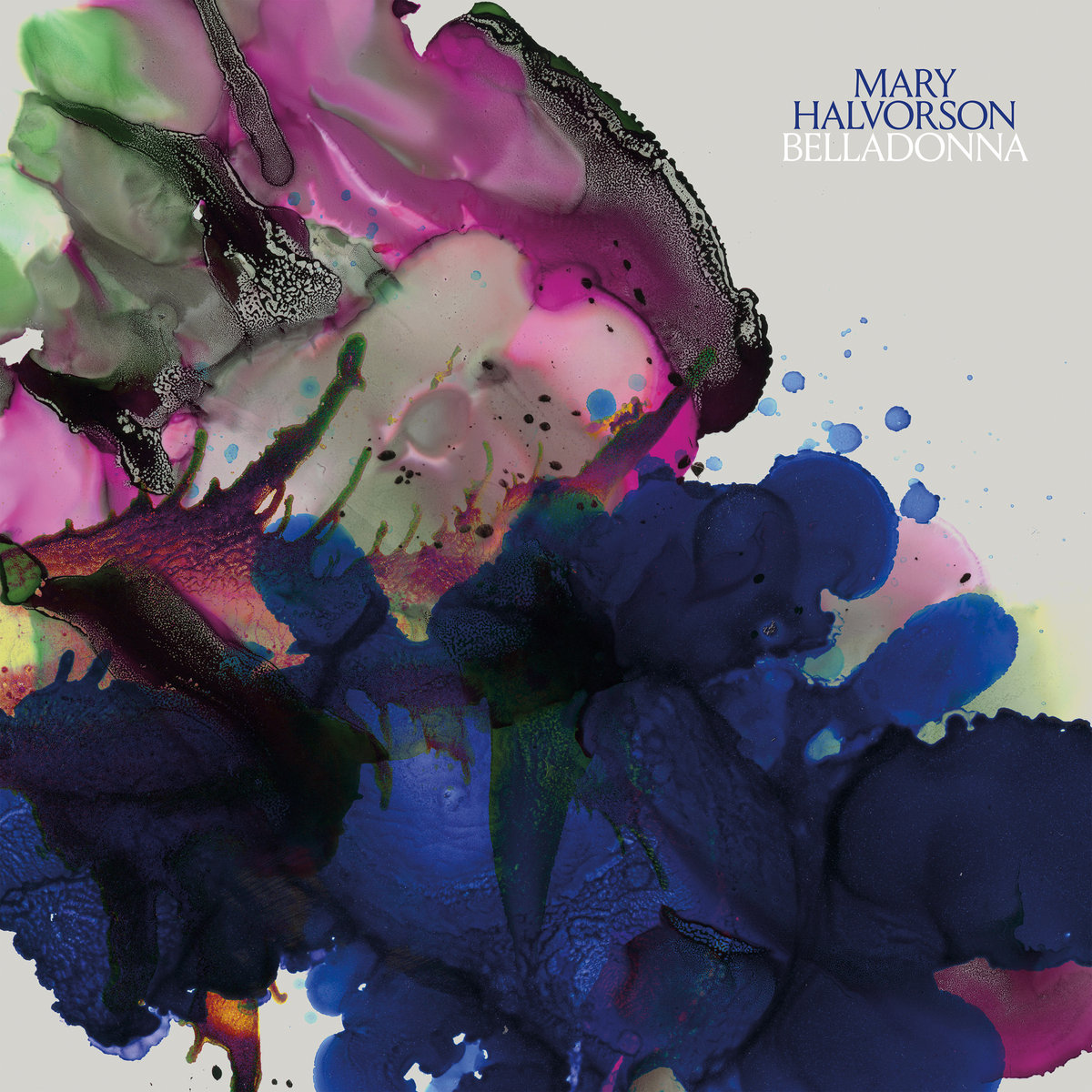
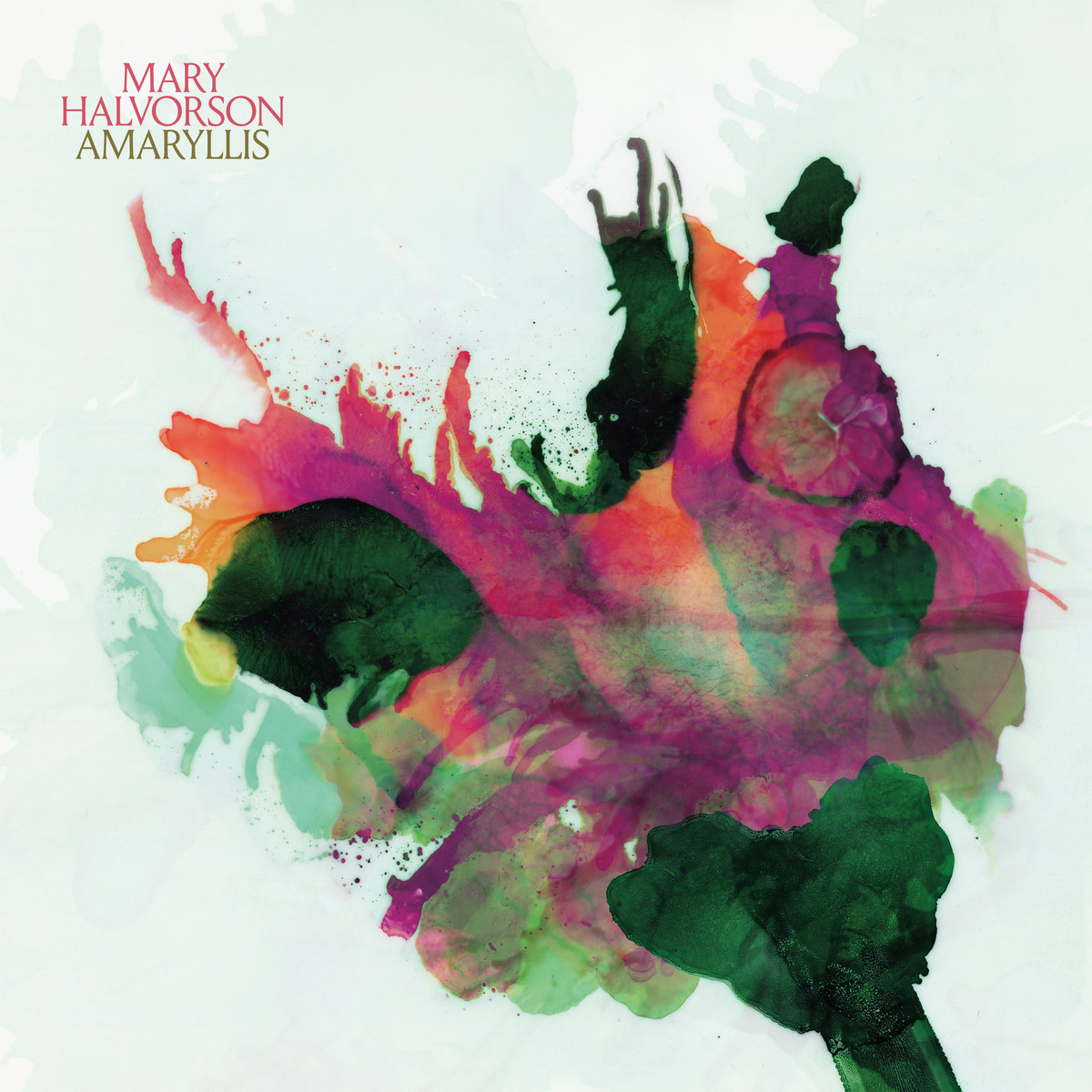
Mary Halvorson - Amaryllis and Belladonna (Nonesuch, 2022)


By Gary Chapin

It’s hard for me not to think of these two as a set. They are released separately in CD format, with themed covers, on the same day, with overlapping personnel, and a vibe that travels from the beginning of one to the end of the other. I threw these into a playlist, just the two of them, and have been basking ever since. Both albums are also released as a double vinyl in a single sleeve. 

Mary Halvorson is someone I have marveled at a lot this year. I’m not sure why I wasn’t ready before then. Though I got in on the ground floor of her recording career (Anthony Braxton’s Quartet[Moscow], from 2008), it wasn’t until 2021 (yikes) that I was like, this Mary Halvorson is everywhere and she elevates every setting she is in.

Amaryllis has got a downtown vibe to it. It has the variety of voices, the easy switch between out and hip jazz, and the big group arrangements that bring all of it together in a jazz and cinematic way. I’ve used the word “vibe” twice, and the vibraphone on Amaryllis proves a point I asserted a few months ago, “Everything this music is, is more so on vibes.” If it’s dissonant, it’s more dissonant with vibes. If it swings, it swings harder with vibes. If it’s hip, it’s more hip with vibes. 

But great trumpet, great trombone, and great rhythm don’t change the fact that Halvorson herself is the center of the wizardry. For a while I was fixated on how—HOW?—she does what she does, and it is worth wondering about, just like Frisell in the early ‘80s. After a while, that fever calmed down because, really, does it matter? Even if you do know the answer—invariably, with guitars, it has something to do with pedals—it isn’t the answer that makes her voice so incredibly distinctive and ensorcelling. That little, addictive pitch-bend-thing (excuse the technical term) she does throughout isn’t great because of the pedal, but because of Halvorson’s way of using it.

A few tracks before the end of Amaryllis, the string quartet shows up and the vibe starts to drift. This is the overlapping region of the Venn Diagram between the two records. From such a large group, Halvorson’s sense of drama, lyricism, and harmony truly shine. Extended chords are an amazing thing when you have so many instruments to extend them for you.

Crossing into Belladonna, a set of five tunes, the space becomes something more transcendent. Early contender for my album of the year. The setup is a concerto like relationship between the composed string quartet and Halvorson’s improvisations. I see these two as a set, as I said, but if I had to pick one—I don’t though, and neither do you--it would be Belladonna (but the vinyl release solves the issue too). 

The settings Halvorson writes for the strings are masterpieces of evocation. The quartet functions almost as a Greek chorus, setting the scene, directing priorities, and even interacting with the lead (which, since she is improvising and they are not, is remarkable). This is a storytelling affair with dark stories. Sometimes dark humor. Sometimes dark dark.

The second track, Moonburn, has the quartet in a Samuel Barber place, slow lament, while Halvorson monologues over it. Telling her tale in way that Russian novelists would understand. It’s that kind of lyricism. The track breaks upon you like a wave.

Aside from Mary Halvorson (guitar), we’ve got Patricia Brennan (vibraphone), Nick Dunston (bass), Tomas Fujiwara (drums), Jacob Garchik (trombone), and Adam O’Farrill (trumpet).

The Mivos String Quartet is Olivia De Prato (violin), Maya Bennardo (violin), Victor Lowrie Tafoya (viola), and Tyler J. Borden (cello).

Tuesday, July 3, 2018

Two from Thumbscrew

By Troy Dostert

It’s always a delight to hear a new release from Thumbscrew, the “supertrio” comprised of guitarist Mary Halvorson, bassist Michael Formanek and drummer Tomas Fujiwara. In this case, there are two additional reasons for celebration. First, it’s a double release for the group, with Ours presenting nine pieces of the band’s own material, while Theirs is an idiosyncratic collection of covers; and second, the release represents the return of Cuneiform Records, a vital label for creative music that went on a brief hiatus for the first half of 2018 to retool for the future.

Thumbscrew – Ours (Cuneiform, 2018) ****


Much of the value in hearing these three musicians as a trio is that it puts the emphasis squarely on their identities as musicians rather than as composers. Lately all three have been utilizing larger ensembles as a vehicle to showcase their compositions: Halvorson’s septet and octet releases (2013’s Illusionary Sea and 2016’s Away With You, respectively) have demonstrated the multihued complexity of her role as a writer, and this year’s Code Girl is no different, as even her quintet on that record sounds like a much bigger band, with diverse textures and harmonic intricacies galore. Meanwhile, Fujiwara’s Triple Double, one of 2017’s highlights, was a similar effort to try out a wider range of instrumental voices and compositional strategies; and the name of Formanek’s own Ensemble Kolossus speaks for itself when it comes to the large-scale impact of his own ambitious vision. It’s nice, then, to be reminded of what these three exceptional musicians can do with a somewhat smaller canvas.

Ours gets off to a thrilling start with “Snarling Joys,” a trademark Halvorson composition built around an insinuating melody that both Formanek and Halvorson toy with throughout the piece, while Fujiwara’s crisp snare work drives the track irresistibly. Halvorson is in superb form here, with precise, fast-paced lines and her characteristically oblique refractions. Fujiwara’s “Saturn Way” relies a bit more on indirection, with a less immediately obvious melody and more room for space and indeterminacy to emerge, especially with Formanek’s arco in dialogue with Halvorson’s abstract musings. Then Formanek’s “Cruel Heartless Bastards” takes things down a rock-inflected path, with some hard-hitting chords and a churning beat that pivots between different meters. It’s quite a burst of creativity for the first three cuts, and yet while each piece has a dramatically different character, they all possess the commonality that makes these songs immediately recognizable as Thumbscrew; the collective identity of the trio is always firmly in place.

The rest of the album provides similarly interesting moments, whether on “Smoketree,” a charming folk-like melody that takes an ominous turn, or “Words that Rhyme with Spangle,” a relentless, free-ranging piece that somehow stays together despite its rhythmic and thematic complexity. What makes each of the tracks so riveting is the sense of surprise that enlivens each of them: the trio can and will turn on a dime to head off in a completely different, yet logically plausible, direction. Nowhere is this more evident than on Halvorson’s “Thumbprint,” where a loping, seemingly innocuous figure eventually opens into a semi-martial cadence under Fujiwara’s guidance, and Formanek’s nimble interjections take the energy to another level altogether, eventually blazing a trail into the unknown with rapid-fire phrases that spool out in dizzying intensity.

With nine pieces filled with intrigue and complexity, and the trio’s near-telepathic rapport, Ours is perfect in giving these three ambitious musicians a chance to scale things down. The intimacy allowed by the trio format showcases the close connection they have forged in years of working together.


Thumbscrew – Theirs (Cuneiform, 2018) ***½


Perhaps it isn’t fair to evaluate Theirs alongside its companion album, as Ours is so strong that it sets an unrealistically high bar to clear, particularly since this isn’t a trio that has specialized in playing covers. But even so, it’s a tantalizing glimpse at how the Thumbscrew logic can be applied to an interesting mix of other material. With songs ranging from jazz staples (Brooks Bowman’s “East of the Sun,” Wayne Shorter’s “Dance Cadaverous”) to more unusual choices (Evelyn Danzig’s “Scarlet Ribbons,” Julio De Caro’s “Buen Amigo”), the trio proves that nothing’s off-limits. From the first few notes of Benny Golson’s “Stablemates,” the album’s opener, Halvorson’s heavily-processed guitar lets the listener know right away that this won’t be a repertory endeavor. There’s substantial creativity here, whether through Halvorson’s swerves, Formanek’s careful balancing of swing and freedom, or Fujiwara’s restless inventiveness.

Yet when the trio performs “Benzinho,” Brazilian songwriter Jacob do Bandolim’s infectious choro tune, the group stays perhaps too true to the original to allow its idiosyncrasies to come fully to the fore. Sure, Halvorson’s solo is engaging, with all those Halvorsonian bent notes—there’s no mistaking who’s playing here. But Formanek and Fujiwara play it relatively straight, leaving one to wonder how things might go if they opened the piece to the kind of creative detours found in such abundance on Ours. The same goes for “Scarlet Ribbons”: the reverence the group displays for the tune is laudable, but there’s not quite enough “there” there to justify many repeated listenings. The running length of the tunes on Theirs also tends to be briefer, suggesting that the trio wasn’t always sure they wanted to release the shackles and take more chances. Meatier fare like Shorter’s “Dance Cadaverous,” on the other hand, are much more in the group’s wheelhouse, as Shorter’s own oblique vision dovetails much more compatibly with the trio’s own disposition. Here the sense of open-ended mystery possessed by the original is articulated enticingly, and it’s a powerful display of improvisatory prowess. Perhaps more unexpectedly, the same goes for “East of the Sun,” which has all the off-kilter craftiness we associate with these three musicians, with only the barest hint of the melody emerging fleetingly amidst a creative maelstrom. But those are the exception to the rule, as otherwise even strong material like Herbie Nichols’s “House Party Starting” tends to be governed by a relatively staid sensibility. And while the trio never mails it in—these are always engaged and focused treatments, with fine musicianship—one can be forgiven, perhaps, for wanting to hear a bit more of the group’s unique “stamp” on them.

It’s worth emphasizing that while most readers of this blog will find Ours the more valuable of the two releases, both are worth having. Even Theirs, although it feels more like a tentative path than an arrived-at destination, points the way toward possibilities the group may pursue even more convincingly down the road in investigating classic repertoire with its hallmark cleverness and intrepid spirit of adventure.

Tuesday, March 18, 2014

Guitar Week: Thumbscrew and eCsTaSy

For the second installment of guitar week, I am excited to be sharing some thoughts on recent releases from two great guitarists (oh hell, they're all great). From these two artists, the blog has most recently reviewed Raoul Bjorkenheim's Scorch Trio and Mary Halvorson's Ghost Loops... 

By Paul Acquaro

Mary Halvorson, Michael Formanek, Tomas Fujiwara-  Thumbscrew (Cuneiform, 2014) ****


This trio, comprised of guitarist Mary Halvorson, bassist Michael Formanek, and drummer Tomas Fujiwara is real treat. Like on Halvorson's recent Ghost Loops, the trio format gives the guitarist's unusual chord voicing and intervallic leaps a big space to fill up. The group is tight, and as far out as they may go, they lock together tightly and deliver some exceptional music.

The opener "Cheap Knock Off" sets the stage with a lyrical opening passage and within five minutes, builds to a full throated roar. Fujiwara and Formanek create a strong foundation upon which the Halvorson builds a structure, and then proceeds to burn it down. The smarmily named "iThumbscrew" begins as a rhythmic exercise, the guitar connecting with drum's deep pockets with an arpeggiated melody. Fujiwara's drums playfully responds to Halvorson's more squirrely musical moments and deftly supporting the more muscular ones. "Fluid Hills in Pink" shows Halvorson's more subdued side, and places Fujiwara and Formanek in the spotlight for an extended and slightly mysterious sounding duet. Skipping ahead, the track "Still … Doesn't Swing" actually seems to swing as much as the other tracks. Generally, the tracks seem to be built off of composed frameworks with plenty of room for making it up as they go along, however, this one in particular, breaks down into down into some incredibly heated improvisation, with Halvorson pulling out all sorts of effects while the rhythm section digging into some deep syncopations.

Thumbscrew is a great trio, highly listenable and lyrical, but does not shy away from the tough stuff.

Listen awhile …


Raoul Bjorkenheim - eCsTaSy (Cuneiform, 2014) ****½ 


The eCsTaSy trio is a new all Finnish group from guitarist Raoul Bjorkenheim. This new group encompasses the fire of the Scorch Trio and improvisational power of the Kalabalik Trio with some of the orchestral vision of the UMO Orchestra's Primal Mind. Comprised of saxophonist Pauli Lyytinen, bassist Jori Huhtala and drummer Markku Ounaskari, it's not quite the size of an orchestra but the guitarist's compositions and arrangements think expansively.

First track, "El Pueblo Unido" kicks things off in a soaring fashion. The guitarists biting tone is big and rises above the rhythm section in a tradition that I would liken to Terje Rypdal's more rock oriented output. The arrangement makes the quartet sound quite full. The next track "SOS" is festooned with groove - the soprano sax juxtaposed with Bjorkenheim's low end riffs and rapid fire unison lines beautifully frame the fiery solos - especially from upright bassist Huhtala. "As Luck Would Have It" eventually turns into another barnburner, with Huhtala taking an extended solo and Bjorkenheim and Lyyntinen delivering complex intertwining melodies. Other textures and free-playing take over in "Threshold", which reminds me of the atmospheric fusion of early Weather Report.

It's great to hear Bjorkenheim, who has been delivering some excellent power trio based recordings, add some additional sonic elements. Each piece seems carefully composed to get the most out the instruments, but leaves plenty of room for the musicians to stretch out.


Tuesday, December 13, 2016

Mary Halvorson Octet - Away with You (Firehouse 12, 2016) ****½


Mary Halvorson is perhaps the most organic guitarist of my generation. Her music grows so logically and intricately yet twists and turns unexpectedly, spinning inward into knots before branching out into a glorious arbor that provides shelter to an impressive ecosystem of some of the finest musicians working today.

Halvorson’s long-running trio with John Hebért and Ches Smith grew into a septet with Jonathan Finlayson, Jon Irabagon, Ingrid Laubrock, and Jacob Garchik, as featured on Halvorson’s 2013 album Illusionary Sea. Away With You, her sixth album released on Firehouse 12 Records, grows into an octet with the key addition of the mighty Susan Alcorn on pedal steel. For only one example of what Alcorn brings to the band, listen to her opening of “The Absolute Almost (no. 52)” the third cut on Away With You. Alcorn is slowly joined by Halvorson and the two dance around each other until the full band enters about halfway through leading us into the cacophonous madness that ends the composition.

Away With You presents eight new compositions, numbers 52-59 in her catalog (I love that Halvorson numbers her compositions). The band is tightly anchored by the core trio of Hebért, Smith, & Halvorson. The horns swirl around, engaging with and being deflected by the trio. Hebért steps to the fore with an intense opening solo on “Old King Misfit (no. 57).” Halvorson deserves much credit for her tight arrangements that showcase the band in their best light, leaving room for everyone to do their thing while still managing to act as a single multi-headed Hydra seeking to destroy your minds and expectations of what jazz is in 2016.

Something worth pointing out is the emotional content of Away With You. So much modern jazz might satisfy my head, but so little of it really hits me in my guts. This album is an excellent blending of the two: the tunes are intelligent, thoughtful, and unusual while still managing to move me in a way that much modern jazz doesn’t. It’s all here, in one nice package, just waiting for you to press play.

Away With You
should probably be on my year end list, I know it’s on other lists on this site, but as with who knows how many other great albums, I didn’t hear it in time.

Wednesday, December 11, 2013

Roundup: More Guitars

By Paul Acquaro

A couple of weeks ago Stef wrote up a great review of guitar related albums. In it, he expressed concern that it seemed like many guitar albums went unreviewed on the blog ... well, that's probably true to some extent, as there is just too damn much good music in general, but I'd like to take a moment to point out some guitar album reviews from this past year including guitar week, the menacing Slobber Pup, veterans like Bill Frisell, mad scientists like Marc Ribot and Mary Halvorson, rootsy Ross Hammond and the ever fascinating Marc Ducret.

Ok, that's not quite comprehensive, but now with that off my chest, why not add a couple more names to the list?

Here we go with some stocking stuffers just in time for the holidays...

Stephen Crump's Rosetta - Thwirl (Sunnyside, 2013) ****


Is it right to start off a review of guitar albums with a bassist's album? I think so since it seems that Stephen Crump likes working with great guitarists. He recently released a duo effort, Secret Keeper, with Mary Halvorson, and in his Rosetta Trio he surrounds himself with two fantastic players in Liberty Ellman and Jamie Fox.

The album with Halvorson was quite successful, drawing on the more subtle aspects of the duo's playing and likewise, Thwirl is also an understated but insistent affair. The Rosetta Trio places the bassist's playing in contrast between the two guitarists to great effect. Tunes like the opening 'Ending' features the guitarists playing rhythmic figures against each other, while the bass provides and anchor between their phrases. Openly strummed chords announce the alt-rock 'Reclamation Zone', while a folksy-bluesy melody floats above.

Thwirl is an album full of texture and feel, give it a listen:


Mary Halvorson - Ghost Loop (ForTune Records, 2013) ****½


Speaking of Mary Halvorson, my gut reaction to her new trio release Ghost Loop (a live concert recording that seems to be available from Instant Jazz), is that it's just flat out excellent. Halvorson's compositions and studio recordings seem to keep growing in scope and sophistication - from the trio to the quintet and recently to the septet recording. Ghost Loop is stripped back to the essential three piece: Halvorson on guitar, Ches Smith on drums and John Hebert on bass, so the textures and horn arrangements that she had been developing on her recent recordings are less of a factor and the the trio's playing comes to the fore.

Several of the tracks really showcase Halvorson's versatility, such as the gently arpeggiated "Into the Sea Into Me (No. 36)", which as the tune evolves, erupts with raw power.  However, these delightfully fierce moments are balanced out with quite lyrical passages. The jarring syncopations in "Crashes Like Light (no. 29)" are captivating and showcases just how in tune the trio is with each other. The tracks are Halvorson's compositions, some of which have appeared on her recordings and others making what seems to be recorded debuts.

This is an excellent, unexpected, and quite welcome album. Check it out:


Bogdo Ula - The Return of the Sons of Ra (self released, 2013) ****


One of my favorite Finnish power trios (yes, I have more than one) keeps flying ever further out into the unknown. Illustrated clad in spacesuits with their craft nearby, Bogdo Ula's fourth album spans the cosmic void effortlessly. Delving deep into sound collages and impressionistic sequences and segueing into expressive Rypdal-like arcs, the group turns searching improvisations into kinetic journeys.

The ringing of Samuli Kristian's heavily effected guitar on 'Killing Horizon' echoes loudly over the rumble of Jean Ruin's bass and the pulse of Ivan Horder's drums, while the improvised melodies between the guitar and bass on 'Io Gas & Coal Company Wish You Bon Voyage' are sparse and effective. More and more atmosphere is creeping in, along with spaciousness, electronics and risk. It seems that each new release finds the trio stretching the boundaries of their brand of jazz rock.

Check them out:


Bushman's Revenge - Electric Komle - Live! (Rune Grammofon, 2013) ****


I recently had the pleasure of seeing Norway's Bushman's Revenge make some rare concert appearances in New York City. The power trio tore it up with a nonchalance that comes with a knowing confidence, brutalizing and harmonizing their way through scintillating sets.

So, it's with pleasure that I give Electric Kolme - Live! a spin. Recorded at the Storyville jazz club in Molde in May 2012, the limited pressing LP's tiny grooves (with includes a CD of the album as well) somehow contains the scarring guitar of Even Helte Hermansen, the propulsive polyrhythyms of Rune Nergaard and the zestful electric bass of Gard Nilssen. While the group leans towards the heavier side, their music is still loose and specked with reflective moments that give the powerful passages even more heft. If I were to pick a favorite song from this set it may have to be to their scorching version of Ornette Coleman's 'Lonely Woman, but then again, Sonny Sharrock's 'As We Used to Sing' is excellent as well.

Put it on the record player, turn it up way too loud, wad up some toilet paper in your ears, and behold the Bushman's Revenge.


Rich Rosenthal - Falling Up (Muse-Eek, 2014)  ***½


Guitarist Rich Rosenthal hasn't recorded much as a leader to date, but has worked with some big names in the field, like Joe McPhee, Michael Bisio, Joe Giardullo among others. On Falling Up, the New York based guitarist has made a nice debut.

'Powder Hysteria' kicks things off with a dissonant ping ponging of chords, segueing into a unison melody between the guitar and sax. After a flurry of notes, space opens up for a compelling set of solos.  Track two, 'No Baby', begins with the oddly chanted words 'No Baby' whose syllables are transformed a rhythmic motif. An edgy solo by Rosenthal follows. Track 4, 'We Sneezawee', finds Rosenthal playing with a fuzzier tone, the bass is a little punchier, and were into some solid jazz-rock. The next track 'Eternal Meltdown' has some sharp shards of sound bring tossed around after a dramatic sax intro. My only complain is that some momentum is a lost with the synthesizer on 'Airing Out'.  Overall, Falling Up is a compelling album that fuses adventurous ideas with an accessible approach.


Friday, February 26, 2016

Tom Rainey Trio - Hotel Grief (Intakt, 2015) ****


“Hotel Grief,” the latest from the Tom Rainey Trio (Rainey on drums, Ingrid Laubrock on saxophones, and Mary Halvorson on guitar), is a live recording from December 30, 2013. For a few reasons, mostly the lack of online chatter, this group seems underappreciated. Yet, the trio consistently churns out dynamic, sensitive improvisation.

Tom Rainey, leader of this group, has a resume about a mile long, and surely most readers of this blog are familiar with his work with Tim Berne, Tony Malaby, and Mark Helias, as well as his recent recordings with Kris Davis and Ingrid Laubrock. He’s been a regular fixture for decades, but this stretch of trio albums released in the past few years have demonstrated the emotion in his performance. Rainey’s collaborative style brings a good deal of surprise to the whole, as he leaves himself open to the river of ideas flowing from Halvorson and Laubrock.

My music library is rapidly filling up with albums led by or featuring Mary Halvorson. This isn’t a complaint, just pointing out the degree to which her sound has come to signify the 2010s. Her waves of sound, accented by effects pedals, complement Rainey’s fluid drumming. Despite the recognizable touchstones of her style, one of the more impressive aspects of Halvorson’s playing is how she gives herself over to the feel of whatever recording she’s on. She’s been on an incredible range of ensemble records this year (Laubrock’s Anti-House, Tomas Fujiwara’s Hook Up, Jacob Garchik’s Ye Olde, Tomeka Reid’s quartet), and it’s interesting to hear how she slightly augments her very distinct sound to adapt to the group dynamics.

And then there’s Ingrid Laubrock. To me, she’s the standout of the recording. I can’t be the only one consistently surprised by her imaginative improvisation, which marries a rich tone with clipped, languid phrasing. The key, though, is Laubrock’s fierce and fiery approach. She’s developing a unique voice on the saxophone and pushing herself to expand her vocabulary with a passionate dedication to the art of improvisation. While it’s not impossible to hear the roots of her style in her earliest records, I feel like I’m listening to a completely different person from the one who recorded those first albums with the F-IRE Collective.

Recorded live, there’s a nice shape to the trio’s performance. The opener, “Last Overture,” gives each member a chance to introduce themselves through an early solo turn. Halvorson opens the song in a textural mood, and her solo is a lovely wash of chords. Rainey’s solo, when it comes around 5 minutes in, is big and bold, somewhat atypical of his signature light touch. Later, when he and Halvorson break into a rock groove, the beat feels oddly metered, and their interplay with Laubrock gives the whole moment a kind of Berne-ian feel. Halvorson layers distortion and pedal-tinged riffs, while Rainey gradually pulls at the threads of the beat, moving all around the drum set. Finally, Rainey and Laubrock fall away, and “Last Overture” ends in a moment of sustained guitar.

There’s a brief pause before “Hotel Grief,” which is a stunning achievement, the high point of the album. Halvorson tweaks the volume knob so her guitar melts in and out of the background. Rainey plays what I’m keen to call melancholy drums. I don’t quite know how he achieves this, but his interplay with the trio is emotionally complex. It’s a passionate, languid improvisation, one of two tracks stretching nearly 20 minutes. The second, “Proud Achievements In Botany,” opens with a searching sax and gentle background fills from Rainey. A few minutes in, Halvorson and Rainey create an eerie mix of effects that gently lead into Laubrock playing a low, patterned line. Gradually, the three transition into an extended minimalist improvisation that quickly ratchets up the tension, maintaining it for minutes on end. It’s an fine example of the power and range of this trio.


Video from 16 April 2015

Thursday, February 23, 2017

Sylvie Courvoisier & Mary Halvorson - Crop Circles (Relative Pitch, 2017) ****½

By Derek Stone

Sylvie Courvoisier’s new album with Mary Halvorson, called Crop Circles, marks the first time that the two have worked together, and it’s indeed a rare treat: a meeting between two of the most inventive musicians working in improvised music today, and an opportunity for listeners to hear the magnificent sounds that result. Recorded in August of 2016, Crop Circles is, as the title suggests, a sublime collection of shapes and figures, one that is alternately awe-inspiring and inscrutable. Sometimes repeating , sometimes spiralling off into new configurations, these shapes are irrefutable proof - not of extraterrestrial life, of course, but of the creative prowess of these two musical heavyweights.

“La Cigale” (literally, “the cicada”) is an introduction that somewhat typifies the approach that Courvoisier and Halvorson take throughout the album: elliptical melodies, played in conjunction, that soon scatter off in oblique, sometimes unexpected, directions. What starts in “La Cigale” as a duet between the two that is slightly disjointed, soon becomes a frenetic dialogue - Courvoisier using the piano’s action as a way to evoke the distinctive vibrato of the insect after which the piece is named, and Halvorson running at a breakneck pace through a wide variety of chord shapes. The brief “Eclats for Ornette” follows a similar structure, but it is even more frenzied; here, Courvoisier issues rapid-fire sequences of notes that occasionally amass into violent, pounded bursts, while Halvorson holds her own with blazing runs up and down the neck. One of the most melodic pieces is “Double Vision,” which is based on an angular theme that is somewhere between whimsical and sinister - this is due to the fact that Courvoisier and Halvorson never seem to fully adhere, leaving an uncanny valley of sorts between the lines that they produce.

Not all of the pieces are so high-strung, of course. “Absent Across Skies,” while always seeming to teeter on the brink of eruption, maintains a kind of nervous tension - the central melody acts as a check, so to speak, for the wilder, more impulsive, stretches that occasionally bubble up. Although it’s the longest track, the sense of constant pressure pushing on all sides of the piece keeps the listener invested in what may or may not happen. Compared to a few of the other tracks, “Your Way” is downright lovely; rather than obliqueness, the musical motif here seems to be rooted in a whirling, dream-like impressionism. “Woman in the Dunes,” while not explicitly “beautiful,” is an exploration of the textures and tones that Courvoisier and Halvorson can conjure up. Courvoisier moves from notes that are knotted together in pristine, twinkling clusters, to rumbling undertones. Halvorson’s use of pedals to shape and alter the sound of her guitar is in full display here, with notes that bend, stretch, and moan.

Calling the album Crop Circles was not a bad move by Courvoisier and Halvorson, as it captures some of the reasons that the recording is so special. First and foremost, the two musicians are masters of combining the familiar with the, well, unfamiliar; like flying over the commonplace sight of a corn-field, and seeing cryptic symbols laid out beneath you, the two always seem undercut their melodies with moments that are perplexing, unexpected, or slightly slanted. In addition, the rhythms and shapes that the two produce together are never straightforward or easy-to-read - as it would be in the event of having to decipher an alien language, the listener is expected to tilt their head, toss away their preconceptions, and open their ears.

Saturday, November 25, 2017

Ribbons of Euphoria, Music Unlimited 31 Festival, Wels, Austria, Nov. 10-12, 2017 (Part 2 of 2)

Mary Halvorson, curator of Unlimited 31
By Eyal Hareuveni

Saturday, Second Day, November 11

American viola player Jessica Pavone, who collaborates with Halvorson in an art-song duo, began the second day’s afternoon solo concerts at the ancient, church building of Minoriten, playing the viola with a set of effects. Pavone used wisely the huge and tall, resonating hall of Minoriten and experimented with with space and time. She transformed fleeting, lyrical folk-songs themes, into minimalist, repetitive drones, and then into rich textures full with overtones and sparse, alien sounds, as if she was performing a modern-day ritual in this hall that once was hosting sacred rituals. The following performance “Shabby Metal Radio Rap” by Wels-born Raumschiff Engelmayr (Spaceship Engelmayr) -  the guitarist of the local alt-rock trio Bulbul (in which drummer Didi Kern of Vandermark’s DEK trio plays), at Kornspeicher was a stand-up comedy. It meant more to the ones who fully understood the dialect of Upper Austria but had its share of funny moments.

The evening program began with the Swiss Trio Heinz Herbert, the only non-American or non-Austrian group in this edition of the Unlimited Festival - the brothers, guitarist Dominic Landolt and keyboards player Ramon Landolt and drummer  Mario Hänni. The Trio's recent, third album, The Willisau Concert (Intakt, 2017) was praised in this blog and the Trio's performance gave plenty of reasons to reaffirm these praises. Trio Heinz Herbert knows how to create infectious, hypnotic grooves that float freely between the sonic universes of free jazz, art rock, techno and noise, without losing the tension for a minute and with strong senses of form, adventure and humor.

Susan Alcorn
American pedal steel guitarist Susan Alcorn followed with a magical solo set. Alcorn played on Halvorson’s recent album, Away With You (Firehouse 12, 2016) and her set was in a way an antithesis to the roaring performance of another pedal steel guitarist, Heather Leigh, who performed in last year’s edition of the festival with reeds titan Peter Brötzmann. Alcorn's subtle, poetic set connected seamlessly her abstraction of French composer Olivier Messiaen’s enigmatic “I Await the Resurrection of the Dead” to Argentinian nuveo-tango composer Ástor Piazzolla’s emotional homage to his dead father “Adiós Nonino” and to a beautiful song of fellow-Argentinian folk singer Mercedes Sosa with sparks of country gospel. Alcorn evocative stories between the pieces deepened the mysterious, almost spiritual atmosphere, of this untimely music.

The only performance that disappointed many, included me, was by the American quartet Seven Teares - vocalist, synth and harmonium player Amirtha Kidambi, vocalist-guitarist Charlie Looker, guitarist, portable organ player Robbie Lee, and drummer-percussionist Russell Greenberg. Seven Teares’ mediaeval-like Power Ballads, which is the title of the quartet's debut album from 2013, sounded way too dramatic and lacked the charm and humor of such songs, as performed by the wave of British folk-rock groups from the seventies or the more intricate, poetic versions of ECM’s The Downland Project (with double bass master Barry Guy, reeds player John Surman, and tenor vocalist John Potter).

But soon enough, the first-ever acoustic guitars duo of Mary Halvorson and Deerhoof’s John Dieterich compensated the audience. Halvorson has followed Deerhoof and Dieterich for many years and he has collaborated in recent years with jazz musicians as clarinet player Ben Goldberg, drummer Scott Amendola, and pianist Thollem McDonas. This set bridged between the rough, direct playing style of Dieterich and the more subtle, angular lines of Halvorson. There were times that it was clear that Halvorson’s language is far richer than Dieterich’s but she articulated with a remarkable generosity. She challenged Dieterich to explore and experiment her ideas, interacted with his hesitant thoughts with gentle attention and humor and turned this set into a joyful meeting, full of innocent adventures and dreams that came alive .

Radian
The second evening was concluded with an explosive set of local heroes, the trio Radian - bass player John Norman, guitarist and electronics player Martin Siewert and drummer and samples player Martin Brandlmayr. It was the only set in this festival that matched the level of massive energy and volume of previous editions of the Unlimited Festival. Radian played pieces from its recent, excellent On Dark Silent Off (Thril Jockey, 2016) where its music juxtaposes contrasting approaches. There are times that the trio sounded as tripping in psychedelic, abstract clouds and then, in an instant Radian transformed into a tight, wild beast erupting from a huge volcano, flowing with a noisy lava of manic rhythm, embraced by dense walls of nervous guitar, electronics, and bass sounds. Brandmayr injected drum machine like incessant grooves, Norman anchors it in a tight, distorted envelope, and Siewert swirled it all into alien stratospheres with concise symphonies of sinister riffs, waves of ecstatic feedback and suggestive, electronic noises. Radian operated as a super-coordinated unit even in its most noisiest, wildest moments, always close to a verge of a spectacular meltdown, but just in the last second changes course and builds the tension methodically, again and again, leaving the excited audience demanding more of this addictive stuff.

Sunday, Third, Last Day, November 12


Robbie Lee, who performed the night before with Seven Teares, proved that he is a much more interesting musician when he is on his own. He played on the first afternoon set in the ImPavillion Baroque flutes and no-cables electronics boxes. Lee and Halvorson are at work now on an album where Halvorson plays the banjo. Lee investigated wisely the timbres of the flutes in the acoustically-shaped building,  sketching delicate overtones and microtonal ideas coupled with the buzzing sounds electronics boxes, somehow sounding like twisted Indian ragas.

Following Lee, in another afternoon set, BAG - Christof Kurzmann on vocals and the ppooll software and Swedish alto sax player Anna Högberg, known from Mats Gustafsson’s Fire! Orchestra and her groups Attack and Doglife, Both are half of BAGGER quartet but trumpeter Susana Santos Silva and turntables master Dieb13 could not make it. BAG offered a dreamy, intimate set that began in a melancholic note, when Kurzmann referred to the the recent Austrian election and the dark, stormy weather outside the MedienKulturHaus, but soon moved to an emotional  soundscape that featured an ironic interpretation of “Lazy Sunday Afternoon”. Kurzmann and Högberg connected so naturally and there were times that both sounded as one, extending and expanding each other ideas and sounds, in a kind of poetic talk of close, loving friends.

The evening concerts began with a free-improvised solo guitar set from Joe Morris, from whom Halvorson took private lessons from while she was a student at Wesleyan University. Morris demonstrated masterfully how a spontaneous improvisation can turn into a coherent composition. Morris has a unique sound of his own and throughout the improvisation he played with with distinct themes and developed complex rhythmic patterns, later shifted and then were reintroduced again, suggesting a fragile backbone of this one of its kind, uncompromising piece.

The next set changed the atmosphere completely. The local trio Gabbeh - Golnar Shahyar on vocals and berimbau, Mona Matbou Riahi on clarinets (she played in a duo with guitarist Golfam Khayam on ECM’s Narrante, 2016) and Manu Mayr on double bass (who plays on the local Kompost 3), is titled after the art of Persian carpets made by nomadic women. Gabbeh adopted the ancient tradition and weaved evocative and highly personal arrangements of Persian folk songs with strong, contemporary sensibility. Gabbeh performance was intensified by the captivating, theatrical-dramatic delivery of Shahyar and the imaginative, colorful playing of Matbou Riahi. Viola player Jessica Pavone joined Gabbeh for the encore and added to the hypnotic intensity of these enigmatic songs.

The Liberty Ellman Trio performed next - Ellman on electric guitar, Stephan Crump on the double bass and Kassa Overall on drums. This set offered iconic pieces that highlighted the brilliant, refined guitar work of Ellman. The Trio began with a majestic cover of Sonny Sharrock’s “Promises Kept” (from Ask The Ages, Axiom, 1991), moved to an emotional reading of Mingus’ “Duke Ellington’s Sound of Love,” and concluded with an impressive interpretation of an Andrew Hill composition. Ellman played with no effects or pedals, building his potent solos meticulously and economically with not even one note that sounded redundant.

Unlimited 31 Festival was concluded with the third of Halvorson’s groups - Illegal Crowns - with French pianist Benoît Delbecq, drummer Tomas Fujiwara and flugelhorn and cornet player Taylor Ho Bynum. The quartet performance at the festival was the first in its European tour in which it recorded the follow-up to its self-title debut (Rogue Art, 2016). The title of this highly creative quartet, suggested by Halvorson, captures the essence of this collective quartet. An irreverent, thoughtful but always playful experiment with new sounds, dynamics and complex textures, borrowing ideas from jazz and contemporary music. Ho Bynum's new composition that offered variations on Duke Ellington and French composer Olivier Messiaen stressed the depth, imagination and the unique poetics of this excellent quartet. A great conclusion to another great edition of the Unlimited Festival.