Click here to [close]

Monday, May 9, 2016

Simon Nabatov – Equal Poise (Leo Records, 2016) ****

By Eric McDowell

Following last year’s Projections, Simon Nabatov and Mark Dresser are back on record together in standard piano trio formation with up-and-coming drummer Dominik Mahnig. Equal Poise seems a cheeky name for this set of five rowdy improvisations; the stylized boxing ring depicted on the album cover is off-kilter and wobbly. Yet at the same time it’s perhaps in the album’s dynamic extremes that some sort of balance, ultimately, is achieved. On the one hand this repeated exploration of limits lends each track a seeming, superficial sameness. On the other hand, though, it makes each track—with some attention to detail—its own world worth inhabiting.

First up, “Full Circles” is itself built of ebbs and flows, advances and retreats. Nabatov has a knack here for creating drama by playing with proportion—he might build up tension and intensity gradually only to withdraw suddenly, or crash a quiet moment with a booming low-register chord cluster. Not that he can’t sustain sensitivity, but the most thrilling moments for me are when his playing leaves his band mates in its wake.

Given Nabatov’s intrepid power, while listening it’s hard not to think of the boxing ring album art or the blurb on the Leo site, which compares the music to a bout: “Push and pull, jabs and hooks, gloves on and off, circling around and direct engagement…” There’s certainly a physicality to Nabatov’s playing here—to Dresser’s, too—even a kind of avuncular bullying, given the generational gap between the two veteran players and the twenty-something Mahnig. Of course the drummer survives each round just fine. It’s the boxing ring itself—a space of structure and boundary, inherited codes and rules, not unlike the classic jazz piano trio configuration after all—that’s left bent out of shape, almost out of recognition.

Indeed, elsewhere the trio set their efforts toward cooperation and interplay. It’s no surprise that Dresser’s playing, whether textural or propulsive, makes a reliable complement to Nabatov’s. And while Mahnig isn’t afraid to experiment on his kit, at times he provides the decisive ingredient when the trio draws together rhythmically. One of my favorite examples of this is his perfectly stiff almost-groove over Nabatov’s two-handed pattern and Dresser’s eighth-note sawing near the end of “Minor Force.” And on the final track, “Lithe Moves,” the trio even drops in and out of some genuine swing—Nabatov flirting with some lithe indeed post-bop phrases, Mahnig working the ride and stamping out a crisp two and four. But to overemphasize these moments would be to ignore all the other wonderful, completely dissimilar moments of unpredictable discovery and tension. It’s in the balance of the two, again, that Equal Poise succeeds.

Sunday, May 8, 2016

Beyond Jazz: Plink, Plonk & Scratch, the Golden Age of Free Music inLondon 1966–1972 (2nd Edition) - Trevor Barre (Compass Publishing, 2016) ****1/2


Now in its second edition, Trevor Barre's Beyond Jazz, Plink, Plonk & Scratch, the Golden Age of Free Music in London 1966–1972 is a nicely composed survey of the unique approach to free improvisation that came to be in London starting in the mid-1960s. Striking the right balance between entertaining and academically rigorous, the book is a pleasure to read and invaluable history of ‘Free Music’.

To begin, Barre lays out plainly how he came to appreciate this branch of improvised music. Like many of us, he arrived through the obvious channels of Prog-Rock and through the good fortune of being exposed in the 70s to a BBC radio show that programmed Free Jazz. As a dedicated listener and fan of the music, his thesis is focused more on the context and history of the musicians and players than a dissection of the musical components, which I believe makes Beyond Jazz an essential primer in the under-documented world of avant-garde jazz.

Barre hones in on the fertile years of 1966 - 1972 and adroitly builds his case for these being the exciting formative years of Free Music. This was the time when our heroes - John Stevens, Trevor Watts, Derek Bailey, Evan Parker, Barry Guy, Eddie Prevost, Paul Lytton, Keith Rowe, Cornelius Cardew and many others - we're embroiled in the zeitgeist of creativity, turmoil, and inexpensive living in London, and found their own approach to making music. Barre spends the first couple chapters setting the stage for Free Music - not Free Jazz - which he convincingly argues occupies a unique creative space, inspired by, but different than, the one mapped out by American musicians like Ornette Coleman, John Coltrane, Albert Ayler.  As the musicians, working somewhat isolated in Britain, traveled to the continent to play with their colleagues in Denmark and Germany. Back in London, they quickly developed a style that went beyond American Free Jazz (which still maintained traces of composition, pulse, and melody) by drawing upon more European and Middle Eastern sources, and removing the final element of composition by shifting the focus to textures, sounds and other elements of the musical experience.

In a great passage, Barre describes the true litmus test of experiencing Free Music:
The sound of Free Music can be initially alienating for many people, as the constituents of ‘proper’ musical sounds, as perhaps anticipated, are largely missing. Melodic refrains and anchors are not present, the music sounds chaotic and unanchored; there is no recognisable rhythmic foundation (at least initially) to focus on or to help one ‘get one’s bearings’. Sounds are at times harsh and discordant; the piece has no perceivable ‘direction’ or recognisable reference points; the musicians do not seem to be playing together, even to the point of their contributions actually seeming to clash; where and what is the end-point of this music? “A racket,” as my wife emphatically states with unchanging regularity. (p52)
The real meat of the book comes in the chapters when Barre digs into the history and influence of the Spontaneous Music Ensemble and the AMM, positioning them as the archetype of free music. Both groups were seminal in the creation of the British approach to free music and help define the careers of their respective rotating membership. The history of these free-thinking musicians and a scrappy DIY mindset is inseparable, as venues and engagements for Free Music concerts were limited, and the most secure work was found working outside of Britain. It was the creation and curation of the Little Theater Club by John Stevens, a take over in the evenings of a small theater in London, which served as an incubator for his ideas and the musicians surrounding the Spontaneous Music Ensemble and to some degree the AMM, as well as the brief but important gathering place the Old Place, that gave Free Music a base. From this, important ventures like Incus Records were spawned - the record label started by Derek Bailey, Evan Parker and Tony Oxley that gave us Topography of the Lungs, Iskra 1903 and Derek Bailey’s first solo guitar recordings.

A theme that is deeply woven is the importance of cultural and political conditions on the music - the post-World War II era gave folks like Stevens and Watts an opportunity and unorthodox training by being a part of the Royal Air Force band. Their time serving led them to make connections with musicians in Germany which proved to be influential and fruitful. Then, back in Britain, opposition to a stifling culture and expectations, led to this quiet oppositional music.

Throughout the chapters, Barre's research and personal communications with the founding fathers, like Evans, Guy, Watts, and Lytton, yield fresh insights and reflections that help deepen the appreciation of the contributions and sacrifices made in that heady era that led to the creation of a rich trove of music and influences that are still relevant today. Barre introduces the second and third ‘waves’ of Free Music musicians as well, presenting them as a direct heirs and contemporaries (many of the original musicians are still active, of course), these include second wavers: Lol Coxhill, Steve Beresford, David Toop and third wavers: Fred Frith, and John Butcher, John Rutherford, Mark Wastell, Phil Durrant, Radu Malfatti, Rhodri Davis, Shabak Hutchings and Dominic Lash.

My own knowledge of the SME and AMM was spotty, as my introduction to British jazz was through a high school fascination with Syd Barrett that eventually led me to the rock influenced Soft Machine, then to Nucleus, and eventually to John Surman and The Trio. These players all form an ancillary part of Barre's history, and certainly provide a gap in the literature for another enthusiast of the music. In fact, Barre's book could almost serve as a follow-up and update on musician and author Ian Carr's 1973 book Music Outside, which was a survey of the then very current avant-garde music scene in England.

Beyond Jazz, Plink, Plonk & Scratch, the Golden Age of Free Music in London 1966–1972 is a great primer and for those already well aware of the history, offers wonderful insights and anecdotes fresh from Barre’s painstaking research and personal communications. It’s available pretty readily in book and Kindle format.


Keep reading

The Free Jazz Blog has many reviews and musings on British Free Music, be sure visit or revisit some of these posts (in no particular order or level of completeness) and use the search to find more:

Saturday, May 7, 2016

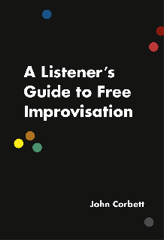
A Listener's Guide to Free Improvisation – John Corbett (University of Chicago Press, 2016) ****


By Colin Green

Free Improvisation is and probably always will be, fringe music. As a general rule, a fringe or counterculture either fades away or becomes absorbed into the mainstream, as brilliantly portrayed in the closing scenes of the TV series Mad Men. Not so with free improvisation (and its close relation, free jazz). The only other instance of which I can think of a counterculture that’s resolutely remained as such, is the Amish. Go figure.

The reasons for its lack of popularity are easy to discern, but what’s the appeal of free improvisation – what is it that continues to fascinate and stimulate musicians and audiences about music-making that can seem wilfully marginalised, and how should you go about listening to it? It’s to this question that John Corbett’s book is addressed.  Corbett is a well-known critic and writer, who teaches at the School of the Art Institute of Chicago and is also co-proprietor of the art gallery, publisher and record label, Corbett vs. Dempsey.

This is a slim book, written in a breezy tone, free of jargon and impenetrable prose masquerading as profundity. Corbett is keen to demystify, making the music sound more accessible and less intimidating, often a bar to new listeners. At various points he uses the analogy of bird-watching, which doesn’t require you to be an ornithologist, and where repetition and accumulated knowledge count for a great deal. This provides useful comparisons with the business of listening, though he accepts the analogy can only be taken so far.

There are introductory remarks on taxonomy, distinguishing free improvisation from structured improvisation, free jazz and noise music, distinctions easy enough to make on paper but due to overlap they’re rather more difficult to apply when listening and ultimately are of little practical benefit; once understood they’re probably best discarded. There’s also a curious rejection of “improv” – “I never use the abbreviated form of improvisation” says Corbett “Improv is for improvised comedy, a particular and separate artistic activity”. Outside of the Comedy Store, it’s difficult to see how anyone could really confuse the two.

What Corbett recognises is that getting to know any new area of music requires adjusting listening habits and managing expectations – what to listen for and what not to carry over from other idioms – and focuses on a number of fundamentals, essential to grasp when coming to terms with improvisation. It’s a rewiring of parts of the musical brain which can’t be achieved with the flick of a switch. In respect of rhythm, don’t expect regularity and metric pulses. It’s a matter of motion and velocity rather than tempo. As Corbett puts it:
“Once you relax, let down your guard, and pay attention to all the minute rhythmic details – the flux, the freeze-frames, the tasty timings – you can move deeper into improvised music. If you cling to the desire for a beat, you’ll forever stand at the front door.”
We live in a time when most of the music listened to is in song form, music having a clear arc between opening and closure: we know pretty much how long it’s going to last. With improvisation musical duration is more open-ended, often with no real sense of beginning, middle or end, which has two consequences. We have no real idea how long each piece or section will last – the music unfolds according to its own time – and on occasions, listening only to part need not be a bad thing, allowing digestion in bite-sized pieces. It’s not always possible to maintain full concentration, particularly when finding one’s feet: it’s better to come to terms with music little by little than be confused by the whole thing. Like the musicians, the listener has choices. Before the advent of CD, recordings of improvisation were sometimes edited down to fit onto an LP but with no loss in musical quality, just the amount you got.

In addition, what can be forgotten is that performances vary and the quality of playing is not necessarily at the same level throughout. Free improvisation can be a high-risk strategy: music without a safety net, and only the mediocre are always at their best. Like all musicians, improvisers can coast – what Corbett describes as “cosmetic” rather than “real” improvisation – until something ignites the spark.

Corbett then moves on to some of the more active components of listening. Here and elsewhere, the backdrop is attending a performance but of course, unless one lives in or near London, New York, Berlin or other major centres, they’re hard to come by, and I’d go far as to say that even regular attendees probably listen to more music via recordings than gigs. This doesn’t undermine the value of Corbett’s observations but identifying who’s playing what, the agency of sound, and how the players time their entrances and exits is trickier without visual cues. A suitable compromise would be YouTube, a valuable resource for improvised music. He also considers the subject of watching and listening and competing views of their importance: music as a form of social theatre against focussing on sounds as such, irrespective of who’s making them and how they’re produced. Naturally, there are merits to both; there’s no reason why it should be an all or nothing affair. (Incidentally, Corbett’s suggestion that one can process the music while fast asleep can’t be entirely serious though arguably, peripheral listening has its place.)

Perhaps the most important feature of improvisation is that the players occupy their own space with varying degrees of interaction, as well as none at all. The idea that it’s all egalitarianism is misleading. It’s music which reflects the whole range of personal and social relations – sometimes sympathetic, other times contrasting, even oppositional or disruptive – not something as narrow in scope as a musical bill of rights. Corbett gives examples of the different relationships, the kind of activity to listen for, changes in focus and the processes going on – dialogue, independent simultaneous action, imitation, consensus/dispute, support/stepping up, making space vs. being tentative, and counterpoint. The illustrations provided are sometimes musical, but are often by analogy with everyday activities with which we’re all familiar. In many respects, improvisation is the poetry of the prosaic.

It’s also about personalities – actual or assumed – and individual vocabularies, including our old friend “extended techniques”. Musically speaking, character is far more interesting than even-handed neutrality and inevitably, there will be those who appeal and others that do not. Corbett provides a checklist of major living free improvisers according to instrument (the contingency of living at the time of writing is one way of keeping the list of manageable size and presumably, is an encouragement to go and hear them play).

He also draws attention to the importance of dynamic shifts, not just changes in volume but in intensity, with suggestions of how to map out a performance by reference to such features. Focussing attention on particular facets is part of training our ears. Similarly with identifying transitions, where musical thought moves from one area, or set of concerns, to another. Regarding structure, he identifies the two principal forms this can take: the classical narrative of exposition, conflict and resolution (those who think improvisation is a rejection of all traditional forms should think again) and juxtaposition, non-goal-orientated music. I can’t agree with Corbett’s description of the latter as ”being stuck, static, not propelled forward, but staying in one place” however. Although true of some music, there are plenty of examples of nonlinear music which doesn’t have those features, both in contemporary classical music (of which he regards it as a legacy) and improvisation. As he notes, structure can be particularly difficult to identify and its importance can vary: often the music simply unfolds organically, like Paul Klee’s “taking a line for a walk”. Improvisation which is completely free does not lend itself to sophisticated long-term structures, at least where multiple musicians are involved; that kind of thing requires planning and some form of overriding organisation.

There are some theoretical musings on free will and determinism and how they relate to music, and the nature of improvisation containing composed elements (poly-free music) subjects that have led to the writing of much tosh elsewhere, and whose value in this book is largely down to Corbett’s concluding observations:
  “…the term “freedom” has been the source of many misconceptions in improvised music, and it’s helpful to keep from investing in the word too deeply…in the wrong hands “free” music can be rallied around as a facile and softheaded notion…The point isn’t determining what’s free and what’s not. It’s time better spent paying attention to what’s going on in the music and how it’s made. Free is a method for making music; it isn’t an independent value or quality.”
This a refreshingly pragmatic book. Corbett is enthusiastic but not gushing, and open about his preferences (taste is a sign of a discerning mind) such as his fondness for threesomes – trios, over smaller or larger ensembles, and meetings of musicians familiar with each other over new combinations. There are lists of recommended recordings and books, though no online resources.

As a primer, it’s a valuable guide and even seasoned listeners will find it useful to be reminded what distinguishes free improvisation from other music and the kinds of things to which they should be alive. Like any music, it’s available to those prepared to devote the time and effort necessary to come to terms with its core features but it requires commitment and active engagement – like its practitioners, discipline – and its rewards are not easily won. Improvisation is music which is constitutionally ad hoc, sometimes feeling as if its parameters are defined afresh for each performance. The primacy given to process means it can lack the sense of completion or finish we tend to expect elsewhere, giving it the air of the ambiguous, provisional or incomplete: work in progress with everything laid bare. Like abstract art, it’s essentially a modernist enterprise, with its focus on originality and the renewal of forms. Corbett puts it in the following terms:
“…I feel strongly that free improvisation will eventually be seen as one of the great contributions of Western society to world culture, on a par with cubism’s introduction of multiple-point perspective or abstraction’s renewed attention to materiality and plasticity over observation and representation. What those early twentieth-century artistic concepts opened up in terms of image, vison and form, improvised music has cracked open in terms of time. It’s so much more than spontaneous outpourings of emotion or a brash proclamation that “I can do anything I want”; improvised music has contributed something deeply profound to the world, a new way of thinking about sound and space and temporal experience and personal interaction.”
As acknowledged by Corbett, there remains a sense of mystery at the heart of improvisation, for musicians and listeners alike, how impulse is transferred into action is something that cannot be put into words or explained in straight musicological terms. And that’s probably for the best. The sculptor Henry Moore was once sent a book about his work which considered it from the perspective of Jungian psychology. He stopped reading after the first chapter. For him, the fundamentally ineffable nature of the creative process was essential to what he did: to understand it would be to risk destroying it.

The book is available in paperback or, more cheaply, in electronic form which can be read using a Kindle app.

Friday, May 6, 2016

Johannes Bauer (1954 - 2016)

By Martin Schray

It’s sad news that Johannes Bauer has passed away. With his older brother Conny, he was one of the most prominent figures of the free jazz scene in the former German Democratic Republic. As a young man, he’d already released albums on the legendary FMP label, among them outstanding releases with the Manfred Schulze Bläser Quintett (Nummer 12), the Conny Bauer Quartet (Round About Mittweida) and the Heinz Becker Group (Pan - Vielleicht Tau). Later, he had great bands like the Tradition Trio (with Alan Silva and Roger Turner), Grid Mesh (with Frank Paul Schubert, Andreas Willers and Rudi Fischerlehner), Freeter (with Tobias Delius, Clayton Thomas and Martin Blume) and the exceptional Doppelmoppel (with he and Conny on trombone and Joe Sachse and Uwe Kropinski on guitars). I liked Johannes Bauer best however, when he was part of large ensembles. I first saw him when Peter Brötzmann celebrated his 50th birthday in Wuppertal in 1992, a performance which ultimately won me over to free jazz. As a part of Barry Guy’s London Jazz Composers Orchestra he played “Harmos“ at the Jazzfestival in Schaffhausen in 2008 and I‘ll never forget his duel with his brother Conny at the beginning of the piece. Those who were able to see him with Peter Brötzmann’s Chicago Tentet +1 at their three-day-residency in Wuppertal’s Café Ada in 2011 will always remember how passionately he swung with Fred Lonberg-Holm, how much he enjoyed the music, the obvious fun he had playing. Johannes Bauer was my favorite trombonist. Today he has lost his fight against cancer. He’ll be missed by all in the jazz community.

Here‘s an excerpt from a Bauer 4 concert - with his brothers Conny (tb), Matthias (b) and his nephew Louis Rastig (p):


Keefe Jackson & Jason Adasiewicz – Rows and Rows (Delmark, 2016) ****½


Keefe Jackson’s tone is essential.  Whether he’s playing tenor saxophone or bass clarinet, which are of course as different as brass and wood, his sound is immediately identifiable.  It’s a deep, full tone that is shadowy and full of movement – like candlelight.  I’m not romanticizing it.  Those waxy wisps of smoky light are exactly what enable you to get to the bathroom in a power outage.  Essential.  Like that.

Because his tone is so rich – and his voice so varied – I’ve always wondered why he doesn’t do more duo work.  (I’ve not heard any solo work from him.  A discussion for another time, I suppose.)  He is well matched with powerhouse vibraphonist Jason Adasiewicz, whose stereophonic overtones, sustain and sharp mallet stings connect and contradict in all the right ways.  On paper this promises to be one helluva textural ride.

And while that expectation is definitely delivered, the big surprise here is the meshing of composition and improvisation into such completeness that it’s impossible to tell when composition ends and improvisation begins.  Well…  until the head repeats at the end of some of the pieces and you realize that the brilliant composition you’ve been listening to for the last two minutes was totally improvised.  (Or was it?)   The scope is varied throughout as well, running from East African melodicism on “Questioned, Understood, Possessed” to the bluesy old-school swing of the title track.

Several moments of transcendence include:
  • Adasiewicz’s clanging tone clusters that resonate like a trolley filled with magic contrasting with Jackson’s supremely deep bass clarinet presence midway through “Where’s Mine.”
  • “A Rose Heading,” a plaintive and gorgeous piece, is conventionally beautiful while steering clear of anything remotely maudlin.  Adasiewicz joins Keefe’s bass clarinet to play the melody before levitating toward the stars over Keefe’s slow, drawn-out whole notes.  If Adasiewicz plays the stars in a constellation, Jackson seems to look up and play the imaginary lines connecting them.
  • The playful support Adasiewicz shows Jackson on “Questioned, Understood, Possessed” is fascinating.  He throws sonic pillows at the ground underneath Jackson’s notes – to catch them if they fall (and they don’t).  Jackson’s notes mostly float high above the ground, swirling and flapping broadly – until Adasiewicz tosses a pillow directly at one and Jackson bats it away masterfully.  This happens several times.
  • The theme from “Cannon from the Nothing Suite” is played “round” style with Jason and Keefe winding the melody around each other.  Keefe drops a few really interesting notes and then bends & modulates them, heading back to East Africa on a rickety bus powered by vibraphone stardust.  Adasiewicz then begins bowing the vibes, taking the bus into the sky & accelerating by pounding the metal with mallets.
The selections here are relatively short.  (There are nine pieces; the longest clocks in at 6:01.)  To extend them into longer stretches might produce some interesting results, but ultimately the line that blurs composition and improvisation would most likely become more defined.  And it’s that blurred line that creates the magic.  The way this disc is sequenced and presented, the magic can continue to live over multiple listening sessions.  You won't get tired of the tunes either.  They sneak up on you.  You don't realize their strength until you've heard them multiple times.  And you will definitely listen to them multiple times.

Thursday, May 5, 2016

News from the Israeli Front


The small Israeli jazz scene does not provide many releases, and many of the Israeli musicians explore their work outside Israel or through foreign labels. These three recent releases from three very different musicians in their approaches and their aesthetics shed some light on this scene.


Anat Fort Trio with Gianluigi Trovesi - Birdwatching (ECM, 2016) ***½


Birdwatching is pianist Anat Fort's third album for the acclaimed ECM label (she is the only Israeli musician so far who has established such a long-standing relationship with the German label) and features her regular trio - double bass player Gary Wang and drummer Roland Schneider, augmented by Italian clarinet player Gianluigi Trovesi. Fort revisits here the same territory of her debut album for ECM, A Long Story (2007), on which she hosted clarinet player Perry Robinson.

Fort and Gianluigi performed together in the Italian Novara Jazz Festival and later in Tel Aviv before heading to Lugano, Switzerland, where they recorded Birdwatching on November 2013. The collaborative pieces with Trovesi are the most interesting ones. These pieces sound as an immediate, open-ended sketches of larger ideas, a kind of sonic haikus that offer an insight into a much bigger phenomenon in nature, as the haikus do. Trovesi fits perfectly into such contemplative-improvised approach. His phrasing enriches the jazzy sound of the trio with a singing, full-of-wonder and dramatic voice, beautifully demonstrated on the pieces “Not The Perfect Storm”,  “Jumpin’ In” and the two parts of “Song Of The Phoenix”, all accumulate to pieces of a long story. Fort other compositions for her trio follow too closely Keith Jarrett mid-seventies song-like themes for his Scandinavian Quartet.


Ziv Taubenfeld / Shay Hazan / Nir Sabag - Bones (Leo Records, 2016) ****


Bass clarinet player Ziv Taubenfeld, double bass player Shay Hazan and drummer Nir Sabag grew up together in a small town in the northern part of Israel, Karmiel, where “dreams and imagination are food for many nights.” Taubenfeld relocated to Amsterdam, studied with Michael Moore, and performed with him. Sabag relocated to Berlin, but still plays with the Israeli Hanut Trio, and performed before with Polish reeds player MikoÅ‚aj Trzaska and experimental composer Hans Tammen. Hazan, the only one who still lives in Israel, plays in saxophonist Albert Beger's new 4tet.
The long-standing friendship and personal affinity may explain the organic, flowing of the interplay of this trio, officially founded only in 2013, and only now releasing its debut album. The trio doesn’t need much more than a short motive, usually suggested by Taubenfeld, the composer of all the pieces, and then all three abstract it, expand it with colorful, multi-layered textures with a distinct sonic atmosphere. Taubenfeld, Hazan and Sabag play with fresh urgency and joyful playfulness balanced with great sensitivity and focus.

Taubenfeld's ideas draw from excellent masters. The contemplative “Under the Ab Tree” nods to reeds master Ab Baars and the manner that Baars applies his extended breathing techniques to the Japanese shakuhachi flute. His short solo on “Milonga” highlights his masterful technique, continuing in his own way the innovative work of Eric Dolphy, David Murray and Moore, his teacher.  The pieces end up as parts in a big puzzle that reflects on different moods - the emotional “Kiwi Flower”, the mysterious, ritualistic “Gold Wood”, the intense and stormy “Egge”, but concludes with the moving and peaceful “Citrus Village”.

Beautiful and promising.


Albert Beger Quartet - Freedom Is An Option (Jazzis, 2016) ***


Israeli sax hero Albert Beger changes the personnel of his groups quite often and his 12th solo album offers a new quartet, featuring musicians that are a generation younger than him. These young musicians are eager to play with Beger, enjoy the freedom and the space that he offers them, but it is also obvious that they do not challenge him or push him outside of his comfort zone.

Berger is still a charismatic leader with a commanding sound but Freedom Is An Option splits between pieces interesting ideas that need further further development and well-crafted compositions. A few of the compositions are based on fragmented ideas that do not accumulate to a coherent piece. The title piece is an example of such an approach. It begins with a lyrical motive, introduced beautifully by double bass player Hazan and Beger but totally lose its course and momentum when pianist Milton Michaeli takes the lead.

The most beautiful piece, “Rest Now,” one of the best of Beger oeuvre, dedicated to his late mother, suggests the opposite side. Beger takes the lead from beginning to end, expressing his most touching playing, answered with minimalist, humble interplay of the quartet, that only stresses the profound emotional impact of Beger sound. Hazan, who wisely playing dark tones with the bow, deepens the moving effect. Again, when Beger leads the quartet on “Things We See, We Don’t Know” he engages all in his fast-shifting rhythmic ideas and in a tight collaborative interplay, and again, Hazan stands out as the only one who expands these ideas.


Wednesday, May 4, 2016

Marilyn Lerner, Ken Filliano, Lou Grassi - Live At Edgefest (NoBusiness, 2016) ***½

By JA Besche

Michigan has its own version of SXSW (i.e. a large music festival that takes place throughout a city with musicians playing in various venues around town as opposed to one large fairground), however, there are no insufferable scensters or oddly trendy new forms of electronic music like vaporwave, chillwave, or wavewave (I invented this genre just now). No, all there is at Edgefest are some of the best talents of free jazz and improv laying waste to Ann Arbor. Last year, Lerner, Filliano, and Grassi spoke their collective voice into the Michigan air, and it was luckily captured and imprinted onto vinyl wax thanks to the superb Lithuanian label NoBusiness. Here’s how it went down:

Quiet glissandos tip toe down a rigid set of keys, the light saw of a bowed double bass quickly scatters repeated phrases over top, while the tips of drumsticks dance between snares and hi-hats, touching them with what seem like precisely only the exact amount of force necessary. The instruments come together and take us strutting, with an obtuse delivery of piano notes walking over top of the rhythm in disjointed timing. Three rhythm instruments working as a collective propel the improvisation forward; all skip from percussive to melodic with a collectivist approach. The ringing echo of quickly played cymbal notes drift off and dissipate into the air like smoke before a solo of glissandos interspersed with playful blocks of chords takes the lead. The snare begins rumbling in the background, a tautly pulled drum skin emitting the expertly tapped vibrations that intermingle with the determined and manic-depressive piano. The bow cuts jagged lines across the bass strings, but it is not frayed, only precise. The hood of the piano has been drawn back and its guts are stroked, coaxing pure percussion as the bass flows back and forth between registers. They call. They respond. They push forward in exploring volume and intensity. Silence becomes the fourth member of the band. Improvisations grow and shrink from each other. A well taken drum solo of swirling patterns and ringing hi-hats leads to a whirlpool of notes between the trio, the bass and piano playing being the most nimble of the recording, exchanging rapid fire runs at each other like two armies in a gunfight. Moody piano runs bookend some grooving bass vamps and rolling snares. It becomes an incantation, repeating the calls of worship until it fades out. The audience introduces itself.

Tuesday, May 3, 2016

High Definition Quartet - Bukoliki (For Tune, 2015) ****


By Nicola Negri

High Definition Quartet is formed by four very young musicians from the always interesting polish scene. For Bukoliki, their second album together, pianist Orzechowski took the homonymous work by Witold LutosÅ‚awski, one of Poland’s major classical composers, researched the original folk material on which it was based (melodies of the Kurpie region collected by Father WÅ‚adysÅ‚aw Skierkowski, featured on the CD cover) and arranged the five themes presented here.

The folk material on which Bukoliki is based is just a starting point though, and the record touches many different styles and formal developments, exploring modern jazz, contemporary music and free improvisation.

The opening track – simply titled I – begins with a tight counterpoint of single accents from all the members, until the ensemble coalesces around a brief melodic fragment that pushes the performance forward, flowing in various instrumental combinations that always return to the main theme, used as an anchor for collective improvisation. It’s clear from the start that this is a true ensemble effort, with all the musicians equally serving the development of the music with excellent technique and imagination.

The album continues in similar fashion, with every piece built around structures that pass through often contrasting rhythms and musical styles with ease, highlighting the tight interplay of the group more than the individual contributions of the musicians, that still have ample space for expression. II opens with Orzechowski’s classically inflected piano, showcasing his precise rhythmic approach, with slight diversions that keep the proceedings on the edge, between contemporary austerity and avant jazz sensibility. III is built around a fluid bass solo by Wykpisz, interrupted by blasts of noise by the rest of the group, finally dissolving on a dissonant coda. On the following IV, the base of arco bass and sweeping percussions support the beautiful melody stated in unison by piano and saxophone, for a more traditional musical approach. The album then ends with V, a finely crafted piece developing through surprising rhythm mutations and changing moods that keep pushing in different directions, providing an exciting frame for Åšliwa and Orzechowski’s digressions, and ending with a powerful drum solo by Fortuna.

Bukoliki is a record that shows once again the excellent state of today’s european jazz, and despite many different musical situations and stylistic turns, it has a cohesiveness that keeps it engaging until the last note.


Mateusz Åšliwa – tenor saxophone
Piotr Orzechowski – piano
Alan Wykpisz – double bass
Dawid Fortuna – drums 

Listen to V from Bukoliki by High Definition Quartet:

Monday, May 2, 2016

Østergaard Art Quartet – More Stories from the Village (BoogiePost Recordings, 2016) *****

By Eyal Hareuveni

One of the best-kept secrets of the vibrant Danish jazz scene is drummer Michala Østergaard-Nielsen. A unique musician that can shape the course or the mood of any musical texture with her unique, serene and economic touch. She can blend organically with the vocal jazz quartet David’s Angels, the art-rock trio Nuaia (both with Swedish vocalist Sofie Norling), or the electronics meets free-improvisation of the Swedish Midaricondo duo. Her second album with her own quartet, the Østergaard Art Quartet, follows the acclaimed debut Stories from the Village (BoogiePost Recordings, 2011), and highlights her other talents, that of being a leader of strong-minded musicians and a master improviser.

The quartet is a European supergroup, featuring Norwegian trumpeter and vocalist Per Jørgensen, known from his ongoing collaborations with percussionist Terje Isungset and the trio Jøkleba, Danish trumpeter Kasper Tranberg, known from his collaboration with Yusef Lateef, Adam Rudolph in the Universal Quartet, and French master guitarist Marc Ducret.

As on the Quartet's debut, the short pieces offer an imaginary narrative of life in a remote, rural community, where music plays an integral role in the daily life. This kind of approach to music was perfected by the Art Ensemble of Chicago, embracing black music from the past to future. Østergaard Art Quartet invents its own timeless culture, located in a mysterious destination, yet a very colorful and dramatic one. The album was recorded during the Quartet Nordic tour in 2014.

The musical pieces/improvisations are weaved patiently, offering a choir of sympathetic yet highly original voices, all are experienced storytellers who know how to build a dramatic tension and then to offer a comforting conclusion. This quartet can create an intense emotional atmosphere with no more than sparse and gentle touches, breaths and whispers, as on the fascinating “Storytime”; suggest an inspiring manner of extending each other voice as delivered on “Night fall”; stage an urgent, playful and nuanced mini-drama as on “Little tiger, Part II” or offer a spiritual, meditative universe with repeated, cyclical expressions as on “Beautiful Bells and Trumpet Trance”.

My only complaint about this most beautiful gem: why just 37 minutes, after we have waited so patiently for five long years? We, all, deserve more, and if possible, sometime soon.


Sunday, May 1, 2016

D.C. Improvisers Collective - Ministry of Spontaneous Composition (s/r, 2016) ****

By Derek Stone

In 2014, the D.C. Improvisers Collective released In the Gloam of the Anthropocene, a stellar effort that combined improvised jazz with a myriad of other influences: driving post-rock, shimmering drone, and circular rhythms that approached krautrock in their machine-like regularity. Each iteration of the Collective has undergone slight line-up changes, but Ben Azzara (drums) and Jonathan Matis (electric piano) seem to be the members who’ve stuck around the longest. On this, their newest recording, those two are joined by Chris Brown (bass and electronics), John Kamman (guitar), Ben Redwine (clarinet), and Patrick Whitehead (trumpet/flugelhorn). The result is an album that distills and refines the essence of what the Collective do best: long-form improvisations that seamlessly integrate a number of moods, styles, and rhythmic modes.

The first and longest piece here, “The Division of Unlearning,” starts with a slippery, circular stream of notes from clarinetist Ben Redwine, and steadily adds layers from there. Soon, the band is locked into a tight, swinging groove that seems to owe more to the group’s jazz influences than anything else. However, the D.C. Improvisers Collective is never comfortable sticking with one style for too long - after a few minutes, drummer Azzara lays down a sturdy, relaxed rhythm, Matis’s electric piano takes a more prominent role, and the overall effect is of a transformation from the jazz idiom to something resembling 70’s prog-rock (think: Can, or the jammier side of Pink Floyd) Midway through, Redwine’s snaky clarinet returns, Azzara speeds up the tempo, and (with John Kamman’s guitar sounding straight out of Agharta) the band offers a healthy dose of sinister fusion. It’s this constant restlessness and eagerness to try new things that sets the D.C. Improvisers Collective apart and makes them such an idiosyncratic force; furthermore, they never sound like a cheap imitation or ersatz copy of the music they are tipping their caps too - if anything, the band breathes new life into some of these genres, showing how slight alterations and recontextualizations can resuscitate even the crustiest stylistic corpse. “The Division of Unlearning” ends with a section that sounds as if it could fit comfortably on the eponymous first album from Neu! There are propulsive drums, airy melodies that wind in and out, and an overall sensation of forward movement, joyous and irrepressible.

The other two pieces are much shorter, but they are not lacking in the exploratory impulse that is in evidence all throughout the first. “Unified Conspiracy Theory” starts at an unhurried pace, with the players contributing in brief, leisurely stretches. As the piece develops, though, the relatively stable structure begins to show cracks: Whitehead’s trumpet and Redwine’s clarinet drop their fetters, so to speak, spiralling upwards in progressively more unrestrained eddies; the guitar spits and snarls; Chris Brown weaves a jaunty bass-line throughout. Just when things seem to be on the verge of disintegration, the piece is overtaken by swathes of electronic noise, and the players ride the wave of ambience to its conclusion. “Dark Matter Denial” is a bluesy, swaggering track, Jonathan Matis leading the way with a menacing, yet alluring,  melody on the keys. Compared to the rest of the album, this piece doesn’t really change directions or veer off in unforeseen ways; the percussion and keys are rock-steady, acting as a canvas upon which the other players can paint. At the album’s close, the members of the D.C. Improvisers Collective erupt into laughter, undoubtedly feeling elated at the glorious noise they’d just created. I’d be lying if I said I didn’t feel the same way after hearing it!