Simply gorgeous music. That was my first thought when listening
to Shoebox View, Naomi Moon Siegel's excellent debut solo album. One half
of the duo Syrinx Effect, whose album Snail Songs was highly praised,
Naomi has expanded on the sounds developed on that album to create a
soundscape that is contemplative, evocative and soulful. She
collaborates with a variety of artists here: Sean Woolstenhulme
(electric guitar, acoustic guitar, banjo); Wayne Horvitz (organ, piano
Wurlitzer); Eric Eagle (drums, percussion); Keith Lowe (upright bass);
Alex Guy (viola); Ivan Arteaga (alto saxophone); Michael Coleman
(Wurlitzer, synthesizer); Thione Diop (percussion); Jefferson Rose
(electric bass ); Andrew Vait (syntesizers); Jacques Willis (beat
production); Greg Sinibaldi (baritone saxohone); and Steve O'Brien
(trumpet).
The opening track, Grey Orange Green, is a duet
between SIegel and Woolstenhilme, his guitar providing the theme, and
the trombone soloing, evoking an Ennio Morricone theme song with its
steady pace, repetitiveness and elegant minimalism. Jeanine's Joy has a latin influenced beat with soulful horns and sweet electronic textures; It's Not Safe
combines the influences of Curtis Mayfield and Young Holt Ltd. There
is an even paced tone throughout, no matter what combination of
instruments or references. Her trombone sound is very distinct; gliding
yet lucid.
A mixture of jazz, latin, electronics, folk, and chicago
soul, Shoebox View is an uplifting musical experience that is unlike
anything that I have heard in a while. Highly recommended.
Yukihiro Isso – Nohkan (nohflute), shinobue, dengakubue, gemshorn and recorder
Roger Turner – percussion
One of the most fascinating aspects of traditional Japanese bamboo
flutes, from the shakuhachi of Zen buddhism to the nohkan of Noh
theatre, is how they redefine, to our Western ears, the idea of
virtuosity.
Due to materials and construction each specimen has its own
peculiar sound, and the highest level of musicianship is achieved when
the instrument's inherent character is amplified by the physicality of
the musician, when breath and articulation take the inner voice of the
flute and elevates it to its full potential.
In a sense there's a strong similarity to the jazz and free
improvisation worlds, where a personal and unique approach to the
instrument is a key factor in determining the incisiveness of the
musician's technique.
And this kind of tangible physicality might well be the defining trait of Takanehishigu,
recorded live at London's Cafe Oto in late 2015 and documenting the
first encounter between flutist Yukihiro Isso and percussionist Roger
Turner.
Isso mainly operates in traditional Noh theatre performance, coming
from a long family tradition of nohkan players dating back to the 16th
century. He also has a long experience in Western musical styles and
improvisation, and has worked with Cecil Taylor and John Zorn, among
others. Roger Turner is a veteran of the English jazz and improvisation
scenes, active since the mid-seventies in important duos with Phil
Minton and John Russell, and in different configurations with many other
improvisers.
The first few minutes of Takanehishigu are built on a
slightly disjointed, urgent exchange of ideas, gradually focusing on a
parallel musical activity that develops through loosely connected
episodes, the musicians constantly adjusting to the overall mood but
always keeping a clear independent voice, avoiding the most obvious
interactions in favour of an unpredictable sonic landscape of strong
rhythm formations and rarefied textural shades.
Isso has a very peculiar style — suggesting both folk playfulness
and ritualistic rigour — and a taste for clearly delineated melodic
statements and insisting rhythmic figures. Turner for the most part
choses to work around Isso’s ideas, calibrating his vast arsenal of
percussive colors to complement the continuous flux of shifting textures
and rhythms put forward by the flutist, subtly altering the direction
of the performance with carefully handled dynamics and subtle yet
incisive details.
The contrast between Isso's bold, stark delivery and Turner's
flexible and nuanced approach creates a stimulating musical environment,
inviting the listener to observe casual intersections of different
ideas and more concretely defined structural developments, inevitably
returning to the immediate, physical quality of the instrumental voices,
the always present breath in Isso's flutes and the tangible tension of
Turner's percussive moves.
Rodrigo Amado first caught my attention on two albums as part of a trio with Kent Kessler (double-bass) and Paal Nilssen-Love (drums): Teatro (European Echoes, 2006) and The Abstract Truth (European Echoes, 2009) A mature voice, full of character, I’ve followed his releases with growing interest. My enthusiasm was confirmed by his session with Joe McPhee, Kent Kessler and Chris Corsano, This Is Our Language, being voted our reviewers’ album of the year in 2015, in which year he also topped the tenor saxophone category of El Intruso’s International Critics Poll.
Amado’s Motion Trio consists of himself on tenor, Miguel Mira on cello and Gabriel Ferrandini, drums. They often invite guests and their pair of albums on NoBusiness with Peter Evans (trumpet) – The Freedom Principle and Live in Lisbon – received much praise a couple of years ago. This is the first recording of the trio alone however, since their debut: Motion Trio (European Echoes, 2009). The track titles were inspired by the 1946 essay,Freedom is a Two-Edged Sword by Jack Parsons, a rocket propulsion engineer, occultist and one-time friend of L. Ron Hubbard. That liberty and responsibility are the sometimes conflicting consequences of freedom is something with which few would quibble, but whether all or part of the essay had a deeper influence on the music, I cannot say. I got along fine without it.
The immediately striking feature of the trio is Mira’s cello, played plucked throughout, higher in register and lighter in tone than the double-bass, making the frequent and rapid gear changes, glissandi and double-stops more prominent. Woven into this is the whiplash movement around Ferrandini’s fragile kit, with sizzling cymbals, staccato cracks, rim shot snaps and stuttering rolls. This mesh of cello and drums, a combination of the ductile and sharply transient, creates an energy field whose quivering surface never settles. Against this, Amado’s tenor is a stabilising force providing an equilibrium of sorts, and something which feels both spontaneous and integrated.
There’s a crispness and tonal control to Amado’s line, which unfolds according to its own momentum. Not one to embellish unnecessarily, since the trio’s first album his terseness of expression has if anything, become more pronounced: a concision which sometimes reduces his playing to a string of pecked plosives. It sounds as if each phrase is being scrutinised and given its due weight, the trajectory of each piece being modelled as a sculptor moulds clay, small additions and scraping away. The result is a tour de force of controlled intensity.
There are times when the presence of a fourth instrument would be welcome – Amado’s soliloquies might benefit from some contrasting dialogue – but if his previous outings appeal, proceed with confidence.
The album’s available on CD or as a download from Bandcamp.
William S. Burroughs is one of the icons of pop culture. With Jack Kerouac and Allen Ginsberg he belongs to the triumvirate of the Beat generation. His novel Naked Lunch influenced artists like Patti Smith, Lou Reed, Laurie Anderson, Susan Sontag, Robert Wilson and many more. He invented the words "Heavy Metal", "Steely Dan" and "Soft Machine" and his drug consumption was legendary. Ornette played on the soundtrack of David Cronenberg’s "Naked Lunch" movie.
Many of his writings are based on the so-called cut-up method, an aleatory literary technique in which a text is cut up and rearranged to create a new one (he’s said to have invented it with Brion Gysin in the late 1950s, although the technique had been conceived originally in Tristan Tzara’s How to Make a Dadaist Poem (1920)). Another important element of his style are so-called oral “routines”, satiric or surreal sketches which later grew, expanded, imploded and folded in on themselves to create new texts.
In April 2014 New York celebrated the 100th anniversary of Burroughs’ birthday with musical performances, public readings, academic panels, film screenings, multi-media, and performance art. Artists scheduled to appear included John Zorn, Laurie Anderson, Genesis P. Orridge, Lydia Lunch, Hal Willner, Bill Laswell, Thurston Moore, Steve Buscemi, Elliott Sharp and many more.
Buscemi (famous for his roles in the television series Boardwalk Empire and The Sopranos and films such as Fargo, The Big Lebowski and Reservoir Dogs) and avant-garde guitarist/multi-instrumentalist Sharp teamed up for the live performance documented on this album.
Key topics of the performance are the cut-up method, different forms of control, the advantages and disadvantages of various drugs (Burroughs called it “junk“), sex, the art of writing and language as a virus.
However, what is most interesting about the performance is the fact that Buscemi imitates Burroughs' characteristic gravelly delivery and enriches it with his own distinctive voice - as if he was a Burroughs impersonator playing a cover version of a Burroughs song. This works out nicely because he uses Burroughs’ texts like riffs, tunes, and melodies, which he re-organizes to different pieces in the best cut-up tradition. You can hear this when comparing “Rub Out the Word” and “Taking the Virus”. In the first, Buscemi talks about the idea of rubbing out the Kabbalah and the Talmud, the works of Marx, Lenin, Freud and others. He claims that the written word is a virus that only made the spoken word possible and that the written word was not recognized as a virus because it has established a stable symbiosis with the host (in this case: man) as can be seen when you look at animals, which have no written word. That’s why Burroughs/Buscemi calls man the time-binding animal. In “Taking the Virus” Buscemi takes up several ideas again, like “the word as a virus“ which is there to exterminate human life on this planet, “the stable symbiosis”, man as “the time-binding animal” etc. Buscemi actually invigorates the track by reading in a rapid-fire, breathless voice as if a saxophonist would use circular breathing, conjuring images of the apocalypse.
All this is augmented by Elliott Sharp's guitar and electronics, which create a spooky background. Supportive and atmospheric, Sharp’s feedback drones complement the surreal passages (especially those about Dr. Benway, Burroughs’ most famous literary figure) as well as the funny ones (like the passage in which a man teaches his arsehole to talk). Sharp’s contributions are rather economical, he stays in the background most of the time, never competing with Buscemi for the audience’s attention.
All in all an album for die-hard Burroughs fans (who also own the excellent Dead City Radio album, for example) but it might also work as an introduction for those who are not familiar with the writer’s work at all.
Sedimental You is the new album from Mark Dresser featuring his compositions performed by an unusually beautiful band: Nicole Mitchell (flute), David Morales Boroff (violin), Marty Ehrlich (bass clarinet), Michael Dessen (trombone), Jim Black (drums), Joshua White (piano), and Mark Dresser (bass).
It is a rare treat to hear an album that sits so squarely in the tradition of jazz while still being able to sound so fresh and new. The music is deeply rooted in the tradition of ancestors like Duke Ellington while managing to evoke our strange, modern world. On the first few moments of the opening track, “Hobby Lobby Horse”, Dresser sounds more like Jimmy Blanton than ever, providing a clear rhythmic bounce that also functions melodically across odd meters that sit atop a deep groove. The opening of the title track, a play on”Sedimental You,” is as spartan and dystopian as you can imagine, while still managing to swing. Dresser turns in an achingly futuristic bitonal solo around the ten minute mark, before the delightfully surprising end.
The album has an excellent sense of humor that comes through in the playfulness of the music and which is balanced by both the seriousness of the performances and by the political nature of some of the tunes. “Hobby Lobby Horse” is a “musical response to the ‘religulous’ Oklahoma-based, gigantic chain crafts store Hobby Lobby.” “TrumpinPutinStoopin,” features a “pas il Duce’ rather than “pas de deux” based on its cartoonish namesakes.” “Newton Char” is “inspired by the mass-shooting tragedies in Newtown, Connecticut in 2012 and Charleston, South Carolina in 2015…in the tradition of John Coltrane’s “Alabama.” Marty Ehrlich’s opening solo on “Newton Char” is rightly described as a “sermon,” reminiscent of Dolphy’s best work with Mingus. There are also tracks dedicated to Dresser’s friends Alexandra Montano, Daniel Jackson, and Roswell Rudd.
Dresser’s abilities as a composer are on fine display across Sedimental You. The tunes are intelligent and thoughtful, with beautiful melodies that flow so well you often don’t notice just how wonderfully odd the grooves are beneath it. Much of it will make you dance, most of it will make you think. The album is endlessly surprising, turning at the most unexpected moments. The music covers a huge amount of ground, shimmering in as many colors as you can imagine, without ever feeling gimmicky. The twists and turns serve the compositions in the most logical and satisfying ways.
One of the few jazz albums I’ve heard this year that is satisfying both intellectually and emotionally. One of the few that I’ll still (probably) be listening to years from now. Fewer albums of tired old standards (or new tunes that sound like them) and more albums of fresh, new, interesting music please!
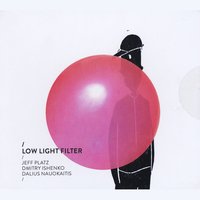
Jeff Platz’s music over the years has had a remarkable consistency to it, and none more so than his work within the trio format. In this instrumental configuration his guitar is centre stage making the fluidity, flexibility and excursive elements of his playing all the more prominent. It is a delight to bathe in the homogeneity of his music, which if viewed from either a compositional technique or improvisational language point of view holds firm as an honest and quality product. Whilst other creative or avant-garde guitarists may get more plaudits it seems that Mr. Platz tends to slip under the radar somewhat when compared to the likes of a Joe Morris or Raoul Bjorkenheim, not that I’m trying to equate their diverse styles with a similarity. However, regarding the consistency of his style and the interest within the music, his playing from my point of view is every bit as good as more recognised others in the sound world he has created for himself.
Some of the more prominent features of the album Low Light Filter include the slow dirge of ‘Continuo’ with it’s repeated bass motive, as the very aspect of the title suggests, which sets up a regular pattern for the guitar to weave in and out of with timbral and melodic regularity, that is at the very epicentre of his sound. This piece in itself can be seen on a micro level to reflect the global musical style of the guitarist’s work overall. The underlying skipping beat of ‘Daisuki’ creates a nice foil for the wandering melodic line that seems to be looking for something that it never quite finds, containing an introspective look at a ‘big love’, whilst the free flowing time of ‘Duration’ gathers pace and momentum due to the deviceful drumming of Dalius Nauokaitis. Also a nod to Dmitry Ishenko’s bass which starts ‘Semicircle’ with it’s African Kora-like intro and sees Mr. Platz abandoning his signature tone for a more distorted and bit-crushing sound. This piece also benefitting from some resourceful metric modulation from the drums, which suggests some fluid changes in background tempi offset against the lead line that stays the same.
Overall this is a strong set of pieces that sets out Mr. Platz’s music in an ingenuous way, and would be a very good place to start for anyone that hasn’t had the pleasure of experiencing his guitar playing thus far. From the evidence on show Jeff Platz sounds very comfortable within his musical character, which not only distinguishes him from others but also aligns his creativity equally alongside theirs as well.
A few recent releases by and with Swedish musicians that guarantee to keep your ears warm, even in the coming, freezing Nordic winter.
Fredrik Ljungkvist / Mattias Risberg - And Now the Queen - A Tribute to Carla Bley (Lilalo records, 2016) *****
And Now The Queen calls for many reasons to celebrate. It is a beautiful tribute to one of the greatest queens of modern jazz, Carla Bley, on the occasion of her 80th anniversary. It is also the debut album of the independent label Lilao Records, founded by vocalist Lina Nyberg. And it offers an imaginative interpretations of Bley compositions by two acclaimed Swedish musicians - reeds player Fredrik Ljungkvist, the husband of Nyberg, and keyboards player Mattias Risberg.
Ljungkvist is best known as a member of the Swedish-Norwegian quintet Atomic, leader of the Yun Kan groups (3, 5 and 10 that released its last album, Yun Kan 10 on Hoob Records, 2013), and a frequent collaborator of reeds players Ken Vandermark, Mats Gustafsson and Per ‘Texas’ Johansson and pianist Bobo Stenson. Ljungkvist also plays in Risberg’s yet-to-be-recorded Ritualia ensemble. Risberg is a composer in his own right, plays regularly with Ljungkvist in the last decade as a member of the Yun Kan 10 and is passionate about “soulful” vintage instruments as the mellotron and analog synthesizers.
Ljungkvist and Risberg cover Bley iconic compositions from the early sixties, most of them were written originally for the Jimmy Giuffre Trio - with Paul Bley, her husband at the time, and Steve Swallow, or for Paul Bley first solo albums. Their intimate interpretations are true to Carla's spirit - elegant, clever and ironic but far from being reverential. They reimagine and reconstruct these compositions, referencing the sixties and seventies sonic experiences with electronic sounds.
The duo offer two different versions for the title-piece and “Donkey”. The latter is first interpreted by Ljungkvist alone, in an intense tone that even cries and shouts, and later by the duo in a more playful mode. The reimagination of “Ida Lupino”, one of Bley most loved compositions, her moving homage to the actress, still captures its dreamy and melancholic essence as played on Paul Bley first recorded version (Turning Point, 1964), but Ljungkvist and Risberg version suggest free-associative perspective. The cover of the bluesy "Sing Me Softly of the Blues” cements even further this emphatic, free-associative vein. Nyberg joins the duo for the last song on this arresting album, an emotional cover of “Vila (AKA Jesus Maria)", sung in Swedish, a soulful acknowledgment of Bley lasting legacy.
Lisa Ullén-Nina de Heney duo feat Charlotte Hug - Quarrtsiluni (Lamour, 2016) ****
Quarrtsiluni is an Inuit term referring to a state of deep silence in which one sits together and waits until something is ready to burst. The Inuit ancestors believed that all songs came from such deep silence, coming to the human consciousness as bubbles from oceanic depths.
Quarrtsiluni is also the fifth recorded album of pianist Lisa Ullén and double bass master Nina de Heney, hosting this time Swiss violinist-vocalist Charlotte Hug. The Ullén-de Heney duo previous collaborations were with cellist Okkyung Lee and vocalist Mariam Wallentin. De Heney collaborated before with Hug on Acoustic Electronics (LJ Records, 2008), a trio with percussionist Christian Jormin.
The six improvisations-songs on this digital-only album were recorded on June 2015 in Gothenburg, after the trio gathered a crop of sounds, rhythms and ideas. The trio already passed its silent Quarrtsiluni phase and its songs flow in an organic, collective stream, emphasizing the rich, nuanced language that Ullén, de Heney and Hug have developed.
“Song Three”, the longest song here, almost 15 minutes long, answers best the ancient Inuit concept. Its sonic bubbles surfacing from a half-hallucinating, half-dreaming deep consciousness, morphing into a steady flow that keeps unwinding by its own secretive spell, sensual and tempting despite its dissonant atmosphere. The more you listen to it the more you are drawn by its haunting spirit. I guess that Ullén, de Heney and Hug may have connected with a spirit of ancestral, oceanic beast, most likely a singing whale who conveyed this trio some of its mysterious unsung rituals.
The Revoid Ensemble - s/t (Found You Recordings, 2016) ****½
Pianist Klas Nevrin’s Revoid Ensemble consists of eight opinionated and resourceful improvisers - Swedish Nervin on keyboards (he also plays in Ljungkvist’s Yun Kan 5 and 10), violinists Anna Lindal and Katt Hernandez (the latter plays in Yun Kan 10) , double bass player Vilhelm Bromander, reeds player Per “Texas” Johansson and drummer Ricard Österstam; Norwegian trumpeter Eivind Lønning and American cellist-vocalist Audrey Chen. Nevrin assembled this octet, an expansion of his own quintet, in attempt to explore improvisations strategies based on different compositional methods, moods and sounds, inspired by the Third Stream movement.
Nevrin modular compositions draw their inspirations from diverse, innovative composers - György Ligeti string quartets, Jimmy Giuffre trio, Barry Guy orchestral works and John Carter’s classic Castles of Ghana (Gramavision, 1986). His ensemble electro-acoustic language offers rich, dynamic spectrum, ranging from minimalistic, almost silent sonic events through dense and intense polyrhythm to reductionist textures and microtonal impressionism. He uses non-standard intonations, inspired by West-African balafon and Indonesian gamelan percussion tunings and the works of composers Terry Riley and Lou Harrison. He also superimposed "disorderly order" of shifting pulses and demanded collective improvisation in order to create ambiguity that demands the musicians to reflect on the ethical aspects of reciprocal interaction and interplay. This ensemble is already committed to an ongoing artistic research project at the Royal College of Music in Stockholm during 2016-2018, focusing on the workings of collective improvisation.
The Revoid Ensemble debut album was recorded live on January 2016 at Theatre Lederman in Stockholm. The experimental, complex compositional tools and the disciplined improvised strategies unite organically and form a fascinating, highly nuanced language. Nevrin compositions are colorful, surreal kaleidoscopic textures that keep spiraling and shifting sounds, moods and ideas in some distant, hazy electro-acoustic atmospheres. “158-c” and “Spkkr” demonstrate the delicate tension between the composed, chamber-sounding segments and the ensemble collective abstraction of these segments, shifting the focus from the contemplative and reserved strings and reeds to an exploration of earthier rhythmic patterns. The almost silent, often dissonant “13.z” revolves around the weird, wordless recitations of Chen, as in some mysterious ritual, while “A+psq” trips gently in some dreamy, Eastern territory.
Konvoj Ensemble - Mira (Konvoj Records, 2016) ****
The sophomore release of the pan-European Konvoj Ensemble - featuring sax players Danish Lotte Anker, British Evan Parker and Ola Paulson, Lithuanian clarinet player Liudas Mockūnas, pianist and vocalist Sten Sandell, electronics player Jakob Riis and drummer-percussionist Anders Uddeskog - explores a new composition of Paulson and Riis. Mira is a five-parts composition, based on a collection of graphic scores and interactive methods used as tools for collective ensemble improvisation. Mira also asks the ensemble experienced improvisers to employ their skills as sound explores and navigate together through this complex musical organism, following its rational “to work between- to act among”.
The five pieces ebb and flow, alternating between patient, collective improvisations to eccentric, volcanic eruptions. Each piece emphasizes a certain strategy of the ensemble collective language. “Prelude/Hommage to O Ceti” uses the sparse, unique extended breathing techniques of reeds player Anker, Parker, Paulson and Mockūnas as its basic materials. “Speak out, Oh Ye Red Giant” intensifies the previous vein, structuring and deconstructing the multilayered sounds of the muscular reeds. Sandell sketches its outlines of the central piece, the 20 minutes of “In the Belly of the Whale - 3 Days and 3 Nights”, beginning with a commanding solo piano introduction - playing all over the piano - and later with minimalist touches that accentuates the stormy interventions of the reeds, drummer Uddeskog and the live processing of Riis. “A Part of Miranda” plays again with ever-shifting, multi-layered voices of the reeds, ornamented by Sandell, Riis and Uddeskog. The last piece “Postlude/Hauers Treasure” highlights the dense yet highly nuanced collective language of the ensemble. This composition demands repeated listening in order to fully explore its complex, nuanced aspects.
Martin Küchen / Johannes Heuer - Bagatellen / Cirfa 01-08 (Lenka Lente, 2016) ***½
The French publishing house Lanka Lente like to bring together left-off-center, eccentric musicians with poets and visual artists. This time it offers 50 copies only, special box edition that matches 43 short improvisations of alto sax player Martin Küchen with eight double-sided printed cardboards of Austrian artist Johannes Heuer, numbered and signed by Heuer. Küchen, who also plays with an electric toothbrush and radio, also contribute four poems to box, written in Swedish. He is known as the leader of the Angels group and from many free-improvised meetings with such innovative musicians as Keith Rowe and John Tilbury. Heuer art is done with everyday objects that have been cut and assembled again.
Küchen's brief, concise improvisations last only few dozens of seconds. All offer his highly personal approach to sound. He uses the sax as an instrument that produces abstract breathing sounds, then colors, disturbs or collides these sounds with the noises of the toothbrush and white-noise, alien radio waves, until these sonic events make some sense. It may be a weird, unsettling, even threatening sonic sense, but one that corresponds beautifully with Heuer art. Sounds and image that say that now is here but it is already gone, almost as life and its surrounding objects, all are on a declining course as it is captured on Heuer cardboards.
Switchback - the name says it all. On the one hand the word describes a serpentine path or several sweeping roads on a mountain slope, but it also refers to a rollercoaster. And indeed, this quartet‘s music offers emotional peaks and troughs, alternating dramas where the musical map leads to blues, gospels and folks songs, only to take an abrupt turn into free jazz, klezmer and elements of modern classical. Ecstatic, almost feverish outbreaks gradually flow into slow, quiet phases.
The reason for this lucky bag are the musicians. Switchback is a collision of two musical worlds, American and European. Mars Williams (saxes, toys) has been a long time member of the Chicago free jazz scene and Hilliard Greene is a New York based bassist who is deeply rooted in the jazz tradition. On the other hand there’s Waclaw Zimpel (clarinets, flutes, shrutibox), who contributes Polish folk music and a certain Eastern European spirituality, while German percussionist Klaus Kugel delivers a Zen-buddhist-like abstract groove.
The result is excellent music. The reeds work together well: Mars Williams is the expressive center of the band, his powerful solos focussing the listener’s attention, while Waclaw Zimpel with his singing and pure clarinet tone (particularly on the bass clarinet), creates sturdy arches to support Williams. More than that, the interaction of sax and clarinet shows a certain congeniality. Despite their different musical personalities, Williams and Zimpel find common ground allowing sharp dialogues with varied runs, where phrases and their counterparts are refined and shaded between them.
This takes place in front of an excellent rhythm section - and Hilliard Greene and Klaus Kugel are a match made in heaven. Kugel emits a fountain of percussive sprinkles and showers while Greene’s sometimes plucked, sometimes bowed sharp-edged double bass provides a grounding for his fellow musicians and keeps the ship on course.
A good example of how the band works is “There were Houses“, the opening number. It starts with an almost chaotic dialogue between Williams and Zimpel, which Greene and Kugel try to moderate with long glissandi and fervent drum rolls. Then the piece switches to a free jazz trio before Zimpel throws in a riff reminiscent of circus music. The second part is introduced by Greene’s melancholic arcos and Zimpel on shrutibox, a simple hand-operated instrument often used in Indian music, which provides a rich drone background. It‘s Greene who moves the introspective character of this passage into the public sphere by introducing the melody of the famous spiritual “Kumbaya“ on the bass, a song often associated with the Civil Rights Movement. This aspect is picked up again at the end of the album. “Plywie Kacza“, the last track, is the song the Ukrainian protesters sang on the Maidan Square, where they demonstrated against the Yanukovych government in 2013/14. It’s a sad, yet inspiring song whose melancholic main theme is torn apart by the band and re-connected in the end - a typical Switchback approach.
After a marvelous show at Weikersheim’s W71 Waclaw Zimpel told me what he loves in this
project is that whenever they meet they sound completely different, it’s always something new and unexpected. And indeed, compared to the first album, Live in Ukraine is more meditative and
elegiac. Hopefully, there will be a third album.
In 2009, Mark Dresser (bass), Larry Ochs (tenor & sopranino) and Vladimir Tarasov (drums) met for a trio performance at the Moscow Biennale of the Arts, where Tarasov had a retrospective exhibition of his installation art. For those interested, some of those are to be found in the pictures below. Tarasov's music and his installations may share a common sense of creativity, but they couldn't be more different in the actual delivery of it: the installations seem to be orderly, precise and measured, his drumming is immediate, authentic and straight from the heart.
He is also a remarkable percussionist, very angular and unpredictable, with a love for deep rumbling sounds and high-pitched little cymbals, a scope which allows him to create his own personal sense of drama. And interestingly, Dresser goes along with it. His bass-playing is more muscular and raw than on other performances, with an almost deliberate choice to avoid anything that may sound fluid, even when playing his bow in the opening track, it scrapes and saws over Tarasov's thundering toms. The rhythm section plays in abrupt bursts with bouts of energy. And Ochs' sax is equally raw, blusterous and fierce.
Yet somehow the overall sound is not violent, nor aggressive. Despite the power, you could even call it sensitive and deeply felt. All improvisations are truly collective creations, with equal roles for each instrument. And they listen well: each member can initiate changes that are being followed by the two others.
For their first album, released in 2009, I wrote that sparkles fly, and that's the case here too. Even within the very used concept of the sax-bass-drums trio, they manage to create their own voice, one of wild explorations and emotional expressivity, that grows organically from reinforcing and enriching each other's sounds. The result is quite varied with five tracks of distinct character and length.
Roji is primarily a duo with Gonçalo Almeida and drummer Jörg A. Schneider. This is not the Almeida of Lama, which is how I got to know his work. Roji’s sound is dense, layered, heavy, processed, dark, and twisted. Their debut, The Hundred Headed Women, was released over the summer, but it could just as easily have emerged during the long nights of winter. Throughout writing this review, I found it impossible to avoid organic metaphors. That’s because, for all the digital effects, there’s a lushness to Roji’s playing that evokes organic matter; it’s loamic, dense and rich.
Almeida augments his bass with a great deal of processing, and Schneider’s playing sounds like it’s being filtered through a midnight fog. There’s a brassy edge to the cymbals and the drums sound like they’ve been dug up from a deep pit. Colin Webster and Susana Santos Silva guest on baritone sax and trumpet, respectively, and they blend nicely with the vibe and mood of the album. Santos Silva comes at this material halfway between her playing with Lama and her trio with Torbjörn Zetterberg and Hampus Lindwall. And Webster, well if you hadn’t guessed by now, he is a near-perfect fit for Roji.
The album’s a near palindrome, with Santos Silva guesting on the first, middle, and last tracks, and Webster mostly sandwiched between (although there’s one track—the brief, driving monster “2 Sisters”—which is only Almeida and Schneider). The album opens with a long peeling back, “Inner Roji,” which gradually cranks up the intensity, Santos Silva coming in to split the track along hidden fault lines. A bit later, “Sounding Restraint” wastes almost no time, with Webster playing off Almeida’s bass and various loops and drones, while Schneider lays down a rhythm so tense and urgent my dog got audibly nervous.
“Prelude to a Broken Sax” opens with Webster’s long tones paired with a thrilling run from Almeida. After about a minute, Webster’s tones become stretched and strained, and Almeida’s bass line becomes distorted and ragged. Again, Schneider provides a churning undercurrent of crisp fills and muted, clattering cymbals. The final track, the titular “The Hundred Headed Women,” opens with several minutes of exploratory rumination from Schneider and Almeida. Santos Silva seems to enter through a side door, sneaking in around the halfway point with some subtle shading. But the trio builds to a heavy finish, with Santos Silva alternately growling and piercing over Almeida and Schneider’s wild, rolling melody of-sorts.
In Clean Feed’s notes online, The Hundred Headed Women is described as an alternate soundtrack for Lars von Trier’s Antichrist. It’s a cinematic work, surely, and while there’s plenty of von Trier here, the album’s also infused with loads of Lynch and doses of a darker, alternate universe Malick.