Click here to [close]
Showing posts sorted by relevance for query matthew shipp and ivo perelman. Sort by date Show all posts

Sunday, December 31, 2023

Ivo Perelman - Sunday Interview

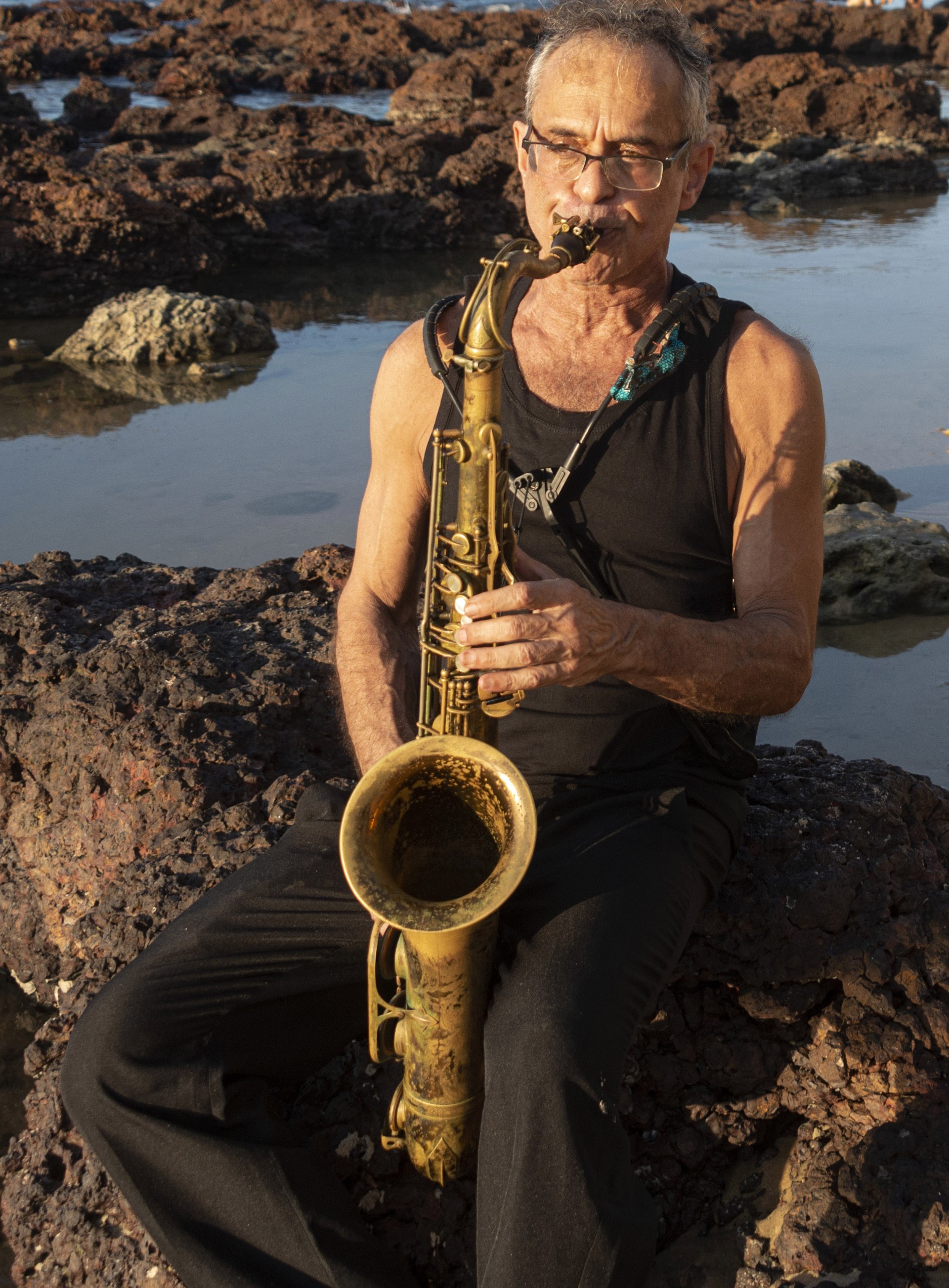
Photo by Celso Oliveira
  1.  What is your greatest joy in improvised music?

    The childish playful soul cleansing nature of total improvisation.

  2. What quality do you most admire in the musicians you perform with?

    Their total "in the moment" availability and commitment to very demanding art form.

  3. Which historical musician/composer do you admire the most?

    Heitor Villa Lobos

  4. If you could resurrect a musician to perform with, who would it be?

    Cecil Taylor

  5. What would you still like to achieve musically in your life?

    Achieve even more control of the many musical parameters while being able to be totally in the moment.

  6. Are you interested in popular music and - if yes - what music/artist do you particularly like

    Yes, I am. I enjoy listening to Brazilian pop music like Roberto Carlos.

  7. If you could change one thing about yourself, what would it be?

    I would like to be less critical of my own playing.

  8. Which of your albums are you most proud of?

    Ivo and Seven Skies Orchestra

  9. Once an album of yours is released, do you still listen to it? And how often?

    Very rarely

  10. Which album (from any musician) have you listened to the most in your life?

    A Love Supreme - John Coltrane

  11. What are you listening to at the moment?

    12 guitar etudes by Villa Lobos

  12. What artist outside music inspires you?

    Helen Frankenthaler, painter


Ivo Perelman reviewed on the Free Jazz Blog:

  • Ivo Perelman and Matt Moran - Tuning Forks (Ibeji, 2023)
  • Ivo Perelman and Nate Wooley - Polarity 2 (Burning Ambulance, 2023)
  • Ivo Perelman and James Emery - The Whisperers (Mahakala, 2023)
  • Ivo Perelman - Molten Gold (Fundacja SÅ‚uchaj, 2023)
  • Ivo Perelman and Matthew Shipp - Tryptich I - III (SMP, 2023)
  • Ivo Perelman and Joe Morris - Elliptic Time (Mahakala, 2022)
  • Ivo Perelman - Reed Rapture in Brooklyn (Mahakala Music, 2022)
  • (D)IVO Saxophone Quartet (Mahakala Music, 2022) ***½
  • Ivo Perelman - Brass and Ivory Tales (Fundacja Sluchcaj, 2021) *****
  • Ivo Perelman & Nate Wooley - Polarity (Burning Ambulance, 2021) ****
  • Ivo Perelman and Matthew Shipp - Special Edition Box (SMP, 2020) ****½
  • Ivo Perelman: A Musical Storyteller - a film by Leonel Costa (2020)
  • Ivo Perelman - The Purity of Desire (Not Two, 2020) *****
  • Ivo Perelman, Matthew Shipp and Joe Morris - Shamanism (Mahakala Music, 2020) ****
  • Ivo Perelman/Pascal Marzan - Dust of Light / Ears Drawings Sounds (Setola di Maiale/ Ibeji, 2020) ****
  • Ivo Perelman and the Arcado String Trio - Deep Resonance (FSRecords, 2020) *****
  • Ivo Perelman and Matt Shipp - Amalgam (Mahakala Music, 2020) ****½
  • Ivo Perelman is Prolific in His Creativity: An Interview with Ivo Perelman
  • Reflecting upon last decade's musical influencers
  • Ivo Perelman and Matthew Shipp - Live in Nuremberg (SMP Records, 2019) ****½
  • Ivo Perelman and Matthew Shipp - Efflorescence Volume 1 (Leo Records, 2019) ****½
  • Solo percussion & percussion duets and even more percussion
  • Ivo Perelman - Ineffable Joy (ESP Disc, 2019) ****1⁄2
  • Ivo Perelman - Strings 4 (Leo, 2019) ****
  • Ivo Perelman and Rudi Mahall - Kindred Spirits (Leo, 2018) *****
  • Ivo Perelman & Matthew Shipp – Live In Brussels (Leo, 2017) *****
  • The Art of Perelman-Shipp (Leo Records, 2017) – Part Two
  • The Art of Perelman-Shipp (Leo Records, 2017) – Part One
  • Vision Festival 2017 - Day 6: Seeking Optimism
  • Ivo Perelman & Matthew Shipp - Le Poisson Rouge, May 7th, 2017
  • The year in review
  • The Art of the Improv Trio (3 of 3)
  • The Art of the Improv Trio (2 of 3)
  • The Art of the Improv Trio (1 of 3)
  • Ivo Perelman & Joe Morris – Blue (Leo Records, 2016) ****
  • Ivo Perelman, Matthew Shipp, Michael Bisio, Whit Dickey -- Soul (Leo Records, 2016) ****
  • Ivo Perelman and Matthew Shipp - Corpo (Leo Records, 2016) ****½
  • Perelman/Maneri/Morris/Cleaver - Breaking Point (Leo Records, 2016) ****
  • Ivo Perelman and Karl Berger – The Hitchhiker (Leo Records, 2016) ****½
  • Ivo Perelman Week
  • Three more from Ivo
  • Three from Ivo (3 of 3)
  • Three from Ivo (2 of 3)
  • Three from Ivo (1 of 3)
  • Ivo Perelman galore ....
  • Ivo Perelman / Joe Morris / Gerald Cleaver - Living Jelly (Leo, 2012) ****½
  • Latest from Leo (Part 2 of 3)
  • Sax, piano, drums ... free expressions from around the world
  • Gerald Cleaver : drummer by nature
  • Ivo Perelman and friends
  • Ivo Perelman - Mind Games (Leo Records, 2009) ****
  • Ivo Perelman & Dominic Duval - Nowhere To Hide (Not Two, 2009) ****
  • Sax trio
  • Saturday, December 28, 2013

    Ivo Perelman galore ....

    By Stef

    So far, I think we've reviewed about ten albums by the Brazilian sax player; but New York resident, Ivo Perelman, a musican close to my heart, because of his ferocious lyricism, his raw and sensitive energy, his authenticity as an artist and as a human being. Like with so many musicians, this reviewer would love to write about all his releases, but his output has been so prolific recently, that it's hard to catch up, let alone invest the necessary time for close listening and concentrated reviewing. I can refer readers to the great Discogs website, and you will notice with me that Perelman released no less than a dozen CDs in 2012 and 2013, some of which were reviewed on this blog.

    Recent highlights are "The Foreign Legion" with Matthew Shipp and Gerald Cleaver, "Living Jelly", with Joe Morris and Gerald Cleaver, "The Hour Of The Star" with Joe Morris, Matthew Shipp and Gerald Cleaver.


    Ivo Perelman & Matthew Shipp - The Art Of The Duet (Leo, 2013) ****


    Perelman and Shipp crystalise their long musical collaboration in the most intimate of performances, a duet between piano and sax. Without preparation, both musicians set to the task of co-creating their art of the duet, one of close listening, like-minded thinking and perfect inuition, and of course strong musical skill. This is not a romantic outing, but actually a rather harsh one at times, with abstract phrasing and timing.

    And both men co-create from a common background in jazz, with references to known pieces. Is that Jobim in "Duet #8"?, or Ellington in "Duet # 11"? or Gillespie in "Duet #9"? Hard to say because the boundaries of harmony and melody are blurred by higher levels of abstraction, yet they reside unmistakably underneath the chords and phrases, like spirits from the past pushing these two masters forward in their exploration of interaction, of call and response, of cerebral games and emotional alignment and expressivity.

    In contrast to some of the other albums reviewed here, the energy is somewhat lower, with both musicians respecting the classical chamber music setting.


    Ivo Perelman, Joe Morris & Balazs Pandi - One (Rare Noise, 2013) ****½


    "One" is a really ferocious album, with Joe Morris on electric bass and Hungarian drummer Balazs Pandi on drums, a sax trio in the best free jazz tradition, an album that kickstarts as if in the middle of a performance, no intro, no theme, just raw blowing and relentless attacks on strings and skins. The second and third track are somewhat calmer, and more lyrical, with great pulse and implicit rhythm, the kind of foundation which makes it possible for the saxophonist to move in any direction without restrictions.

    The title track is a duo between sax and bass, sensitive and wild at the same time, but then the last two tracks the trio is back in full force, relentlessly, with all three musicians moving as one, including the sudden slowing down on the last piece, a strange breathing moment before the storm starts raging again.


    Ivo Perelman, Matthew Shipp & Mat Maneri - A Violent Dose Of Anything (Leo, 2013) ***½


    "A Violent Dose Of Anything" is actually the soundtrack for a Brazilian movie with the same title, released earlier this year as "Uma Dose Violenta de Qualquer Coisa", and the music is of an abstraction and dissonance that is hard to make compatible with a movie. Matthew Shipp's piano chords and phrases are among his most unusual, full of openness, lack of pattern or direction, a strange backdrop for both sax and viola to play with strange undercurrents of surprise and disorientation.

    But then if you read the plot summary of the movie "Pedro has taken the road and he does not know where he is going. Lucas does not know it either", the music makes sense. Next to the wonder and disorientation, there is drama, but also some fun moments, when a sudden rhythmic pattern makes the three musicians join in a little dance, that disappears as quickly as it arises. 


    Interestingly enough, the strange, floating quality of the music is maintained throughout the album, making it a very coherent, and special listening experience. 


    Ivo Perelman, Shipp, Bisio, Dickey - The Edge (Leo, 2013) ****


    "The Edge" is offered to us by a quartet with Perelman on sax, Matthew Shipp on piano, Michael Bisio on bass and Whit Dickey on drums. The album starts with arco bass and a romantic sentiment coming out of Shipp's piano, forcing Perelman to move in an almost David S Ware style into the stratosphere, full of expansive howling to the universe, full of power and confidence, in sipiritual awe.

    On the second track, they're back on earth, starting with some 60s jazz feelings, but rapidly evolving into soaring sax and intense rhythm section, into the essence of real free jazz, but Perelman is not a screamer, quite to the contrary, despite his ferocious energy, his tone remains warm, and throughout his soloing he comes with melodic phrases or rhythmic emphasis, playing with volume and speed, offering lots of variety and beauty on top of the intensity.

    And the album has variations in line-up too. Two tracks are actually duets between sax and drums, one of sax and piano. These three tracks are also the calmest ones, and near the album ends in full force, in the aptly titled "Volcanic", and the last track is an ode to Ben Webster, called "Websterisms", with again a 60s sentiment, but a 21st century delivery.

    This is Perelman at his best, and I must say, all four musicians are fantastic on this album.


    Ivo Perelman, Shipp, Dickey, Cleaver - Enigma (Leo, 2013) ****


    For a quartet that features two drummers, the album starts quietly, with a ballad called "Enigma" on which Perelman and Matthew Shipp share sensitive thoughts, fragile and slow, with a minimal percussion support, a few cymbals, some toms, nothing substantial.

    "Irresistible Incarnation" starts with some dramatic piano chords, with bluesy right hand runs, but Perelman joins almost against the intro, with rapid phrases breaking the sentiment, supported by the energetic propulsion of the bass drum, slowly growing in power until both drummers are active, with counter-rhythms and antagonistic interations, playing the same thing, yet full of cross-currents and whirlpools, with changing emphasis, volume and intensity.

    "Annunciation" is only full energy, a solid work-out for the quartet, with Shipp resorting to some of his most percussive playing too, hammering on his keyboard, supporting a screeching and howling Perelman, and sentiments change again with "Supernatural Life", a slower piece, yet with relative energetic drumming, two-timing the piano and sax. Then Shipp and Perelman play two duets, the first one slowly, the second one with somewhat chopped and unpredictable rhythms and evolution, as if some madness forces the two artists to jump and turn for no apparent reason.

    The album ends with the powerful "A Bourgeois Ideal", not without reason placed at the end of the album, and a great finale for a strong album.


    Ivo Perelman, Matthew Shipp, William Parker, Gerald Cleaver - Serendipity (Leo, 2013) ****½


    But in truth, "Serendipity" is the greatest album of them all. Just one track, a fourty-three minute free jazz blow-fest, expansive, exuberant, relentless, with references to bop somehow, with references to Coltrane in spirit, but Perelman, Shipp, Paker & Cleaver in reality, with the four virtuosi giving the best they can give, driving, propulsing the music forward, full of intensity and unavoidable necessity of notes and rhythms that are what they should be, hammering and pounding and uplifting and tearing and moving, without pretence, without cerebral intervention of chords or phrases that think about harmonies or structure, or clever creativity, no, a wild outburst of pure heartfelt musical energy, expressing things that we all would like to express but lack the means to, making this even more valuable, the thing we would express if we had the same skills as these four guys, so that makes it good to hear, a quartet in unison with the listener's emotions and deeper aspirations, releasing unexpressed feelings and even shady things hiding between feelings and thoughts. In a way, this is the band that goes beyond self-consciousness, that stops thinking, but fully falls back on some more foundational, some rawer and authentic expessivity, in a denial of the cerebral, lifting the music to a level of absolute purity and energy.

    Saturday, July 8, 2017

    The Art of Perelman-Shipp (Leo Records, 2017) – Part One

    By Tom Burris

    Several months ago I read an interview with Matthew Shipp, during which he stated his intention to cease recording. The reasoning behind his decision was primarily that live performance is where improvisation lives (true enough) and that recording in the studio no longer felt like a necessity – so he planned to simply stop doing studio sessions. He has made this kind of claim before; so I’m not sure how long the sabbatical will last – but one thing we do know is this: This set of seven recordings with longtime sparring partner, the great Brazilian saxophonist Ivo Perelman, may be the last studio discs to appear with Shipp’s name on them for quite a while.

    It seems fitting that this collection of recordings is scheduled to be his last, as it is a monumental exploration of Perelman and Shipp as a duo – and the sounds that transpire when other musicians join their extremely unique and personal dialogues. So why not a box set? Box sets tend to signify either something epochal or stand as a summary of artistic achievement after a particular era of events has passed. These individual sets of improvisations are simply new dialogues in new settings taking place in the here and the now. They stand as individual documents. Having said that, fans of either man and/or the duo will want them all regardless of packaging.

    Thematically, the discs and their titles are centered around an astronomical phenomenon known as the Saturn Return, which both men feel is an active force in their lives and in their musical relationship to one another.

    Volume 1: Titan (Parts 1-6)   ****1/2


    Ivo Perelman – tenor saxophone
    Matthew Shipp – piano
    William Parker - bass


    It’s interesting that Volume 1 begins with Shipp’s old bandmate from David S. Ware’s quartet, bassist William Parker – because (I’m jumping ahead here) most of these groups center around Perelman & Shipp as a duo. In this trio, Shipp often splits alliances between Perelman & Parker. On Part 2, for example, Shipp & Parker hang stars in the sky while Perelman shoots at them from the moon. (Hey, I saw it.) Soon after, the core duo of Perelman-Shipp locks down, leaving Parker to play against them as a solidified unit.


    When all three players take equal part in the exploration it’s especially thrilling. On Part 4, they successfully attempt to compose a Brecht-by-way-of-Lester-Young ballad on the fly. Naturally, it ends as something else entirely – but as something unique and complete as a whole. Part 5 also begins with all three musicians functioning as a creative trio, playing in a style I’d call more “conventionally free” as opposed to the more painterly pieces that precede it. Shipp & Parker get an extended spot together, before Perelman joins in again and switches the dynamic back to Perelman-Shipp with solid support from Parker.

    Part 6 is all over the map. It opens with Perelman playing mournful vibrato notes almost to the point of parody, with Parker’s arco bowing adding to the pathos. Shipp’s support, naturally, is melodic and sedate. By the five-minute mark, the trio has joined together as one playing a free jazz rembetika of immediate origin. Shortly after this, Parker is leading with a bop-era bass line, sparking Shipp to respond with an angular avant riff, over which Perelman invokes the spirit of '70s Arista-era Braxton. There are also hints of the blues, marches (Braxton again), and Perelman sounding positively soulful during some amazing runs. I’m not sure how it holds together as a single piece, but it’s a wild ride.

    Volume 2: Tarvos (Parts 1-7)   ****


    Ivo Perelman – tenor saxophone
    Matthew Shipp – piano
    Bobby Kapp – drums


    Bobby Kapp’s lightness of touch is a perfect complement to the approach of the Perelman-Shipp duo. Even when things get dark or heavy, somehow Kapp remains light – and that doesn’t mean soft. It’s more of an air of optimism – an openness and natural positivity. It is his general demeanor that allows for magic moments to happen – like the one in Part 3 where the trio comes together in a way that sounds entirely composed. And FYI – Kapp and Perelman never played together before this date!

    Typically, the dynamic throughout most of this session is Perelman-Shipp allowing itself to be driven by Kapp. Part 6 is the standout piece, opening with gorgeous balladry from Shipp which picks up in intensity after Perelman and Kapp add their contributions. A time-signature is established for a short while, but quickly dissipates as Perelman’s melodic sense becomes one with Shipp’s arpeggios and chord voicings. Kapp holds his own as Perelman and Shipp kick the music up into a Trane/Tyner intensity. Beautiful.


    Volume 3: Pandora (Parts 1-6)   ****


    Ivo Perelman – tenor saxophone
    Matthew Shipp – piano
    William Parker – bass
    Whit Dickey – drums


    Now we have Ware’s entire rhythm section w/ Perelman in the sax chair. This is the one I was most curious about, so I started with this one. It did not disappoint. It gets intense with three guys kicking up the saxophonist's ass – and Perelman’s not tough in the same way that Ware was, so how is this gonna pan out? Shipp again does double duty, playing as part of the Ware unit & moving in and out of the Perelman-Shipp model. As Ware-Perelman, the entire rhythm section rumbles as it creates storm clouds on which Perelman rides. Part 2 opens this way, but is disrupted a couple of times as Perelman-Shipp comes out. Shipp has a lot of pressure on him to perform this delicate balancing act, but it’s the man’s job & he is not one to underperform.

    Midway through the disc, Perelman has become comfortable enough to relish the energy of the band & interacts enthusiastically with the players individually. He is investigating the machinery, kicking the tires, swooping down on the musicians to get their reactions. Perelman is trying to find his way of dealing with the Ware group’s collective power. He finds it eventually – and it’s where you think the group would’ve started from anyway (but they didn’t). Dickey and Parker hold Shipp up. Shipp holds Perelman up. That’s it! It takes them half the disc to get there – but I wouldn’t have wanted to miss out on all of the experimentation that happened previously either. So it’s win/win, really.

    Volume 4: Hyperion (Parts 1-10)   ****


    Ivo Perelman – tenor saxophone
    Matthew Shipp – piano
    Michael Bisio – bass

    The trio begins tentatively, in a curious and patient mood. Snippets of songs peek through the cracks only to vanish quickly from view. The musicians begin to play angular runs that do not seem to fit together at all – until the ears adjust. Naturally, it gels into another beast entirely. Bisio plays busily while Shipp alternates between runs and block chords. Perelman, as always, is searching for the melody within. Bisio suits the duo as well as Parker did, but Bisio is not as aggressive.

    Shipp fans, you get short but complete solos on Part 5 and Part 9. They are both bits of automatic composition that my notes say “could be 30 minutes longer.” I stand by that!

    Part 6 barely contains its own energy, with restless rooting from all three players until they become one six-armed, six-legged cyber-insect digging its way through silent corners and infecting them with gigantic SOUND. Perelman is still trying to locate melodies – even at this pace – which is, of course, futile.

    Part 7 finds Shipp dropping surprise chords like they’re just spilling out of his pocket – and Perelman and Bisio adapt quickly and easily like the total pros they are. In fact, Perelman delights in this shit – singing like a magnificent bird of prey. He stays in this mode on Part 8, flying around the other two continuously. By Part 10 things have run a little amok, with Perelman-Shipp moving at top speed and Bisio struggling to keep up. It’s the only track where Bisio appears to be a third wheel – and for this reason, I kinda wish they wouldn’t have closed with it.

    Tuesday, June 10, 2025

    Ivo Perelman: Leo Records Backcatalog Reissue

     
    With the reissue of Leo Records catalog digitally by Burning Ambulance, a total of of 68 albums that saxophonist Ivo Perelman released with the label will eventually be made available. To explore the bounty, or at least to get a taste, I asked the saxophonist to do the dubious task of picking out five recordings that he felt stood out in some way and to talk about his picks and what they mean to him. 

    1. Sad Life (1997) 

     
    Paul Acquaro: The first one is Sad Life from 1997 with drummer Rashid Ali & bassist William Parker. What struck me immediately is that this is the rhythm section from the FMP release Touchin' on Trane from 1993 with Charles Gayle. How did this recording come to be and what does it mean to you now?
     
    Ivo Perelman: I used to see Rashied at Bradleys (an East Village piano bar in the 90s) but never dared talking to him as I was so in awe of his playing. One day, I bumped into him on 14th street and started to talk and couldn't help but ask if he would do a trio CD with me and William, with whom I had been playing for a while. He promptly agreed.
     
    The studio session was transcendental! I traveled back in time when Coltrane was alive and felt that creative powerful energy that fueled many of his sessions with Rashied.


    2.  Seeds, Vision and Counterpoint (1998)


    PA: Next, we have Seeds, Vision and Counterpoint from 1998 with Dominic Duval on bass and Jay Rosen on drums. I suppose one thing that sticks out to me is that Duval and Rosen are a tight duo and with say Joe McPhee perform as Trio X among other configurations. On listening, I noticed that your tone is a little different here, a bit sharper and concise than on Sad Life, am I just making this up? Anyway, how did you get involved with this duo and what sticks out to you about the album?
     
    IP: Seeds Vision and Counterpoint took place at a tiny rehearsal/recording studio in Long Island and the idea was to just get together with Duval and Rosen and play some since we had never played before. They had spoken to me a few days before the session and we decided to do it in Long Island near Duval s home.
     
    This session was explosive from the get go and it started a long series of concerts and CDs. We had an instant, natural exchange and non-stop flow of ideas (the sharp tone of the sax was duo to a series of sound studies I was interested at the time). 


    3. The Edge (2013) 

    PA: Third, we have The Edge from 2013 with pianist Matthew Shipp, bassist Michael Bisio and drummer Whit Dickey. This is like the crème de la crème of the New York creative music scene. I couldn't help notice the explosiveness of the opening track 'Clarinblasen.' What was it like playing with these three and why did you choose this album for the short list?

    IP: I chose The Edge with Bisio, Dickey and Matthew Shipp to be in this short list because it started a series of albums investigating Matthew Shipp in quartet situations. Whenever Matthew Shipp is in a quartet classical quartet with sax, piano, drums and bass, he turns it into a Matthew Shipp Quartet experience, and it's a beautiful thing. He plays slightly differently depending on the members of the quartet. That one in particular is the classic Matthew Shipp Quartet, I would say, and we did a second one because I felt that was very fertile terrain for further investigation and it was me testing my powers, I would say against, like you say, a classic creme de la cremecreative group of musicians in New York.

    So, keeping up with the concept of Matthew Shipp and a jazz quartet, I changed one at a time. Instead of Michael Bisio, I had another bass player, and then instead of Whit Dickey, I had Gerald Cleaver and I kept moving around, but what triggered that investigative period was that first album, The Edge
     

    4. Reverie (2014)

    PA: Now, we're looking at the expressive Reverie from 2014 with vibraphonist and pianist Karl Berger (who works only the piano on this album). You have at least one other recording with Berger, The Hitchhiker. Berger was a very influential figure in the improvisational music world, including with his organization Creative Music Studio which continues today under the direction of Billy Martin. What was it like working with Berger and what about this recording helped make this wonderfully subjective list?

    IP: The duo with Karl Berger on piano disarmed, me, disarmed. I was ready for more notes, more harmonies, density, but his playing was so light and lyrical and beautiful that I dropped my guns and just gave myself to the music and surrendered to the simplicity, the lyrical beauty of his notes and phrasing. It led me, like never before, to a kind of a lyrical pursuit in that gorgeous doesn't mean corny or commercial. Gorgeous is just gorgeous. The melodies floated around like snowflakes on a beautiful, sunny winter afternoon. He was truly remarkable musician, very generous, very open minded. We just shook hands, said nice to meet you, and started playing. And there were some pieces, some of them were in C-minor that I still remember the feeling of and how they affected me. That particular session changed, changed my playing forever.

    Whenever I feel a Karl Berger moment with whomever else I'm playing, I let it flow. I let it take possession of my playing, and I honor and cherish it. He taught me that, he was a great master and a great teacher even when he was only playing. 
     

    5. Callas (2015)


    PA: The album Callas from 2015 with Shipp is one of the many duo recordings you have made together. Our former contributor Colin Green wrote about this album when it came out, writing "There’s no doubt that on this album Maria Callas has inspired a heightened sensitivity to things that are often overlooked, providing a springboard for some truly remarkable playing. It’s a masterclass in the control of dynamics and subtle shading." Can you tell us about the importance of Maria Callas to your playing and what this album means to you?

    IP: Callas played a very important role in my development as a musician because at the time I was suffering from uh throat problems, I was over practicing the altissimo register and doing it wrong.

    I had the sessions with the therapist who suggested I start to study vocals and opera singing with someone specialized in opera singers who had the same problem. I did get rid of the problem, and I also learned a lot about music. I started to play Callas’ music and got into some various arias, and it added a lot of subtlety to my playing. So, I phoned my partner Matthew Shipp, who is always the best counterpart to share my discoveries with, because Matthew is so open to anything. He's such a wonderful wide-ranging musician, and his music covers the whole gamut from Maria Callas to Charlie Parker to everything in between.

    So, this was the beginning of a very important segment of my career. Callas is remarkable because I was listening to her day in day out and even though I didn't exactly play the arias or the melodies, one is reminded of her pieces in someway. Somehow, I played like she sang. It is a truly remarkable album. 
     
     
    While it is nice to have this chance to look back, Perelman is an artist always moving forward. Tomorrow, Sammy Stein will review his next release, Armegeddon Flower with the Matthew Shipp String Trio.

    Monday, May 20, 2024

    Matthew Shipp and Ivo Perelman – Magical Incantation (Soul City Sounds, 2024)

    By Sammy Stein

    What is it about the musical connection between Matthew Shipp and Ivo Perelman? Both are accomplished musicians, and both can hold attention on their own, but it is when they record together that the heart of each musician is revealed just a little more. It is conceivable that due to the number of recordings they have made together, the time may come when the music becomes predictable. However, that time feels a long way off. Because both are complex musicians with multiple influences and the ability to execute changes of style, tone, and atmosphere in a heartbeat, the possibilities are endless – and while they may have explored a small section of their musical potential, Magical Incantations, out on Soul City Sounds on 3 rd May 2024, demonstrates they are not done yet. The duo finds more ways to interact, react, and interpret ideas. Their exploratory natures mean they bounce ideas off each other – some work, some not so much – but the intention to push the boundaries of piano and tenor saxophone and the way they combine and converse, means they find new roads to travel musically and seem to relish the different approaches.

    Watching the evolution of a musician is interesting and because Perelman records so prolifically with a range of different musicians, his journey is ongoing. Like Shipp, he has many influences and both musicians have a history steeped in musical education and experiences. On ‘Prayer’ for example, Perelman delivers a warm, melodic, introspective rumination and remains in the lower register, proving his respected altissimo is not the only register he can communicate in with profound effect. Shipp, meanwhile, intuitively contrasts with gentle counterpointed melodies on the piano.

    The music on this recording ranges from fast, gentle but furious anecdotes swapped and batted back and forth – such as on ‘Rituals,’ where Shipp lays down tricky rhythms while Perelman shifts from altissimo to lower register and back in full flow – to gorgeous, rounded sections such as those from both players on ‘Lustihood’. Musical intuition abounds on tracks including the stand-out ‘Enlightenment’ where Shipp delivers a wealth of ideas that Perelman takes, shapes, and throws across the top for Shipp to capture and reflect. The concluding section of this number is beautiful.

    On ‘Sacred Values’ there is an atmosphere of mystery and awe with both players introducing a sense of respect and almost tentative entry at times. The deep rolling piano provides the perfect backdrop for Perelman’s delivery at times, while at others, Shipp withdraws, leaving Perelman floating exposed across the top. The rising section is magnificent from both players as Shipp connects with what Perelman is doing and the texture and volume swells.

    ‘Incarnation’ is jumpy, forceful, and packed with energy, while ‘Vibrational Essence’ is as fugal as a two-part piece can be, with Shipp delivering classical-influenced lines transcending the keys in equal intervals and eloquent changes before Perelman enters.

    Magical Incantation is atmospheric, thoughtful, and subtly powered by Shipp as he introduces changes of key and emphasis, to which Perelman reacts in Perelman fashion with a series of switches, ascensions, and descents of the keys. His musical reflexes are on point.

    Perelman and Shipp have delivered another piece of their continuing musical dialogue – as beautiful and profound as much of their work before. Their multiple influences can be heard, from blues and classical music to freeform and complete improvisation and their ability to tell stories with music is a delight. One issues an invitation by pressing on with a distinct rhythm or pattern and the other either accepts the invitation and backs the other or invites the other to follow them as they diverge from the original concept – or maybe they come back to it. There is structure to the pieces however and they are not simply improvised meanderings that have no beginning, middle, and end. It is this structure that reflects the hardened learning of both musicians and displays their understanding of how music needs to make sense, to prevent it becoming simply noise. Shipp and Perelman prove music is a continuous journey and here, it feels as if two outstanding improvisers who understand each other have found the perfect partner to travel some of that journey with.

    Monday, December 16, 2019

    Ivo Perelman and Matthew Shipp - Live in Nuremberg (SMP Records, 2019) ****½


    By Sammy Stein

    Ivo Perelman and Matthew Shipp have released a live recording and it is something quite special. recorded at a live concert in Nuremberg in June 2019, it gives a real feel of how great live music should be. Set one is over an hour of discussion between sax and piano - and it is a discussion because, just as in personal interactions, the conversation veers between listening, answering, talking at the same time and then one steps out for a while whilst the other takes over. The early part consists largely of Matthew Shipp placing chords over which Perelman on his sax takes liberties, embellishing, telling tales and taking over in a breathless, excitable style. A little further in and the piano asserts its authority, slapping the sax down a tone or two, the sax continually offering cheeky responses, only to be put down again. The conversation continues, each taking lead, each sitting back but over the first section, neither player falls silent for more than a millisecond.

    What is interesting is how often the lead changes and how , though the sax takes the lead often, the piano leads for longer with Perelman gladly following, adding his quips and interjections but following mostly. Shipp occasionally introduces something completely different such as one section when Perelman is answering a particularly loud scale ascension and suddenly the piano is soft, quietly offering up rivulets of trickling sound, which is an incredibly effective way of re-taking the lead and for a minute or so the sax drops out, offering only breathy interjections into the falling, trickling, rivers of sound Shipp continues relentlessly.

    Then, the sax returns, cheekily juxtaposing the chords, ascending where the piano descends and creating its own apposite sine-waves of sound. This continues throughout much of the recording and there are sublime moments aplenty such as when Matthew Shipp hammers out series after series of chords and Perelman noisily free flows across the top, effortlessly splitting hairs in tempo and rhythmic changes, inserting sound into each and every space left by the chords.

    What comes across clearly is the relationship Matthew Shipp has to classical music, with his sometimes eloquent chordal progressions and melodies, the perfect apposite to Perelman's intricacies on the saxophone. It is as if this playing style breaks the chains which bound Ivo Perelman and with Shipp he unleashes an energy which surfaces as cheeky stut runs, blazing top notes and shrieking wails across the steadfast, rock-solid piano. Because it is a live recording and improvised over a large extent, the music will never be played this way again, and it is this quality of live performances which often make the decision to capture it or let it go an importance choice. In this case, it was right to capture because the listener is taken up, away and along with the two musicians who, whilst playing with the same reverence - and often irreverence- you might expect- are still occasionally tempered by remembering and respecting they have an audience - also live and within hearing distance.

    The ear-shattering explosions from the sax are perfectly off set by the heavy, thundering melodies going on under Shipp's guidance at one point, then at another the sax plays a beautiful melody across the top of well, space because the piano simply drops out, leaving Perelman on his own projecting melodic sound into the echoey space of a minute. Both players switch from staccato to legato, from stut to smooth in the case of Perelman and Shipp demonstrates his intuitive understanding of harmonics under the provocative, highly charged sax lines at times. Perelman uses the sax to speak, sing and shriek, mostly to great effect. he has that ability to switch his sound from that of petulant response to mature, well honed and melodic responses.

    This recording is a record of the date, the time and the place - Nuremberg June 2019 - where two great musicians who play in harmony - in the literal if not the musical sense -and the energy and intuition comes across much sharper than in a studio recording.

    Much is said of the quality of the performance when the audience insists they return and the pair deliver an encore - just over four more minutes of completely improvised, delicious, bonus music.
    Out of almost a quarter of a century of playing together, Matthew Shipp and Ivo Perelman have developed something of a psychic link when playing together - yet there is still a sense of more to come, more challenges to be explored and different combinations of the keys and in this live recording that sense of uniqueness comes across loud and clear.

    Sunday, May 14, 2017

    Ivo Perelman & Matthew Shipp - Le Poisson Rouge, May 7th, 2017

    Ivo Perelman, Photo by Susanne Baltes

    It’s a rainy Saturday here in New Jersey and I finally have a chance to sit down and think about last Sunday's release show for saxophonist Ivo Perelman's and pianist Matthew Shipp's latest set of releases on Leo Records, The Art of Perelman & Shipp. I've cued up Volume 3, Pandora, which pairs Perelman and  Shipp with bassist William Parker and drummer Whit Dickey, to set the mood.

    So it's a late show at Le Poisson Rouge in NYC. An intimate and extremely attentive audience is gathered, chatting and waiting for Perelman and Shipp to take the stage. They appear exactly at 9:30 and quickly assume their places. Perelman is in jeans and a crisp white button down shirt, tenor sax in hand, Shipp is in jeans and a black t-shirt facing kitty-corner from the audience at a Yahama grand piano. With a nod and no words, they begin.

    Matthew Shipp and Ivo Perelman, photo by Peter Gannushkin

    It's a gentle start, a lyrical and somewhat romantic melody rolls out of the saxophone. Shipp is hunched over the keyboard playing slow deliberate chords as they together set the baseline. Shipp begins picking up the pace, a slight push to which Perelman responds with a quick run, then rests on a long single note. With just piano and sax, it may seem that is a lot of empty space, but that is hardly the case, soon they work up to an early crescendo, piano intense like a crashing wave and sax coasting over the crest.

    The fluidity of their music is most striking. Throughout, Shipp's rhythm is riveting, keeping the music flowing, never stagnating. In a short solo passage, Shipp lets loose small melodic rivulets that quickly join into a steady stream. Then, Perelman re-joins, tossing out more and more jarring ideas. Rapidly ascending lines jump deftly between octaves, never losing the musical ebb and flow.

    After they ramp down from another intense moment, Perelman is in the midst of a solo passage and suddenly the reverent atmosphere is pierced by a squeaky door. In the pin-drop silence - aside from his horn of course - Perelman is nonplussed as he seamlessly reacts to the unexpected sound - maybe subconsciously, maybe not. 

    Shipp is now pawing at the keys, light and bouncing, his shoulders moving rhythmically as Perelman takes up the challenge and quickly finds the right rhythm to play. Soon, the pianist's body language changes, he becomes less buoyant. Perelman hits a few low blats before matching a sudden cluster of notes from the piano.

    The dynamic range that they work with is fascinating, the music is alive, sometimes growing a bit louder, sometimes just more intense. They eventually reach yet another peak, though this time the tension is heart pounding. Perelman is hanging out in the high register, an utterly gripping sound, and Shipp is all sustain and storm … finally it breaks. It seems like an effortless set, the music coming out of Perelman in a constant outpouring, achingly beautiful and abstractly challenging within just a few bars.

    Following the duo is Marco Cappelli's Italian Surf Academy with bassist Damon Banks and drummer Dave Miller. They are a power trio take on the Ennio Morricone spaghetti western genre. It's as excellent as it sounds, fun, raw, and striking a nice balance between composition and improvisation.

    The latest series of 7 CDs from Leo Records (The Art of Perelman-Shipp) sees the duo playing with peers such as bassists William Parker and Michael Bisio, and drummers Andrew Cyrille, Whit Dickey, and Bobby Kapp, in various combinations. However, the two don't necessarily need the help, as this release concert showed, the pair certainly are their own gravitational center. 

    Catching up with Perelman later, near the merchandise table, it seemed to be an obvious question to ask: after several sets of multiple album releases over the past couple of years (all on Leo), is there more to come? With a smile Perelman said yes … "until I’m out of ideas", which doesn't seem to be happening any time soon!


    Saturday, February 4, 2023

    Ivo Perelman and Matthew Shipp - Tryptich I - III (SMP, 2023)

    By Sammy Stein

    When Matt Shipp and Ivo Perelman play together nothing unusual happens – that is, nothing unusual for them. The synergy between the two performers feels as natural as breathing. After many collaborations, this pair of musicians lean into and interpret each other’s music in ways many can only aspire to. Triptych I to III (SMP label) were meant to be released as a cassette/LP/CD box with 150 drawings but plans changed so, while they recorded with imagery in mind, those images are created by the music itself.

    Which poses no problem. Triptych 1 is a journey through musical ideas, the pair swapping excerpts as they feel inspired, and pairing briefly from the dichotomy of sound. And while the pair play with such individuality that the listener might hear each instrument’s line as separate, in many senses there pervades a sense of oneness as the pair bounce off and react to each other. The tracks on Triptych 1 pose a problem in that dissecting them individually is nigh on impossible because one musical idea flows into another, the tracks feeling separated only by natural pauses and subtle changes in approach. From the thunderous piano on the second track where Shipp creates wave after wave of deep-noted gutsy piano, in contrast to Shipp’s almost playful quips and nuanced overlays of melody – which often dissolve into scale ascensions of staccato travels from one interval to another, to places where there is gentleness and contemplative playing, as musical thoughts seem to develop from the spaces and weave together to form multi-layered landscapes. The third track on Triptych 1 is an example of this, Perelman weaving delicate melody before rising to gutsy utterances over Shipp’s continual accompaniment with hardly a pause. On track four, Shipp’s classical style opening is counteracted by Perelman’s free-blowing, powerful exploration, and development into fast, furious phrasing over Shipp’s thunking piano.

    Stand-out moments on Triptych I are number five where both players swap and charge, lead and follow, Track six, where the playful to and fro is escalated and becomes something extraordinary in terms of interpretation and intuition and Track eight where both musicians show their gentler side, Perelman making the tenor sing across the top of Shipp’s gorgeous accompaniment.

    There are moments of lyricism, and times when Perelman’s playing verges on the deranged while Shipp maintains calm, his hypertension inserting a control and hold on Perelman’s sax escapades. Yet, the deception is complete. Perelman never loses the key of the root – well, hardly once.

    Triptych II consists of two longer tracks, each allowing Perelman and Shipp to explore deeper the suggestions introduced by one or the other. Side A is a quite beautiful investigative journey into firstly, the extremes to which a saxophone can be pushed and secondly, how an interpretive piano player reacts and pushes back at times to what is placed, musically before them. At times exquisite in its form, at others a musical argument as to which musician leads, the side is 17 minutes of interesting music, including one powerful section where Shipp slows things down, calms the space, and Perelman follows, creating for a while a dream-like atmosphere, Perelman creating breaks in the sax lines akin to breathing, with a couple of familiar tunes breaking in now and again. The art of silence is subtly shown here. Side B is almost straight jazz in some places, with a good dose of free exploration thrown in but a contrast to Side A in terms of harmonics and tonal development for the first section. Perelman then throws everything, and Shipp gleefully follows as the sax slips into and maintains holds altissimo phrases, dips down into lower register and, to put it simply, on this track, Perelman virtually takes wing.

    Triptych III is two tracks again and the artistic creativity continues as Shipp and Perelman take ideas further, stretch concepts and create musical pictures. Who needs drawings when you have two artists creating musical landscapes in your mind?

    Triptychs I, II, and III show the range of both Shipp and Perelman. There is a chemistry between the players that is palpable even to those unfamiliar with either. The danger of a musical pairing that has known so many recordings is comfort and familiarity and there is some of this because the playing of both is distinctive but Shipp and Perelman also show that familiarity with another’s playing can lead to increased constructive collaboration and trust. Perhaps this is the key to the music. From the hypnotic sections of Triptych III to the gentle and melodic phrasing of track number five on Triptych I, to the pared-back harmonies on Triptych II in places, or the complex layering of side A of Tryptic III, Shipp and Perelman produce music which never ceases to create wonder in the listener – and perhaps the musicians too.

    It is enjoyable to hear Perelman out of his familiar altissimo and delving into the depths of the tenor sax – proving a range of playing styles and absolute understanding and mastery of his instrument. Side A of Tryptic III is a work of art in itself and I defy anyone to find a pair of improvising musicians so tuned into each other as these.

    A triptych is defined as a work of art divided into three sections, each section can be folded shut or displayed open, or the entire work can be viewed as one. This description suits this work because, whether you hear each Triptych part singly or listen to it as a whole, it is art.


    Saturday, January 2, 2016

    Three more from Ivo

    By Derek Stone

    One of the best experiences in life is finding a new musician to love. It’s doubly rewarding when that musician has a discography as deep, wide and varied as Ivo Perelman’s. After being asked to cover three of Perelman’s new projects on Leo Records, I felt a fair bit of consternation - what could I possibly say about Perelman’s work that hasn’t already been said by someone with more expertise? But then I remembered: this is improvisational music! The modus operandi is constant expansion, leaps into the unknown, and missteps that land you somewhere far greater than your intended destination. Thus, I took a deep breath, and took a dive into the sonic world of these three incredible recordings.

    Ivo Perelman & Matthew Shipp - Complementary Colors (Leo, 2015) ****


    Recorded in May 2015, two months after the duo’s previous album (Callas, reviewed here by Colin Green), Complementary Colors continues their endlessly fruitful partnership. Like that album, the compositions were titled retroactively. This method of naming is perhaps not uncommon in the world of improvisational music, but in Perelman’s case, the titles seem to be frequently linked by some overarching theme or idea. For Callas, he chose the names of various roles that Maria Callas had played throughout her career. For this one, as evidenced by the album’s title, he chose colors that, when mixed together, negate each other to become a grey-scale color like white or black. When placed side-by-side, however, these same colors create a strong contrast; they appear more vibrant and alive. Likewise, the sounds and moods that Perelman and Shipp conjure up are enlivened by the contrasts between them. For instance, Shipp’s style is largely romantic; while he does occasionally let loose and tumble wildly over the keys, he is more apt to keep things relaxed and introspective. On the other hand, Perelman is inclined to take unexpected excursions, short jaunts that inevitably end up with the impassioned altissimo wail that has become something of a signature for him. However, he’s equally comfortable with a more conservative approach, offering full-bodied, languorous stretches of notes that suit Shipp well.

    The piece entitled “Blue” is, like the color whose name it shares, cool and crystalline, a self-contained structure carved from ice. Shipp’s chords waft beneath Perelman’s stately intonations like fog, imbuing the whole affair with an ethereal quality. “Red,” on the other hand, finds Shipp in a more playful mode, offering up spry runs and clusters. “Blue and Red” begins with Perelman’s lone saxophone, but Shipp soon joins in and pushes him to exuberant heights. Perelman’s explorations of the dynamic range of his instrument are consistently intriguing, largely because of how listenable they are. He is bold without ever being confrontational or brash. He wanders down circuitous paths, observing, examining, occasionally latching onto short phrases and elaborating them, occasionally abandoning them altogether - but through all of this, he always makes sure to maintain a coherent sense of melody. “Magenta” returns to the solemn refrains of “Blue,” but the passages are even more serpentine and winding, so that it’s difficult to guess where they might end up. By comparison, “Green and Magenta” is more straightforward, with the two employing repetition to give the piece a stuttering, jumpy sense of momentum. Closing the album, “White” is lovely and understated; Shipp’s playing is spacious and elegant, with Perelman making use of a rich vibrato that provides emotional heft to the piece. It’s a wonderful conclusion to a wonderful recording.

    Ivo Perelman, Mat Maneri & Tanya Kalmanovitch - Villa Lobos Suite (Leo Records, 2015) ****½


    Recorded in the same month, Villa Lobos Suite takes an entirely different direction. The lush and romantic stylings of Matthew Shipp are replaced with the bristling, dissonant work of violists Mat Maneri and Tanya Kalmanovitch. Maneri and Perelman have worked together before (on last year’s Two Men Walking, for example), and Maneri has done duets with Kalmanovitch, but this is the first time for all three of them to come together in a trio. Unlike the other two albums reviewed here, no titles were given to the pieces. It’s perhaps to easy to see why; while Complementary Colors and Butterfly Whispers display a range of moods and melodic themes, Villa Lobos Suite is relatively monochromatic - a single frequency with varying degrees of intensity. It’s dedicated to famed Brazilian composer Heitor Villa-Lobos, a man whose work Perelman has previously contended with on  1994’s Man of the Forest.

    This was the last record I listened to out of the three, and it was certainly rewarding to hear Perelman operating in such a different context - and what a context! Maneri and Kalmanovitch scrape and slide across the strings with unabashed ferocity. The interplay in which they engage has hints of Béla Bartók’s famed string quartets, with their idiosyncratic blend of the savage and the refined. It makes for an incredibly dense foundation, one upon which a lesser saxophonist would easily stumble, but Perelman doesn’t falter. In fact, he flowers. The three of them have a near-psychic bond, and they engage in an impeccable back-and-forth that, because of how responsive and sympathetic it is, sounds composed. Out of the three records, this was probably my favorite. While I love Shipp’s piano work and how well he and Perelman interact, this particular combination is more compelling, precisely because of how abstruse and enigmatic it is. It gives me the same feeling that Cecil Taylor’s best work give me - a sense that a new language is being articulated and worked out, right before my eyes (or ears, as it were). Highly recommended!


    Ivo Perelman, Matthew Shipp & Whit Dickey - Butterfly Whispers (Leo Records, 2015) **** 


    Two months later, Perelman and Shipp were joined by drummer Whit Dickey to record Butterfly Whispers. With composition titles referring to the processes of cultivation, fertilization, growth, and human sexuality, I came into this album with the expectation that it would be a little looser, warmer, and more unrestrained than Complementary Colors. Indeed, Dickey’s drums bring a restless energy to the proceedings that recall the first days of spring: creatures stirring, sprouts pushing through the soil and towards the sun. Dickey doesn’t direct the flow of the pieces in any forceful manner, however. For the most part, he’s providing a drifting pulse beneath Shipp’s unruly runs and Perelman’s cascades. The first piece, “Waiting,” is a lovely introduction: Shipp and Perelman ascend and descend the scale together almost teasingly before Perelman takes frantic forays into the altissimo register. Midway through, they align with each other again to produce a dramatic bell-like oscillation behind which Dickey sparingly taps. “Secret Garden” is a solo piece by Shipp that, despite the calm contemplation implied by the title, establishes a mood of quiet desolation. On “Almost Spring,” Shipp stays out of the picture completely, giving Perelman and Dickey time to engage in a rhythmic, exploratory dance. On the final composition, “Her,” Perelman offers his most impassioned blowing yet, thus ending the album on an indisputably euphoric note. This is a fairly short collection of pieces, but there’s a lot to dig into and enjoy.
               

    Wednesday, June 11, 2025

    Ivo Perelman & Matthew Shipp String Trio - Armageddon Flower (Tao Forms, 2025)

    By Sammy Stein

    Imagine. The world has self-destructed. Armageddon. People were begging the powerful to think, the bullies to rein in their power, and those who have everything to share with those who have nothing. They didn’t listen. Greed, power, desire, and a compulsion to control everything continued unabated until eventually Armageddon happened. Not a surprise, not unpredictable. Now there is nothing left. All is dark and still.

    Apart from a single flower. Among the dark, hidden deep within the rubble and detritus of what was once a beautiful world, is a flower – once named in binomial Latin with a genus and specific epithet, but now simply the Armageddon flower. Her body unfurls slowly, tentatively seeking the last tepid rays of sunshine that filter weakly through the dust and sediments that swirl above the Earth.

    Like angel rays, shafts of light caress this delicate little flower. The rays deliver not only light but also sound. The energy the flower needs to grow relies not only on earthly components for photosynthesis – carbon dioxide and water, but also on the energy music provides. At first tiny and insignificant, her petals tightly furled, the little flower begins to bloom, striving toward the light, phototropism compelling the leaves and stem upwards, geotropism pulling the roots deep into the soil, anchoring her to the Earth, seeking out nutrients that remain, allowing the flower to grow ever stronger.

    The power of this music enables the flower to grow and bloom ever larger, her golden petals casting a glow of hope and wonderful colour across the Earth.

    Sound like a fairy story? Maybe, but this album was created in a dream-like state, and the musicians felt truly drawn to create something far greater than Mankind’s weaknesses and compulsions had allowed.

    The music has a power of its own. Ivo Perelman and the Matthew Shipp Trio are the perfect vessels to channel this force. The Matthew Shipp trio comprises pianist Matthew Shipp (with whom Perelman has made over 40 recordings), bassist William Parker, and violinist Mat Maneri. All have performed and recorded together. The trio is teamed with Perelman, who brings the music together with his tenor saxophone, and like the others, shows fearless exploration and intuitive interpretation.

    Improvised music delivered by inexperienced musicians can convey nothing to the listener but the awkwardness of a musician not understanding how they and their instrument are a vessel whose purpose potentially has a higher calling than any teaching can give, if only they immerse and subject their spirit to what happens when they interact with others. Here, then, for anyone, is the ultimate lesson in doing that.

    On ‘Armageddon Flower’, each musician brings their immense experience, understanding, and connection to each other and those who listen truly. The lengthy tracks have time to develop, discuss, and seek an unfolding of the layers to enlighten and inspire.

    The intensity of this music is almost shocking – and so it should be, based as it is on the possibility of Mankind’s self-destruction and seeking to understand what lies ahead in the eternity that awaits us all.

    From the beginning of civilisation, Womankind (and Mankind) has been struggling with the inevitability of their death, and many philosophers have considered the destructive nature of our species. In this music, the destructive sits alongside hope, the ultimate beauty and power of even the tiniest scrap of life left, to flourish, blossom, and scatter darkness aside, as it grows in power.

    All four musicians are fearless in pursuit of perfect communication. On Armageddon Flower, the impossible is possible; what is out of reach is close at hand, and what was lost is found.

    At times, it feels not like the Matthew Shipp Trio with Ivo Perelman, but a well-melded quartet.

    As ever, the music is not set in time or length, and the conversations differ in intensity and emotion, but each is expressive. ‘Pillar of Light’ is a non-stop confluence of different streams, patterns, timing, and responses, particularly between Shipp and Perelman – something they naturally fall into as like-minded musicians. Storytelling is their forte, and on this track, the stories are urgent and essential, but the ultimate quietude is felt by everyone.

    ‘Tree of Life’ is intense, with billowing waves of sound that enfold the listener, carrying them as they take various sonic pathways leading who knows where. Shipp’s intensity on piano, coupled with Perelman’s tranced screeching at one point, feels like they are going to run out of notes. Ultimately, the conversation is brought back, the other musicians are included, and Maneri’s delicately positioned phrases create a texture and depth, along with Parker’s intuitive bass, so the music becomes fulsome and rich. Shipp and Perelman achieve an almost telepathic state where the piano lines echo and then contrast with the sax lines.

    ‘Armageddon Flower’ sets out as a powerful track, with staccato chords pumping from Shipp alongside melodic lines from Maneri and Perelman, before it evolves into a chorale of sounds with each instrument suggesting movement, another retracting and tracing another possibility, ideas exchanged, interwoven and discussed in this intimate and intense conversation – it feels like four artists of different styles decided to create a sonic mural with the essence of each of their art. Just beautiful.

    ‘Restoration’ is a dream of a track, with gentleness, contemplative elements, and an overarching sense of finality, as the title suggests, of restoration to peace and a grounding of the spirit.

    Armageddon Flower is an emotive album, but it is also exquisitely musical. Four musicians of this calibre could have chosen to seek solo recognition, dominate, or lead, but this is never the case. Leads are swapped, responses given, and there is a sense of true communication.

    Amid the spontaneity, the quartet never loses harmonic groundings. There is not only the close relationship and symbiosis of the musicians but also evidence of their differences in approach, interpretation, and responses to sonic suggestions.

    After over thirty years of playing together, separately, in duos, ensembles, and many different combinations, it is impossible not to be surprised that new perspectives can be heard in this music. It is as if the musicians, in spending time apart, then coming together, bring new learning and experiences, which are shared in music. This is deeply intense, madly evocative, and supremely well-worked music.

    Ultimately, the best way to try to understand what music means to musicians is to ask them. Of this recording, Perelman says,

    “This album is a landmark. I will probably not record again after this, the way I used to. I think I have reached the ultimate result with this band.

    The reviews have been outstanding. Luckily, many reviewers hear the importance, relevance, and uniqueness of this band, which propelled its effectiveness. Those are words from the musicians and critics, not just mine.

    The Armageddon Flower is the flower I believe will be left after self-destruction. That is how gloomy and dark I felt when I made this. Although the music brought me a lot of joy, I have been following a lot of World politics, which is awful.

    Many will understand how demineralised soils are, how vegetables are poor in nutrition compared to how they were just a few decades ago, how the health of the World’s population has declined, and how World health authorities manipulate facts and studies to be able to sell medicines that are not effective at all but cause more side effects. All that. So I felt very dark, and I think the world situation, as I am describing it, propelled the session to achieve its intensity. It is so intense that it is unbearable. At the same time, it is the freest album I have ever recorded. We all agreed. Matt Shipp can’t quite believe how free this is. The rhythm is so pliable and mercurial, it is ridiculous. I have never heard anything like it. And it is not just me saying this, I wasn’t even there. It was my fingers moving, channelling forces that were beyond my control. It was a dream – I woke up and the album was done. The same goes for everybody else. We feel incredibly proud and incredulous about how this album came about. I know I am always excited about my projects, but this is the one. This is a once-in-a-lifetime project.”

    Monday, November 4, 2019

    Ivo Perelman and Matthew Shipp - Efflorescence Volume 1 (Leo Records, 2019) ****½

    By Sammy Stein

    Efflorescence Volume 1 is a 4CD set from Ivo Perelman and Matthew Shipp. Already recorded for later release is Efflorescence 2. Shipp and Perelman have been together on many albums and 7 feature just the two musicians. Efflorescence is a term used in chemistry and means to flower out - it happens when hidden salts gather on the surface of a material so the title seems apt. There is both a chemistry between these musicians and a flowering of their art and revealing of their hidden depths over the 4 CD set which is Efflorescence 1.

    CD 1, Track 1 is a conversation of 2 instruments, each travelling their own pathways but converging in harmonic agreement at differing points. Perelman seems to be taking his saxophone into almost melodic realms whilst Matthew Shipp offers dissonant chords and also melodic lines which contrast beautifully with the saxophone workings. Track 2 sees even more melody from both players, whilst Track 3 sees a more familiar Perelman/Shipp discursive entree with Perelman veering from altissimo to lower register and Shipp creating crescendos of scale progressions underneath, coupled with interludes where both q and a across the registers of both piano and sax. Track 4 is atmospheric, gentle and spacey, Perelman's suggestive notes providing pivots for Matthew Shipp to hang his chords on before the track builds into a breathy altissimo sax line, under which Shipp supports with chords predicting the sax notes. Track 5 is energetic and a simplex of complexities swapped between the two players whilst Track 6 has a lot of Brotsmann-esque sax talk over gentle interspersed notes and chords from the piano. Track 7 is sax led, Track 8 piano led and in this one the sax follows the chordal landscapes set out by Shipp. Track 9 introduces an almost swing atmosphere, both fast and slow and then Track 10 is a piano led rhythm-infused number with Perelman's sax picking up the leads provided by strong and linear chord lines. Even the off-notes are perfectly placed here, making it clear that some intuitive playing is happening. Track 11 has breathy sax lines over piano trinkles and track 12 is verging on the melodic again as Perelman shows his gentler side over Shipp's classically lined chords. Track 13 is gorgeous with contrapuntal rhythms played by both instruments, whilst Shipp intersperses his with heavy, deep chords. The final track on CD1 sees Perelman once again speaking volumes in altissimo over contrasting well worked chord progressions from the piano, thunked out with style.

    CD 2, track 1 is a great opener and wake-up number with piano offering chunky, heavy chords over which Perelman soars on tenor. Track 2 misleads at the outset with harmonies aplenty before each instrument diverges, Perelman treading his own redolent pathway over the steady classic lines of the piano. The ending has a madrigal atmosphere at one point which works well before a controlled descent to the end. Track 3 sets off at a jazzy swing with Perelman using a repeated riff, unusual for him, over Shipp's well placed chords and lines - that is before the sax leads up and away and Shipp changes the chord lines to lower, emphasised scale descents. Track 4 is busy, with Perelman's altissimo lines in contrast with deep register notes from the piano for the most part until the sax solos into breathy final notes. Track 5 and 6 are on-going conversations between the 2 instruments with track 6 being particularly verbose from the sax. Track 7 is gentler but not easier, with counter-rhythms from Shipp over which the sax melody flows, held in check by the emergent chords which rear from the piano. Track 8 is a maelstrom of sound initially, crashing piano and sighing, singing sax but it settles into a quirky and dissonant conversation, each instrument seemingly following the other, though it is not clear which is doing what at times. Perelman's control in altissimo is impressive here. Track 9 is more melodic from both players, whilst Track 10 and 11 see a return to the more conversational style which is familiar between the two musicians here.

    CD 3 Track 1 is a surprise because Perelman is indistinctly melodic mode- at least at the start, before his innate creativity gets the better of him and the sax is let loose, soaring over the strong chords from the piano. Track 2 begins with crashing, crushing chords from the piano, over which the timorous staccato of the altissimo lines come in before the sax line becomes more forceful and soon the sax is talking over the piano chords - challenging the noisy attitude with pertinent and perfectly placed cheeky notes inserted into any gaps. A lovely track and the unspoken communication can be felt between the musicians. Track 3 is almost a respite after that, a much gentler affair whilst Track 4 is gentler still, more melodic and harmonious - well, until half way through when it digresses before returning to gentleness. Track 5 is rather beautiful but in a different way as Shipp and Perelman take turns about setting the tempo and rhythms whilst Track 6 is more dissonant and includes a lovely forceful ascension from Perelman over some quite extravagant piano before Perelman counter sit with some buzzy, fast fingered work , finishing with altissimo. Track 7 is breathy, gentle and almost tuneful sax over equally gentle piano lines whilst Track 8 is breathless sax over rivulets of notes from the piano, developing into a competitive yet precise divergence with both players in upper registers, playing faster and furious before bringing it back down again. Track 9 is short, sweet and sees both players intuitively picking up each other's lead whilst Track 10 follows a similar pattern but with extended lines and heavier chords interspersed from Shipp, over which Perelman stuts in altissimo and flows beautifully in lower register. Track 11 is set out by gapped chords, providing Perelman the perfect opportunity to insert a melodic episode before both players have had enough of that and chords develop into crashes, the sax soars up and down the scales with tremolo notes at the ends and of course a bit of spoken altissimo. Sweet. Track 12 is part melody, part counter flowing harmonies whilst Track 13 is more of a free flowing conversation. Track 14 is gentle and harmonious versus ebullient in turns.

    CD4 Track 1 has all the essence of a funereal march before the sax sings across the top, adding 4 note phrases to lift the dirge-like piano chords. Piano catches on and changes to a lighter touch which is welcomed and the sax soars, creating some emotive lines. Track 2 is heavy from piano, light from sax which makes a great contrast for the ears, whilst Track 3 contains some great challenging sax lines overflowing the piano chords, which are progressive and classical. Track 4 is a lighter affair, with fast but light fingered sax workings over piano chords which feel like they walk the keyboard. Track 5 begins with a piano phrase over which the sax enters and takes the lead. The piano follows, setting the chords now and the sax follows - a case of perfect juxtaposition and turn about between the two players. Track 6 is easy on the ears from both players with melodic, high register sax lines and wavering notes over solid piano whilst Track 7 is faster, trickier and has a fun element sewn in amongst the crashing chords and tenor sax lines. Track 8 is interesting with short repeated melodic phrasing from the sax over intuitively placed chords and lines from the piano with a crazy but lovely section where both players playing their own challenging lines yet each is clearly acutely aware of what the other is playing. Track 9 is fun with piano setting up rivulets of deep notes over which the altissimo lines soar and play. Track 10 is more melodic from the sax, albeit with a twist - over and under which the piano gently assets its lead. A gentle manner with which to finish.

    There is intuition and sensitivity in the playing, an understanding between the musicians yet many times, the character of each emerges.

    Efflorescence has another meaning - in botany it is when a lot of flowers appear suddenly and this too might explain why each track has an alternative name - flower names. From Cosmos to, Rose, Amaryllis, Jasmine, Sage, Nightshade, Forsythia and more. The plants chosen range from climbers to thick set and sticky plants, from clinging tendrils to tiny demure florets, which seems very appropriate because the tracks on this 4 CD set are variable, each with their own form, their own life, differing energy and an overall tenderness which seems to seep into many of the tracks - possibly part of the musicians' subliminal characters perhaps? As such, Perelman and Shipp have taken different blooms, different fragrances and essences, some ornamental, some useful and just a few deadly. They have combined them into a bouquet and presented them to the listener, tied together with the ribbon which connects the musicians - improvisation, passion , energy and joy. The bouquet is beautiful, its fragrance divine but just be careful and watch out for the deadly nightshade. Excellent music indeed.