Click here to [close]
Showing posts sorted by relevance for query steven bernstein. Sort by date Show all posts

Monday, June 26, 2017

Sexmob - Cultural Capital (Rax Records, 2017) ****


By Paul Acquaro

For some reason, I lost track of Sexmob after 2003's Dime Grind Palace, and so after catching a show by another long-standing Steven Bernstein group "Spanish Fly" a couple of months back, I wondered why this was. Diving back in with Cultural Capital had me instantly a bit nostalgic for the late 90's/early 00's in New York when there were groups like Sex Mob, MMW, and Groove Collective mixing up off kilter grooves and stylistic mashups. This brings it all back, with Steven Bernstein's humor and musicality very much intact. 

Kicking off with 'Street', each member of the band is quickly re-introduced starting with the slick and subtle beat from drummer Kenny Wollesen, and the tandem melodies of trumpeter Bernstein and saxophonist (and guitarist) Briggan Krauss. Tony Scherr's bass is not far behind (musically speaking, its right on!) and at times Krauss' guitar adds a bit of bite. The song is a quick introduction to the recording and they are soon into 'Step Apache' in which Bernstein and Krauss play an infectious melody and counter melody over a sly mambo like rhythm. 

The short tunes come in rapid succession, each one distinct and tightly composed. For example, the mood become spiritual on 'Helmland' as Bernstein plays a heartfelt tune over forlorn accompaniment. '4 Cents' which begins with a wash of cymbals slowly picks up, turning into a pulsating groove. The next song seamlessly segues into some buzzing saxophone work, its sweet flow befits the name 'Syrup'. The rapid succession of songs keep the album moving along and pack in an incredible assortment of ideas and expression. 


Not exactly free jazz, but surely freeing, Bernstein and his crew in Sex Mob have dropped a fun and invigorating album with Cultural Capital. I'm happy I checked back in after so many intervening years!


Saturday, February 21, 2009

Steven Bernstein, Marcus Rojas, Kresten Osgood - Tattoos and Mushrooms (ILK Music, 2009) ****

Steven Bernstein is the master of traditional tunes in new clothes, of neat arrangements with a good sense of humor, yet often with more attention paid to the entertainment value of the music than to its artistic development. At times, the humor still prevails on this album, but it is much more refreshing and creative than much of what Bernstein has been involved in in the past years. He is accompanied by Marcus Rojas on tuba and Kresten Osgood on drums. The music is still rooted in tradition, with klezmer, folk, Latin, swing and blues often providing the backbone of the pieces, but the music is all about exploration, improvisation, interaction and musical expressivity. And it's good to hear Bernstein in this role. His playing on the slide-trumpet is excellent, Rojas is brilliant, filling in for the bass-line and often sounding as a bass, yet he also manages quite well to be the second horn too, adding musical color that works really well, as on the slow and somewhat dark "Scaramanga". Kresten Osgood is a drummer who deserves wider attention (more on him soon). Despite the obvious fun the three musicians have on some tracks, as on "So Lonely I Could Cry" or "Eastcoasting", other tracks bring deep melancholic feelings, such as "Khumbu". Nice. I wish Bernstein could continue in this vein. He has obviously more to bring than just entertainment.

Listen to Scaramanga.


Listen and download from eMusic.
© stef

Saturday, July 28, 2007

Nagl/Bernstein/Akchoté/Jones - Big Four Live (HatHut, 2007) ****

After the success (relatively speaking) of their first studio album "Big Four", the new live version is a more than welcome addition. The band consists of an odd group of musicians : Max Nagl on sax, Steven Bernstein on trumpet, Noël Akchoté on guitar and Bradley Jones on bass. Nagl is Austrian, and best known for his more avant-garde leanings, as is the French guitarist. Bernstein is a good mainstream trumpet player and excellent in musical arrangements and probably best known from his Diaspora CDs on the Tzadik label (and Sex Mob, of course!). Brad Jones is an American bass-player with references going from Don Byron and Marc Ribot to Elvis Costello and Sheryl Crow. And the chemistry between these four gentlemen is excellent, because their technical skills allow them to master all jazz forms and sub-genres, and they demonstrate this here with lots of tongue-in-cheek and respectful joy. The whole of jazz history is being dealt with here, from traditional 12-bar blues, over swing, bop, hard-bop to more modern styles, but then brought by an intimistic free-jazz chamber ensemble, that can swing if need be. Most tracks start with well-rehearsed tunes, just to set the stage, and by itself this is fun, because the melodies and their perfect rendition are a real treat for the ear, but it becomes even more fun once they start playing around with the themes, transforming them, throwing them around and receiving them back. Bernstein has the lion's share of the compositions and that's not really a surprise since his knowledge of jazz history is certainly the deepest, yet that he manages to stand his role in the more free moments is a surprise and good to hear. And the opposite is certainly true for Nagl and Akchoté : their knowledge of the more classical idiom is excellent and the ease and joy with which they handle the mainstream parts are great. And that's what the audience thinks too. It claps and cheers, and probably the longest during and after the long and exhilirating "New Viper Dance", in which Jones gets the opportunity to demonstrate the sensitivity of his bass-playing during a long solo. "Big Four" is probably the nicest composition, more modern, more free, more sensitive, and the beautiful serpentine soloing of the horns are solidly supported by the bass. "Muddy" evolves from a jazzy melody to a straight-ahead Muddy Waters tribute, with Akchoté playing sensitive pentatonic blues scales, great, nice, fun, and the support by bass and horns is simple yet effective. In sum, the musicianship, the interplay, the rhythm and tempo changes, the bouncing of themes, the joy, the call-and-response, the musical quotes from jazz history : this is all candy for the ear, an album to enjoy.

Monday, May 8, 2017

Mostly Other People Do the Killing - Loafer’s Hollow (Hot Cup, 2017) ****

By Lee Rice Epstein

Reprising (and revamping) their extended line-up from Red Hot, Mostly Other People Do the Killing continues their inside-out exploration of capital-J jazz on Loafer’s Hollow. Their most recent albums, Hannover and Mauch Chunk, showed two sides of the core quartet. The former, a kind of victory lap for the original pianoless quartet, is a barn-burner of a live album. The latter is a (relatively) kinder, gentler introduction to the piano-quartet lineup of Jon Irabagon, Ron Stabinsky, Moppa Elliott, and Kevin Shea. As they did on Red Hot, when Stabinsky first guested with the group, MOPDtK brings back the septet for Loafer’s Hollow, with Brandon Seabrook and David Taylor returning on banjo and bass trombone, respectively. Although it was always going to be a challenge to replace Peter Evans, I don’t see how they could have done better than bringing in Steven Bernstein. From Sex Mob and Millennial Territory Orchestra, to his Diaspora tetralogy on Tzadik, Bernstein is one of the forefathers of MOPDtK’s multilingual in/out style.

As incredible and seemingly telepathic as ever, Shea is probably the standout player of this album. How he manages to be everywhere at once and one step ahead of everyone is, frankly, astonishing. But truly, the highlight is, as always, Elliott’s singular compositions. This time around, Elliott aims for the swinging ‘30s, drawing inspiration from the Count Basie Orchestra. Frequently, Seabrook and Stabinsky guide the group through stunningly gorgeous dance-band phrasing, with Elliott . True to the era, if unusual for MOPDtK, all but one of the songs clocks in under five minutes. “Hi-Nella” and “Honey Hole” provide an opening one-two punch of intertwining melodies, countermelodies, harmonies, and genuinely fantastic playing. Seabrook and Bernstein set the scene with excellent solos on “Hi-Nella.” On “Honey Hole,” Irabagon and Taylor take lead, with Taylor playing a particularly excellent solo near the end.

“Bloomsburg (For James Joyce),” which opens a literary suite that makes up the bulk of the album, moves in and out of a series of romantic statements, recalling themes of love and lust in Ulysses. The rest of the literary suite includes tributes to Kurt Vonnegut (“Kilgore”), Thomas Pynchon (“Mason and Dixon”), Cormac McCarthy (“Meridian”), and David Foster Wallace (“Glen Riddle”). Taken together, as their authors often are, Elliott’s compositions seem to comment on each other, phrases and idiomatic references either recur or reappear in variations. “Kilgore” features an extended Stabinsky solo that turns Basie’s style on its head, while echoing his solo from Red Hot’s “King of Prussia” (to my ear, at least, there’s even a different Joe Jackson reference dropped here). Stabinsky’s piano serves as the bridge into “Mason and Dixon,” with Shea putting in some of his finest work on the album. For a song dedicated to McCarthy, “Meridian” is surprisingly restrained, leading into the wonderfully dense and reflective “Glen Riddle.” Seabrook takes a late solo, over some excellent Bernstein and Irabagon doubling.

On album closer “Five (Corners, Points, Forks),” MOPDtK pulls off a rather stunning trick, performing a literal sonic journey from mono to stereo, with everyone first in the high register, before shifting over to a full band, full-range attack in the second half of the song. The effect is MOPDtK in miniature, where decades pass in an instant, and boundaries that once seemed solid now melt into air.

Monday, March 22, 2010

Fight The Big Bull - All Is Gladness In The Kingdom (Clean Feed, 2010) ***½

I am not a fan of big bands, even small big bands, yet there are some exceptions. Some of Charlie Haden's albums for instance, or Carla Bley's. And this one : Fight The Big Bull. The Band started with an excellent, but all too short "Dying Will Be Easy", also on Clean Feed, two years ago. For their second album, Fight The Big Bull, led by guitarist Matt White, is a little more expanded. The band consists of Jason Scott, JC Kuhl and John Lilley on reeds, Bob Millier on trumpet, Reggie Pace and Bryan Hooten on trombone, Cameron Ralston on bass, Brian Jones and Pinson Chanselle on percussion. Eddie Prendergast joins on electric bass on one track. The featured guest star, composer and arranger is trumpeter Steven Bernstein, known from his work on Tzadik, the Sex Mob, MOT.

On the upside, Bernstein is a great slide trumpeter and arranger.

On the downside, it gives the album the same distant veneer of all Bernstein's work : great exercises in style and genre, with lots of attention to the entertainment factor and a demonstration of prowess that basically drowns feeling and authenticity.

The first album lacked some of the complexity of this one, but it was so heart-rending, authentic and majestic, full of dark drama, tragedy and deep-felt anger, whereas here, the element of distant playfulness is introduced, and it reduces the listening experience to something more middle-of-the-road. The band is still great, the playing good, but the end result is less compelling. I wish they had continued their original concept.

© stef

Wednesday, December 12, 2007

Max Nagl - Wumm Zack! Vol. 2 (Rude Noises, 2007) ***

Austrian saxophonist Max Nagl already brought us great joy this year with "Big Four Live", and now he's taking his music a step further in the region of great fun, with this traditional brass band and marching band music. Nagl does with European traditional dance music what Steven Bernstein did with Mexican and American traditional music : rearranged it, turn it into a jazzy version (but without the klezmer approach, of course), while keeping the fun and adding the unexpected ventures into more modern exploratory musical territory. The music was recorded by two line-ups, one in Belgium and one in Austria, with respectively Thomas Gansch on trumpet, Max Nagl on alto, Wilfried Brandstötter on tuba, Patrice Heral on percussion, and Max Nagl, Clemens Salesny on alto, Alex Meissl on electric bass and Herbert Pirker on drums, with ambient sounds thrown in here and there. Nagl's interpretation of the music, and his transformation is respectful and yet I don't think it will appeal to fans of traditional wedding band music, let alone be played at such events. He may squeeze in references to Ornette Coleman, Lol Coxhill and the musicians may screech and skronk in full free jazz blow-out sessions once in a while, but it always moves back into the jolly rhythms (and sudden rhythm changes) of waltzes and polkas, and all that with wonderful arrangements throughout. Yet the question is : what does it offer in the end? Sure, it's fun to hear live, and surely the audience does laugh with the musical jokes once in a while, it's fun to hear on CD, at least once or twice, but it does not have the depth or musical power to listen to it too often, just like Bernstein's music. Light and enjoyable as a side-dish.

Monday, August 22, 2016

Nels Cline - Lovers (Blue Note, 2016) ***½


By Martin Schray

When Nels Cline announced his Blue Note debut his fans were excited. How would an album for a major differ from his recent collaborations with Michael Wimberley and Thollem McDonas, White Out or The Nels Cline Singers, all on independent labels?

Cline is possibly the most versatile and interesting guitarist currently working. Among other things he's a member of the alternative rock superstar band Wilco and Rova::Orkestrova, he’s played with Medeski, Martin & Wood and in duos with Thurston Moore and Elliott Sharp. Now, he’s made an album about love.

According to his website:
“I have been dreaming about...my rather obsessive idea of this record for well over twenty-five years, and it was always going to be called Lovers. It is meant to be as personal in its sound and in its song selection as it is universal in its endeavor to assay or map the parameters of “mood” as it once pertained, and currently pertains, to the peculiar and powerful connection between sound/song and intimacy/romance.”
In order to realize this idea, Cline is augmented by a chamber orchestra consisting of some of the most prominent members of the New York avant-garde scene: Devin Hoff, Steven Bernstein, Kenny Wollesen, Zeena Parkins, Erik Friedlander, and many more. The collection includes covers of songs from the great American songbook, more recent composers, and some Cline originals.

Notwithstanding his familiar elegant touch, the first four pieces still raise an eyebrow – mellow and straight, with no edge or irony, sounding like the score to a Fifties movie. Cline admires great jazz guitarists like Wes Montgomery, Grant Green, Joe Pass, and Bill Frisell, and although the performances are laid back, possibly a little saccharine, there’s real tenderness in his interpretations. On Jerome Kern’s New Orleans swing number “Why Was I Born?“ or “The Bed We Made“, he has a feathery touch which is beguiling. However, in this first part of the album there already are more ambitious covers, like Jimmy Giuffre’s “Cry Want“ and Gabor Szabo’s “Lady Gabor“. The first one with the orchestra only delivering sound snippets, the second based on a monotonous beat.

The other half of the album takes a different approach, including adaptations of songs by Arto Lindsay, Sonic Youth and Annette Peacock: more offbeat compositions. The arrangements, by Michael Leonhart, are rougher here, sometimes dark and minimal, and Cline’s playing more direct, with glimpses of his crystalline, rock accent. But throughout, the album remains true to the underlying theme, reflecting the differing emotional connections which can make up a romance. Behind an urban jungle groove, Sonic Youth’s “Snare, Girl” brings Thurston Moore’s melody to the fore, played more like a country&western tune, with the orchestra largely absent. It provides a nice contrast to Sammy Fain’s lively “Secret Love“ from the Calamity Jane soundtrack.

The highlight is “The Night Porter/Max, Mon Amour“, joining two songs by Daniele Paris and Michel Portal. They‘re from movies dealing with unexpected romance. The Night Porter is about a sadomasochistic relationship between a Nazi death camp survivor and her tormentor, Max, Mon Amour about the love between a woman and a chimp. The surprisingly beautiful principal tune of the first is interrupted by eerie, mechanistic sounds. The second part’s cool theme eventually wanders astray.

Lovers is both restrained and experimental, with standards and lesser known tunes imaginatively set. Clear your mind, sit back, and enjoy a great collection.

The album is available as a CD and double vinyl.

Friday, May 16, 2008

Steuart Liebig Tee-Tot Quartet - Always Outnumbered ( Pfmentum, 2008) ***½

An interesting mix between blues, rock 'n' roll, bop, swing and free jazz, and you will find most of them integrated in all the tunes, which are dedicated to Mingus, Robert Johnson, Louis Armstrong, Muddy Waters and Skip James. Very aptly, the band's lead instruments are dobro and trumpet, an interesting combination which works very well for the concept displayed here, which is straightforward fun without being cheap. The band consists of Steuart Liebig on fretless contrabassguitar, Joseph Berardi on drumset and percussion, Dan Clucas on cornet and Scot Ray on dobro, four excellent musicians, with the electric dobro especially opening new perspectives. This is highly rhythmic and enjoyable music, with once in a while a slower melancholy blues, bringing a mixture that is pretty unique and interesting. The down-side of such an approach is the emotional distance it creates, much in the same vein as much of Steven Bernstein's music. It's nice to hear, interesting, fun too, yet it's not heartbreaking or very expressive music, despite the incredible effort made by Dan Clucas. His cornet playing is in some of the tracks absolutely fantastic.

Listen and download from CDBaby.

Wednesday, February 7, 2018

Mostly Other People Do the Killing - Paint (Hotcup Records, 2017) ****½

By Paul Acquaro

A few years back Pennsylvania based pianist Ron Stabinsky joined the Pennsylvania-philic Mostly Other People Do the Killing. Around the same time, long term member trumpeter Peter Evans left and the group began featuring expanded line-ups (though not all recorded) with musicians like guitarist Brandon Seabrook, trombonist David Taylor, slide trumpeter Steven Bernstein, and on occasion trumpeter Thomas Heberer. However, 2017's Paint signals the biggest shift yet - a stripped down piano trio version of the band.

And what a piano trio it is - band leader bassist Moppa Elliot and drummer Kevin Shea do more than a yeoman's job supporting Stabinsky's melodic and puckish playing. As expected, the song titles continue the long running tradition of name checking towns in PA, but they take it to a new level as each one is also a color name ... like paint I suppose.

The opener 'Yellow House' certainly kicks off with some bright blues. Small shifts in time and tempo keep the music from flowing too easily, reminding attentive listeners of the MOPDtK modus operandi, but they can be so subtle they could slip by the inattentive ones. For a band that has built its reputation on tweaking tradition by say recreating classic album covers, recording Kind of Blue note for note, and brilliantly picking apart slick 80s jazz, Paint is a fantastic evolution - or perhaps just an intriguing side trip.

We heard Stabinsky's unbridled talent on his recording Free for One, a delightful solo outing from 2016. On Paint he again brings the whole jazz vocabulary to bear, from blues riffs and avant-garde tonal cluster on 'Orangeville', to pure blissful harmony on the Duke Ellington tune 'Blue Goose'. The track 'Black Horse' is pretty damn perfect melodically, and its infectious drive showcases not only Stabinsky's virtuosity but Elliot's composition skills. The bass solo during the track is excellent as well - it's rather straightforward while drum and piano hits threaten to derail the tempo but also adds much to the vitality (a trick they pull on 'Blue Goose' as well, where tempos and pulse become at times disorienting). The closing track 'Whitehall' is a fun major key burlesque-like romp but with an unexpectedly sticky prog-rock middle passage.

MOPDtK trio edition is no less fascinating than its bigger versions. The trio format presents a more musically cohesive side of the group, but not without their sly and oft meta humor intact. If their history has proven anything, it's best to simply enjoy this slightly subversive take on the piano trio oeuvre, next time we hear from the band they will most likely be something all together different.

Wednesday, May 14, 2025

Zoe Pia & Mats Gustafsson - Rite (Parco Della Musica, 2025)

By Sammy Stein

Zoe Pia is a clarinettist and composer from Sardinia. She graduated from the Music Conservatory of Cagliari, where she specialised in clarinet. Later, she studied at the Conservatory of Rovigo in classical contemporary music, live electronics, and jazz.

Pia has played with Franco Donatoni’s Hot, together with Marco Tamburini, Mauro Negri, Nico Gori, and Fabio Petretti. She gained experience at the Accademia del Teatro Alla Scala in Milan, international seminars, and has been influenced by Spanish culture and the diverse music she has listened to and played. She has performed with ensembles, as a soloist, and as part of several musical projects. Sardinian music is close to Pia’s heart, and she explores the mixture of styles and soundscapes her homeland provides. The Shardana project, which Pia heads, is part of this exploration of the heritage and culture of Sardinia.

As well as projects, Pia has performed and collaborated with New Art Symphonic, Filarmonica Italiana, Filarmonia Veneta, Sinfonica di Pescara, Alvin Curran, Steven Bernstein, Bruno Biriaco, Reuben Rogers, Paolo Fresu, Mauro Ottolini, Nico Gori, Marco Tamburini, Bebo Ferra, Stefano Senni and Massimo Morganti to name a few. The list of venues Pia has played at is extensive. On Rite, she plays launeddas (a traditional three-piped clarinet-like instrument), Bb clarinet, Sardinian percussion, light synth, and lumanoise.

Mats Gustafsson is a Swedish saxophone player, specialising in the explorative side of free jazz and a stalwart of the improvised music scene. He has played with many of jazz’s luminaries, including Joe McPhee, Peter Brotzmann, Pat Thomas, Evan Parker, Misha Mellenberg, Hamid Drake, Ken Vandermark, and many more. Projects and groups he has been involved with include Gush, and Fire! He collaborates with dancers, artists, and orchestras and has written pieces for full orchestra and ensembles and curated festivals, He remains a self-diagnosed discaholic, enraptured by rare and hard-to-find recordings. On Rite, Gustafsson plays flute, slide flute, baritone sax, Ab clarinet, flutophone, and harmonica.

Pia and Gustafsson met thanks to a collaboration with Fire! Orchestra and Fire! In 2022, they decided to explore the possibilities offered as a duo, and in May 2023, they toured Italy and recorded in the studio, at concerts, and festivals. Initially, it is difficult to conceive how the combination of free blowing, improvising saxophone, and elements of Sardinian folk music, Sami Joik (Sami singing music), and electronic music is going to sound, but Rite does something sublime thanks to the understanding between the musicians. They manage to maintain the purity of their sound yet incorporate elements from each other’s soundscape too. They listen, engage, imbibe from each other, and give their interpretation in ways that create another direction, forging a different pathway into improvisation.

Rite comprises three tracks. Two are just shy of ten minutes long, and the final track lasts almost twenty-two minutes. ‘I shut My Eyes Like A Rock’ is a heady, explorative piece with different effects and rhythms. At times, there is a sense of the two musicians feeling their way, finding connection, and at others, there is a glorious carefree exchange of patterns and ideas as first Zia, then Gustafsson set an idea in motion, and the other responds. Pia’s playing of the clarinet has, at times, beautifully worked phrasing, while Gustafsson interjects with contrasting sounds. The rock upon which this track hinges is the freely played clarinet, against which Gustafsson huffs and blows his improvising mind. ‘A Thousand Bird Calls’ is beautiful in places, guttural, and jerky in others, with strong folk lines, soft against third, fast against slow melodic phrasing – it works because of the timing of the players. No phrase is too long, no interval too short, but the blend and merging of the different rhythmic patterns and stylistic weaving that happens is pure intuition. ‘Minima.Memory.Mirage.’ is a long, deep dive into improvisation and explorative soundscapes. Both players seek out the furthest range of their instruments, with peaceful interludes fractured by fierce disharmonious episodes and blasts of electronics. Around the ten-minute mark, there begins an irksome electronic noise, which is effective because when it stops, it feels like utter silence and relief as the delicate melodies that were present behind it are suddenly left uncovered and can be heard clearly, their sweetness contrasting with the grating, growly noise of before.

Rite presents improvised music in new forms, structures, and directions. Two different paths unite to forge a new way through the noise that surrounds improvised music at times. Moving in soundscapes never explored before, the sound combines the richness of traditional culture and free playing into new creative languages of experimental music. The depth and intensity of some of the guttural phrasing contrasts with the delicacy of the flute and solo phrases, creating a sense of freedoms powered against complete containment. Gustafsson is continuing to stretch music and what it means; he combines it with influences from many sources, while Pia brings a freshness and sublime tonality at times, in contrast with the atonal, free driving of Gustafsson.

This is a sonic encounter. An experience the two musicians shared that is now recorded, and while for both it might feel a different direction, it is one they may continue to develop and explore. So many elements are here, in just under fifty minutes of music. From deep, sensuous, flowing lines, pattering, light, crazy phrases, to forceful blasts of sound and occasional annoying interjections that seem like they have no place – until they reach a point of silence, where the purpose is revealed – they peel away to leave the melodies playing and now they are heard even clearer in the absence of the electronica.

The lines of folk, classical, free improvisation, and exploratory music are blurred, but the elements are all here, and the intertwined, contrasting, parallel sounds create a celebratory feeling – that there is more to music than simply playing the notes – it is about expressing the culture and persona of the players. In this, Rite succeeds.

Monday, November 19, 2018

Unlimited 32 Festival, Wels, Austria, Nov. 9-11, 2018


By Eyal Hareuveni

This year’s program of the Austrian Unlimited festival offered a spectrum of the young, promising and challenging outfits in Austria, Europe and in the United States, with few heavyweights of free music kept for the last night. 22 challenging sets of creative music over three days, not one of these sets allow you to linger in any conventional comfort zone, but all attracted an appreciative audience of few hundred attentive listeners, most of them regulars and doing their pilgrimage to Wels annually. They say that you can’t choose your family but you certainly can choose your community and in Wels you can meet a strong community of like-minded of people who share with you - literally - more than musical tastes.

First Day

The evening sets of the festival began with distinctive piano outfits and the first night introduced one of the most promising piano trios, Punkt.Vrt.Plastik - Slovenian, Amsterdam-based pianist Kaja Draksler, Swedish, Berlin-based double bass player Petter Eldh and fellow-Berliner, German drummer Christian Lillinger, who has collaborated before with Eldh in the Amok Amor quartet. The title of this trio who has released just now its debut album (Intakt, 2018) refers to the Swedish word Punkt - point, but also associated with a statement, the Slovenian word Vrt - garden, or where a musical ideas are being cultivated, and Plastik that characterizes the plasticity of of this trio musical structures. And, indeed, the trio introduced a bold and challenging syntax to its complex pieces. Eldh and Lillinger would begin each piece with a muscular rhythmic pattern that often sounded as if it continues another pieces, closer to its last Punkt than to a conventional beginning, then let Draksler shape and color her own territory within these dense patterns, The trio pieces would terminate abruptly this kind of demanding interplay and begin again, further away, mid-piece of a complex structure and then strive for a simpler solution.

The Austrian quartet Kompost 3 - slide trumpeter Martin Eberle, keyboards player Benny Omerzell, electric bass player Manu Mayr and drummer Lukas König - has been working together since 2009, first in a shared apartment in Vienna’s 3rd district, and already released five albums (the most recent one, Abyss, JazzWerkstatt Records, 2018), one album of remixes and a single with local singer-songwriter Mira Lu Kovacs. Kompost 3 is known has an outfit that distances itself from any stylistic conventions and its performance offered its current incarnation as a jazz quartet that its rhythmic foundations are rooted in European techno and hip-hop and its harmonic horizons are aimed at abstract ambient skies, still, sounding as a far relative of jazz quartet as Steven Bernstein’s Sex Mob when it comes to its refined tension building and its powerful groove.


The Chicagoan quartet of alto and tenor sax player Dave Rempis, double bass player Joshua Abrams, drummer Avreeayl Ra and pianist and ARP synthesizer player Jim Baker offered a completely different version strong, earthy pulses and imaginary flights. The first ever European performance of this quartet, that outgrew out of a trio of Rempis, Abrams and Ra (Aphelion, Aerophonic, 2014) and released its debut double album two years ago (Perihelion, Aerophonic, 2018), melted different yet sympathetic sonic universes. Ra, an alumni of the Sun Ra Arkestra, laid powerful polyrhythmic basis; The muscular playing of Abrams deepened these driving rhythms and on the other side Baker abstracted their infectious pulses into refined, minimalist textures on the piano and later to noisy soundscape on the vintage synthesizer. Rempis - in the middle, literally - navigated wisely this passionate, energetic flow, alternating between charging it with more power or steering it to more contemplative passages.

Peter Evans
This night ended with a wild and hyperactive performance of the New York trio Pulverize the Sound - trumpeter Peter Evans, electric bass player Tim Dahl and drummer Mike Pride. The trio just released now its sophomore album, simply titled Sequel (More and More, 2018), but its performance was far from simplicity. The trio justified its title and these three sonic terminators played as if possessed by manic power, equipped with ultrasonic speed, in a sacred mission to explore otherworldly timbres, but while keeping a delicate balance between three uncompromising generators of sounds that could have easily supply enough energy for all Upper Austria. Evans, in particular and with a remarkable circular breathing technique, created tsunamis of sounds with his mini, quarter-tone trumpet, as if legions of trumpeters backed him.

Jamie Branch
In between these sets, and in a smaller hall, New York-based trumpeter Jamie Branch and tenor sax player Anna Webber performed short solo sets. Branch offered a series of highly inventive noisy drones spiced with an eccentric sense of humor that made full use of the distinct amplification system and the hall acoustics. Weber experimented-improvised with extended breathing techniques, carefully shaping and morphing her attacks into coherent statements.

Second Day

The second day began with two afternoon sets. The first one presented a quartet of two like-minded duos, the Swiss one of electronics player Gaudenz Badrutt and accordion player Jonas Kocher, that has been working since 2009, together with the duo of German clarinetist Kai Fagaschinski, known from The International Nothing duo, and local hero Christof Kurzmann on ppooll software and vocals, both released a duo album in 2006 under the moniker Kommando Raumschiff Zitrone (First Time Ever I Saw Your Face, Quincunx Sound Recordings) and continue to collaborate in the Magic I.D. quartet. This set centered around the quiet, minimalist gestures of Fagaschinski while Bardutt, Kocher and Kurzmann embraced the almost silent commotion with more subtle and transparent sounds, sketching together delicate and suggestive soundscapes. Later, actor Natascha Gangl and vocalist-electronics player Maja Osojnik and synthesizer-laptop player Matija Schellander performed a play in German “Wendy Pferd Tod Mexiko”, that left the non-German speakers enjoying mostly the parts that were sung by the expressive Osojnik.


The evening sets began with another piano trio, but, as usual, completely different from the previous night. French pianist Sophie Angel, Swiss, Berlin-based turntables player Joke Lanz and American, Amsterdam-based drummer Michael Vatcher played together for the first time in the summer of 2016 at the French Météo Festival but not much more since then. But this time lapse did not affected the tight and almost telepathic interplay of this trio. These three highly inventive improvisers - Agnel with her unique playing inside the piano, Lanz with his punkish sense of humor and the rebellious drumming of Vatcher - opted for a kind of fast, dadaist conversation. There was no attempt to sketch coherent narratives or establish rhythmic patterns. but to lure each other into eccentric, often ironic, kaleidoscopic labyrinths of weird, always subversive and most of the time friendly sounds.

Piñata
The next set expanded even further this of suggestive interplay. The Viennese duo Cilantro of paetzold flute-cassettes-electronics player Angélica Castelló and electronics and electric bass player Billy Roisz, was expanded into a sextet titled Piñata with Norwegian double bass player-vocalist Guro S. Moe, American, Berlin-based trumpeter Liz Allbee, French Revox wizard and electronics player Jérôme Noetinger and fellow-Viennese drummer Katharina Ernst. Piñata music collided a strong physical dimension - the wild shouts of Allbee through the trumpet mouthpiece, the trumpet without a mouthpiece or the trumpet with a sax mouthpiece, the brutal intensity of Moe and more reserved but totally charismatic drumming of Ernst - and the more introverted yet powerfully emotionally whirlwinds of alien sounds that Castelló, Roisz and Noetinger created. Once you thought that you could hang on a stable sonic ground within the nervous gestures of Allbee, Moe and Ernst, then Castelló, Roisz and Noetinger would seduce you to their enigmatic and cryptic universes. One of the highlights of this festival.

Hannah Marshall (c) and violinist Alison Blunt (v)
Next we experienced the British school of free-improvisation with one of its finest outfits - the duo of veteran alto and soprano sax player Trevor Watts, the founder of the legendary Spontaneous Music Ensemble, and pianist Veryan Weston together with younger cellist Hannah Marshall and violinist Alison Blunt, titled as Dialogues with Strings, after their first album, Live at Café OTO in London (Fundacja Słuchaj. 2017), that documented the quartet first ever performance. Their performance offered a similar kind of collaborative openness, mutual trust and organic dynamics, where these distinct improvisers constantly shaped, abstracted and colored each other ideas, making the whole bigger and stronger than only four musicians.

Jamie Branch’s Fly or Die
The night ended with a set of trumpeter Jamie Branch’s Fly or Die quartet - drummer Chad Taylor, cellist Lester St. Louis and double bass player Jason Ajemian, all originally from Chicago but reside now in New York. Branch opened with the powerful “A Prayer to America” that stressed her kind of punkish-hip-hop approach, focused on hypnotic layers of rhythm, backed by the always masterful Taylor and intensified by St. Louis and Ajemian. Taylor, St. Louis and Ajemian left Branch enough space to articulate her emotionally-driven song-like themes, often based on single-note, repetitive patterns. The restless Branch did fly constantly all over the stage, near and far from the microphones, offering her tough, uncompromising sound, but she won me and many others when she spread her wings far away from the stage, playing a touching ballad as an encore, deep within the enthusiastic audience, sounding like no other.

In between these long sets Jim Baker presented a solo set on his ARP Synthesizer, that sounded as inspired by the title of his solo album More Questions Than Answers (Delmark, 2005). He literally conversed with this vintage, wayward instrument’s plugs, cables and keys while attempting to decipher its otherworldly transmissions into a reasonable narrative. Swedish, classically-trained violinist Anna Lindal, member of Mats Gustafsson’s Fire! Orchestra, played an enchanting recital that moved naturally between exploring delicate bowing techniques, that produced meditative sounds, and improvising on folk themes, with sparks of engaging humor and captivating elegance.

Third Day

The third and last day of the festival began with the documentary film “Leaning into the Wind” about the Scottish environmental artist Andy Goldsworthy by director Thomas Riedelsheimer and with a soundtrack of Fred Frith. Later on the afternoon, at the picturesque Catholic seminar Bildungshaus Schloss Puchberg at the outskirts of Wels, two ad-hoc duos performed one after the other. The New York-based Canadian tenor sax player Anna Weber and Austrian pianist Elias Stemeseder performed written compositions that highlighted the unique sax attack of Weber, sounding as inspired by the solo work of Anthony Braxton, and the rich language of Stemeseder, who abstracted and enriched any gesture of Weber, with reserved elegance and arresting imagination. Later local vocal artist Agnes Hvizdalek, based in Oslo, and contrabass clarinetist Susanna Gartmayer presented a much more experimental set. Their free-improvisation began with a shout but immediately settled into a clever and highly expressive conversation, comprised of fractured phonetics and extended breathing techniques.

Hamid Drake
The evening began with another set with a pianist, this time the first ever performance of local Ingrid Schmoliner with master drummer-percussionist Hamid Drake. Schmoliner is known as an experimental improviser and composer who expands the tonal language of contemporary avant-garde music with her striking wooden preparations inside the piano and she has developed a highly personal percussive language. This free-improvised set reached quickly to meditative, transcendental regions, with Drake sketching ritualistic pulses and spells, attentive to any idea of Schmoliner and gently encouraging her to dare more and explore together the infinite depths and colors of her hesitant pulses and his earthy polyrhythms.

The New York-based CP Unit - led by tenor sax player Chris Pitsiokos and with guitarist Sam Lisabeth, bass player Henry Fraser and drummer Jason Nazary, performed a set that was based on the quartet’s recent album, Silver Bullet in the Autumn of Your Years (Clean Feed, 2018). The music of the CP Unit sounded as it was shot from a loud canon, arranged in almost prog-rock, complex mathematical formulas but often glided to a reckless, madcap chaos. Pitsiokos himself crisscrossed this joyful interplay with sharp, powerful shouts and led this passionate unit from one fast collective improvisation to another twisted one.

Bay Area’s trumpeter Darren Johnson’s Reasons for Moving was formed in 2005 as a free-improvised unit with guitarist Fred Frith and tenor and sopranino sax player Larry Ochs of Rova Saxophone quartet. Reasons for moving released so far only one only one self-titled album (Not Two, 2007), with bass player Devin Hoff and drummer Ches Smith, and reconvened for a short European tour again this autumn that began in the Unlimited festival with French double bass player Sébastien Jeser and Swiss drummer Samuel Dühsler. This quintet offered nuanced, poetic textures that instantly morphed from intense, free-improvisations into rich and colorful narratives, charged again and again by the fiery blows of Johnson, the always inventive sonic palette of Frith, the wise interventions of Ochs and the orchestral ideas of Jeser and the thoughtful coloring and sheer energy of Dühsler. All Five improvisers sounded as if they were tapped to the same profound a source of ideas that kept propelling this exciting set to higher and higher skies.

Before the closing set, cellist Lester St. Louis and Argentinian trumpeter Leonel Kaplan performed short solo sets at the smaller hall. St. Louis improvisations explored the timbral range of the cello strings and its wooden body with extended bowing techniques with unique microphones setting. Kaplan explored a whole together different language, almost totally silent, made of quiet breaths and minimalist whispers into the trumpet mouthpiece and gentle touches of the trumpet buttons. Often he sounded as producing electronic white noises, but eventually succeeded to suggest an arresting intensity and remarkable emotional depth.

Fire! Orchestra
The Unlimited 32 Festival ended with a magnificent set of Mats Gustafsson’s Fire! Orchestra. Every performance of this big band is considered as a once of a lifetime experience but this performance of the fourth version of the Fire Orchestra, only 14 musicians, was the most emotional and moving one that I have experienced. The new composition “Arrival”, to the words of vocalist Mariam Wallentin, emphasized a different sound - acoustic and lyrical - and surprising instrumentation, focused on a strings quartet and clarinet section, with core members - vocalists Wallentin and sofia Jernberg, double bass and electric bass player John Berthling, drummer Andreas Werliin and trumpeter Susana Santos Silva and Gustafsson himself on the baritone sax. Wallentin and Jernberg delivered this powerful piece with natural charisma and unique passion that only emphasized the powerful appeal of this one-of-a-kind Orchestra, even in its most reserved and modest mode. Wallentin led the Orchestra also in the encore, a surprising but sober cover of Chic’s “At Last I’m Free”, inspired by the cover of Robert Wyatt to this song.

The artistic director of the festival, Wolfgang Wasserbauer, notified the audience that next year, same place, Unlimuted 33 will be curated by German pianist Magda Mayas, Japanese guitarist and daxophone player Kazuhisa Uchihashi and legendary American reeds player Joe McPhee, titled “40.60.80”.

Thursday, March 14, 2024

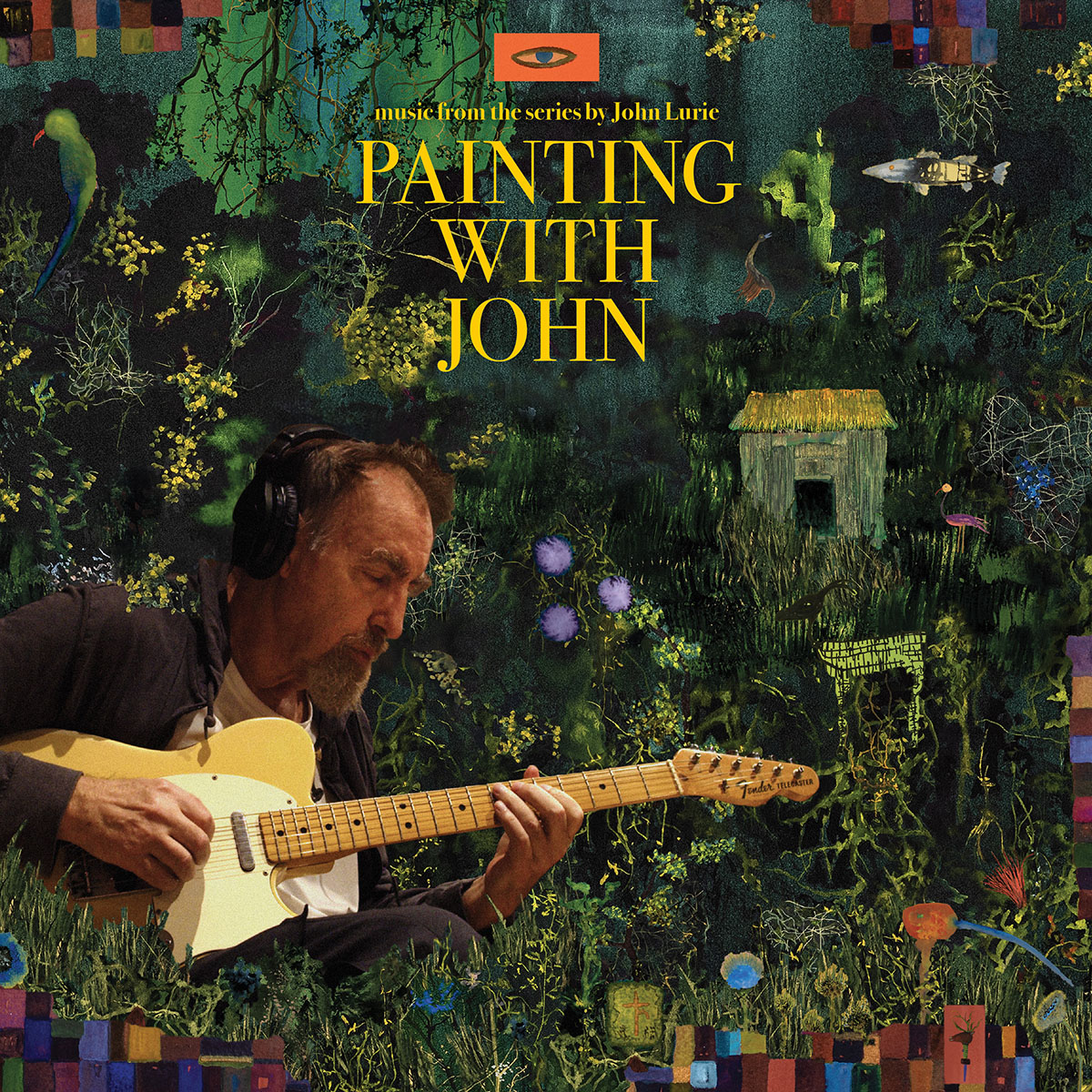
John Lurie - Painting with John (Strange and Beautiful, 2024)

By Martin Schray

The fact that you can listen to a new album by John Lurie (at least in parts) while he’s still alive is spectacular news in itself. For many, he has fallen into oblivion and is more a case for “What happened to …?“ columns. Yet, he was a real star in the 1980s, a hipster par excellence. Almost everyone wanted to be like him. Others however, couldn’t stand him. Both sides had something going for them. Lurie had the coolest jazz band of the time (The Lounge Lizards), he was a friend of Tom Waits, he played the leading roles in Jim Jarmusch’s films (e.g. Stranger Than Paradise and Down By Law), he wore oversized, ultra-sharp suits. On top of it all, he was casual, spindly, more than six feet tall and seemed to be up to his eyeballs with indifference. His instrument was the alto saxophone. The fact that he was not a virtuoso like Charlie Parker didn’t matter, because he invented Fake Jazz, and that led to No Jazz and the scene around the CBGBs in New York in the late 1970s and early 80s. He was simply in the right place at the right time and he had goddamn charisma. Lurie performed successfully with the Lounge Lizards in various line-ups until the end of the nineties and he wrote the soundtracks for films such as Get Shorty and Lulu On the Bridge. He founded his own label, Strange and Beautiful, and developed the completely bonkers TV series Fishing with John.

Then however, his luck took a big blow. He was struck with severe Lyme disease in 1994, which heavily affected him, including the loss of his ability to play the saxophone. Lyme disease also led to his decision to isolate and distance himself socially. But Lurie - the multi-talent that he has always been - had to keep producing art. He started painting pictures in vibrant earth tones and with unconventional fauna. Painting became a source of joy for him and a way to overcome the challenges he faced, since - as if Lyme disease wasn’t enough - he also got cancer. Eventually, in December of 2022, he announced on social media channels that he would be producing a new show for HBO called Painting With John. He described it as a way to cheer people up during these difficult times. In the show, Lurie paints in his secret hideout in the Caribbean. He tells stories from his life, including his experiences as a jazz saxophonist, film and television composer and actor. As in Fishing with John, he combines the idea of painting with non-art: Painting with John is probably the most adventurous art academy ever broadcast.

What is more, everything seems to have come full circle, as Lurie has returned to music. Painting With John, the album, is the soundtrack to his HBO show. The 56 tracks are fragments both from former releases, e.g. from his soundtracks to Manny and Lo and African Swim with the John Lurie National Orchestra, and Marvin Pontiac, the re-animated discography of the fictional bluesman he created, as well as from old Lounge Lizards material (Queen of All Ears). But what is most interesting is the new material. Lurie has composed all the new tracks, he is on vocals and plays banjo, guitar and harmonica. His band is excellent as always: It consists of Doug Wieselman (guitar, clarinet, ocarina, baritone saxophone, bass clarinet), Steven Bernstein (trumpet, slide trumpet), Michael Blake (tenor and soprano saxophone), Art Baron, Curtis Fowlkes and Clark Gayton (trombones), Evan Lurie (piano), Smokey Hormel (guitar), Bryan Carrott (marimba, vibes), Jane Scarpantoni (cello), Tony Scherr (electric and acoustic bass, slide guitar), Calvin Weston (drums), and Kenny Wollesen (percussion, marimba, vibes).

And the result is much more than just a pleasant surprise. It’s particularly heartwarming to hear the great man sing and speak again, for example on “Ali Hum“ and “Night Hunters“, African desert blues tracks that could be found on a Tamikrest album as well. On “Humba“ and “Boomba!“ Lurie simply mumbles one word to himself, which is both funny and meditative. “New Opening“, “John and Calvin Wah Wah“ and “Baby Pigs“ are very delta-bluesy and remind me of a modern John Lee Hooker. Yet, the highlights of the album are certainly tracks that are in the Lounge Lizards tradition. On “Disappearing Alligator“,“The Snake That Protects Teeth“,“GB 14“, Sea Monster“ and “Helium Balloon“ the interplay of brief harmonic shifts, small motivic strands and minimalist groove develops a hypnotizing tapestry of sound.

I have to admit that I’ve been very moved listening to this music (which I’ve done over and over again in the last few weeks). Especially the Lounge Lizards reminiscences transport you back to the early 1990s, it seems like time has stood still. Painting with John comforts me when I’m feeling down. When I’m in a good mood, I feel even better. “This may be the last thing I do“, Lurie says. “I want it to be beautiful.“ I hope it’s not the last thing you hear from John Lurie. But it’s definitely beautiful.

Painting with John is available on double vinyl and as a download. You can order it here

Check out the band jamming here:

Friday, May 21, 2021

Mario Pavone (1940 - 2021)

Mario Pavone (photo by Peter Gannushkin)

By  Martin Schray

Mario Pavone was a fighter - in real life and in his music. For 17 years he has fought cancer and they way he played his bass looked a bit like fighting as well - with a lot of force, keeping his strings a little high and overplaying them. He said that his style was rather sculptural. In any ways, it was spectacular watching him.

Pavone, who was born in Waterbury/Connecticut in 1940, was actually an engineer and had no formal musical training in his youth. The initiatory experience that led him to music was something special: John Coltrane’s seminal residence at the Village Vanguard in 1961. Shortly after that he began playing the bass and settled in New York City, where he got to know pianist Paul Bley and trumpeter Bill Dixon. That’s how he became part what would later on be called the first loft era.

In 1968 he went on a European tour with Bley, with whom he worked until 1972. In the early 1970s he performed with vibraphonist Bobby Naughton and was a member of Bill Dixon’s Orchestra of the Streets, as well as John Fischer’s Interface. In 1975 he formed the Creative Music Improvisers Forum (CMIF) in New Heaven with Bobby Naughton, Wadada Leo Smith, Gerry Hemingway, and many others, before he began his 18-year collaboration with Thomas Chapin in 1980. His most important formation with Chapin was the trio with drummer Michael Sarin, one of the most important bands of the downtown Knitting Factory scene. From 1990 to 1996 the trio was very productive and toured in Europe and the U.S. After Chapin's untimely death in 1998, Pavone began a long recording career as a leader and worked with almost everyone who’s important in the New York free jazz scene - from Tony Malaby to Steven Bernstein, Gerald Cleaver, Craig Taborn, Oscar Noriega, Matt Mitchell, Tyshawn Sorey, to name only a few. 

 Recently, Pavone had focused his musical energies on the classic piano trio format, reconnecting with Paul Bley for a recording, releasing a live disc with Craig Taborn and Gerald Cleaver, recording 3 CDs with his Dialect Trio featuring Matt Mitchell and Tyshawn Sorey, the latest to be released in July 2019 on Clean Feed Records. In a recent interview with Downbeat Magazine he said that he planned to “make a final artistic statement, in two parts“. He recorded sessions in 2020, with two quartets including six new tunes approached from different perspectives. Blue Vertical (Out of Your Head) was for his ongoing “implied time” trio with pianist Matt Mitchell and drummer Tyshawn Sorey, plus trumpeter Dave Ballou. Isabella (Clean Feed) was for the grooving “overt time” of Mario and “the three Mikes” - his son Michael Pavone on electric guitar, altoist Mike DiRubbo and drummer Michael Sarin, his longtime collaborator from the days with Thomas Chapin. “I’m just happy to get these two releases done,” Pavone said in the interview with Downbeat. “It took every bit of energy, and the music is what got me through. I’ve had a great life and I’m so appreciative of all the players who jumped in and generously contributed, from the heart. I’m grateful, happy, satisfied with my life, ready to move to this next cycle.”

On Saturday, May 15th, Mario Pavone lost his fight against cancer. It’s sad to know that he isn’t there anymore.

Watch a performance with his excellent trio with Matt Mitchell and Tyshawn Sorey:


Reflections on the Recordings

Writers of the Free Jazz Blog contributed their thoughts on some of their favorite Mario Pavone recordings.

Martin Schray  


Thomas Chapin Trio - Anima
(Knitting Factory Works, 1992)

Pavone’s bowed for Chapin’s saxophone hook line in the title track is among the most beautiful moments of all the downtown scene releases.

Bill Dixon - Son of Sisyphos (Soul Note, 1988)

Pavone counters John Buckingham's ultra-deep tuba tones with his lightning-fast, scurrying intervals. Dixon's trumpet and Laurence Cook's drums float above things. Free jazz can be so beautiful.
---

Stephen Griffith

My first conscious exposure to Mario Pavone (I guess I'd heard him on Bill Dixon’s Son of Sisyphus previously but it didn't leave as immediate of a positive impression) was on one of the Thomas Chapin Trio’s seven releases on Knitting Factory Works; maybe Third Force. Whichever one it was (I eventually got them all) it grabbed me immediately with how full of a sound an alto sax, bass and drums (Steve Johns or Michael Sarin) achieved moving rapidly through post Ornette originals that were catchily complex and became immediately familiar. Pavone was the foundation rock on which all was built with his large but uniquely dancing sound. Ride (Playscape, 2006) sticks out in my mind because it was released in 2006 posthumously after Chapin’s passing, a 1995 North Sea Jazz Festival performance which brought back all the previous magic one last time.

I tried Chapin releases with other bassists on different labels who played well with other musicians I like but it just wasn't as good a fit as with Mario Pavone.

---

Kenneth Blanchard

Mario Pavone’s passing reminds me of how easy it is to take something for granted. I do not recall listening to one of his recordings over the last year because… they will always be there. I won’t. This morning I am listening to Orange (2003) one of the Nu Trio recordings. What a wonderful piece of music! Pavone’s playing is superb and you can hear his softly singing behind his solos. He is one of those leaders whose genius was contagious. Every member of the band is sharp and luminous. I can also highly recommend Deez to Blues (2006).


---

Lee Rice Epstein

Ancestors ‎(Playscape Recordings, 2008)
Arc Suite T/Pi T/Po (Playscape Recordings, 2010)

Early in his career, Mario Pavone joined Bill Dixon, beginning with the iconic November 1981. Starting with this group, it was clear Pavone and Dixon had one of those deep and special connections. Twenty-five years later, Pavone recorded “Half Dome (For Bill Dixon)” a gorgeous two-minute tribute. These back-to-back albums, Ancestors and Arc Suite T/Pi T/Po, feature the larger groups Double Tenor Quintet and Orange Double Tenor are undeniably modern classics. Both showcase the depth and sensitivity of Pavone’s compositional approach. Tony Malaby and Jimmy Greene tease out the warmth and these melodies. On the second album, Dave Ballou extends the groups sound, but he had already been arranging for Pavone for a while, and continued to do so for several albums following. Pavone and Ballou clearly shared a deep connection, much like his earlier one with Dixon. The arrangement of “Iskmix” for example, brings a spaciousness to the complex, overlaid time signatures and free rhythms. Space was a specialty of Pavone’s  playing and composing, and his sounds and silences will be missed equally.

---

Paul Acquaro

Does it make sense to post Understanding by Bobby Naughton Units? The vibraphonist's 1974 JAPO release features both a young Mario Pavone or Richard Youngstein on bass - the album was a mix of a live and studio recording. Regardless, it's an early document of Pavone's recorded work and puts him in the company of the late great Perry Robinson and Mark Whitecage. Pavone's solo on the track 'Snow' is a lovely, slowly unfolding part within a lovely, slowly unfolding piece.

---

Past Reviews:

Mario Pavone – Vertical (Clean Feed, 2017) 

By Troy Dostert

A reunion record of sorts, with bass legend Mario Pavone getting together with some long-time colleagues of old in a sextet format. And the results are predictably excellent: multiple horn parts giving life to Pavone’s thorny compositions, a strong yet occasionally unpredictable rhythmic current, and superb musicianship throughout. Read more.

---

Mario Pavone's Dialect Trio - Philosophy (Clean Feed Records, 2019)

By Olle Lawson

Double bassist Mario Pavone’s latest album Philosophy could equally have been entitled ‘Aphorisms’ considering how concise these eight mini manifestos are. Pavone is a selfless leader who none the less stamps his authorial mark on all of his multifaceted line-ups. This is the third Dialect Trio LP with pianist Matt Mitchell – best known for his work with Tim Berne – and the inimitable Tyshawn Sorey. Read more.

---

Mario Pavone Dialect Trio - Chrome (Playscape, 2017) 

By Derek Stone 

 For me, 2014’s Blue Dialect was one of those releases that, merely by virtue of the players involved, absolutely insisted on being heard. In particular, two names grabbed my attention: Tyshawn Sorey (on percussion) and Matt Mitchell (on piano) ... Chrome is another fantastic entry in Pavone’s discography, and it offers yet more proof that he is one of the finest composers/bandleaders around. Read more.


---

Thomas Chapin - Night Bird Song ('Olena Productions, 2016) 

By Paul Acquaro

The film, using footage, photos, documents and interviews, presents Chapin's life in two parts: the first a rather chronological log of his life growing up in Connecticut, his family, his growing musical interests, and his studies at Rutger's in the early days of its renowned jazz program. The film moves on to his work as music director of the Lionel Hampton big band, the fury of his group Machine Gun, and finally the creation of the Thomas Chapin Trio with bassist Mario Pavone and drummers Steve Johns and Michael Sarin. In watching the arc of Chapin’s foreshortened career, you cannot help but see how his ambition and focus were always underscored by his humanity and genuine curiosity. It can be humbling to watch. Read more.
---

Mario Pavone – Blue Dialect (Clean Feed, 2015) 

By Troy Dostert

It’s great to see Clean Feed adding a veteran of Mario Pavone’s stature to its roster.  The label has done such a fine job in recent years of documenting many of the most creative and forward-thinking artists in jazz and free improvisation, and bassist Pavone certainly deserves to be in the conversation as one of them, especially when it comes to the piano-bass-drums trio format, arguably the most appropriate showcase for Pavone’s distinctive talents.  A couple years ago Pavone released Arc Trio, an exceptionally fine outing with Gerald Cleaver and Craig Taborn. Read more.

---

Mario Pavone – Arc Trio (Playscape, 2013) 

By Troy Dostert

On this terrific piano trio record, veteran bassist Mario Pavone unites with pianist Craig Taborn and drummer Gerald Cleaver for a live outing from Greenwich Village, allowing us to gain a fascinating glimpse into the levels of musical collaboration possible between three masters of their respective instruments. Read more.

---

Mario Pavone - Arc Suite T/Pi T/Po (Playscape, 2010)

By Stanley Zappa

Calling Mario Pavone's Double Orange Tenor arc suite t/pi t/po commodity jazz is hardly meant to be an insult (unless you're offended by he notion of such a cleve) because as far as commodity jazz concerned, this is as good as it comes. Yet clever arrangements with latin sections, well crafted solos with themes, variations and other well loved compositional elements have an ability to asphyxiate in our post-Coltrane day, despite the level of craft and dedication required in their realization. Read more.
---

Mario Pavone - Ancestors (Playscape, 2008)

Bassist Mario Pavone has been in the forefront of modern jazz for the last four decades, and even if many of his generation got stuck in the style for which they were once in the vanguard, Pavone has kept evolving, and still does. He is most known from his collaborations with Paul Bley first, and Bill Dixon later, then Thomas Chapin, yet his own Nu Trio/Quintet and sextet bring his music, in an always very recognisable style. Read more.

---


Thomas Chapin Trio - Ride (Playscape, 2006)

By Stef Gijssels

 
This is Thomas Chapin's last recorded live date, at the North Sea Jazz Festival in The Hague in 1995. Chapin died from leukemia in 1998 at the age of 40. This is one of his better albums, and as often his trio consists of Mario Pavone on bass and Michael Sarin on drums. The band is at its peak, after having toured for years, and they play with conviction and with joy. Read more.

Friday, July 9, 2010

Harris Eisenstadt - Woodblock Prints (No Business, 2010) *****

Combining many styles and genres into one single blend that sounds fresh and new, like a great and cool cocktail, is relatively unique. Mixing stuff is easy, creating something of which the whole is more than the sum of its parts is a strong feat, but using those parts to create something entirely new is a major achievement. It's the opposite of kitschy world fusion, often the last resort for lack of creativity.

I know a few albums that transcend these genres. Now there is a new one to add to two albums that I listen to time and time again : they integrate composed jazz, played by a solid low-sounding horn section with tuba and electric guitar, solid percussion, world music and rock influences, friendly in atmosphere yet totally non-conformist. ... and they have some of the most beautiful and compelling themes imagineable.

I add the two older albums, The Kingdom Of Champa, and "Racines Du Ciel"  for reference, but will not review them. Check them out. They're great. Although different, they share the same warmth, drive and musical conflict. Full of paradoxes and synthesis. Tight arrangements ánd wild excursions, western ánd eastern music, today ánd the past, gravitas ánd light-footed, familiar ánd avant-garde.


Drummer Harris Eisenstadt is an artist with many approaches to music. Two years ago he released the fantastic "Guewel" with two trumpets and free african rhythms, last year "Canada Day", which received general acclaim, and now he's back with music that really defies categorisation.

First of all the line-up is quite unusual with Michael McGinnis on clarinet, Jason Mears on alto saxophone, Sara Schoenbeck on bassoon, Mark Taylor on french horn, Brian Drye on trombone, Jay Rozen on tuba, Jonathan Goldberger on electric guitar, Garth Stevenson on acoustic bass, and of course Harris Eisenstadt on drums.

Second, the music is inspired by Japanese woodblock prints, as depicted on the cover, yet contrastingly, whereas the Japanese art is purposely created against empty space, the density and complexity of Eisenstadt's arrangements are high, with no space for silence, but that is easily compensated by the overall warmth coming from the horn section.

Third, the compositions are tight, with influences even from classical music in some parts, especially so when Schoenbeck's bassoon comes to the foreground, playing in pure chromatic scales without dissonants, but it is equally big band jazz and rock music. The music can be sweet as Glenn Miller yet as raw and wild as free jazz, which it certainly isn't.

Fourth, Heisenstadt's lets the band play his music. Although there are rhythmic subtleties galore, this is not a drummer's album: it's all about the music: gentle, compelling, expansive, inclusive, refined, but equally hard at moments, full of power and drive, with sound explorations and sonic expressivity that are only to be found in the most adventurous forms of jazz.

Since the music cannot be described, ranging from solemn classically sounding chamber jazz full of counterpoint, to exuberant jazz, I will refrain from doing so.

I can only say that Eisenstadt again shows what real creativity means. Surely the result of hard work and many, many try-outs before chiseling this music out of the hard block of musical tradition. It was in there all the time, only nobody saw it ... until now.

... and man, these horns sound so wonderful ...

Buy from Instantjazz.

Michael Blake - The Kingdom Of Champa (Intuition, 1997)

 Inspired by his trip to Vietnam, Michael Blake's debut album is still very often in my player. The track "Mekong" is an absolutely stellar theme, but so is the whole album. Wild, sweet and expansive.

Michael Blake (bass clarinet, soprano saxophone, tenor saxophone); David Tronzo (slide guitar); Tony Scherr (lute, acoustic bass, electric bass); Rufus Cappadocia (cello); Thomas Chapin (flute, bass flute, piccolo, baritone saxophone); Steven Bernstein (trumpet, slide trumpet, cornet); Marcus Rojas (tuba); Bryan Carrott (vibraphone); Scott Neumann (drums); Billy Martin (percussion)

Listen and download from eMusic.

Rêve d'Eléphant Orchestra - Racines Du Ciel (De Werf, 2001) 

When I heard the track "Les Folies De Cécile" so many years ago on my car radio, I drove immediately to the nearest record shop to buy it. Grand themes over strong rhythmic backbone, full of African and Indian influences. Played by Pierre Bernard (flutes), Laurent Blondiau (trumpet - flugelhorn), Michel Debrulle (drums); Jean-Yves Evrard (guitars), Michel Massot (tubas -trombone), Etienne Plumer ( tablas - drums), Stephan Pougin (drums, etc.)

Listen to Les Folies De Cécile.

© stef