Click here to [close]
Showing posts sorted by relevance for query Lina Allemano. Sort by date Show all posts

Sunday, September 17, 2023

Lina Allemano - Sunday Interview

(photo by Manuel Miethe)

1. What is your greatest joy in improvised music?

Risk, adventure, not-knowing, searching, flowing, discovering, sharing.

2. What quality do you most admire in the musicians you perform with?

Deep listening, musical generosity of spirit, effortless/egoless virtuosity and/or musicality.

3. Which historical musician/composer do you admire the most?

I don’t have a singular “the most”… I admire very many and am always excited to discover more music from the living and the dead.

4. If you could resurrect a musician to perform with, who would it be?

This question is a bit for me like the question, “If you could have an all-star fantasy band, who would be in it?”, to which my answer always is, “I already have my fantasy bands”.

5. What would you still like to achieve musically in your life?

I would like to delve deeper into composition and compose for instruments I am not yet overly familiar with… like harp, for example.

6. Are you interested in popular music and - if yes - what music/artist do you particularly like

Of course! I do play with some fantastic pop musicians from time to time, and for example, I’m a fan of Jeremy Dutcher whose newest album Motewolonuwok comes out very soon…

7. If you could change one thing about yourself, what would it be?

How do I answer this one…? I’m feeling pretty lucky and happy to be alive. Changing something about myself is somehow not on the top of my to-do list, so I guess I haven’t put much thought into it. I’m more focussed on finding out what I can do while I’m here on this planet and what it means to be an artist in this crazy world…

8. Which of your albums are you most proud of?

I’m generally most proud of whichever album I’m making at the moment… until I make a new album… and then I’m most of proud of that one. And so on. I like to move forward, so I don’t tend to look back.

9. Once an album of yours is released, do you still listen to it? And how often?

Nope, never. Leading up to the release, I will have listened to it a zillion times (first choosing the takes, then mixing, then mastering… the whole process goes on for months), so by then it’s completely internalized and I have no desire to listen again. Besides, there’s always more new music to listen to since I keep making new albums, and then there’s the music of other people that I would much prefer to listen to and spend time with… and there’s only so many hours in the day, so… no, why go back?

10. Which album (from any musician) have you listened to the most in your life?

Well, unfortunately that would probably be my own due to the endless process of listening I described in Question 9 that I have to do when producing my own albums. But I’ve had many an album on endless repeat over the years from many different artists… No point in listing those off, too many, but perhaps it’s a fun fact that the first album I recall listening to endlessly on repeat was when I was aged 12… it was a Woody Shaw album called Woody 3 and it was on cassette, taped from my dad’s vinyl.

11. What are you listening to at the moment?

Takes from the latest recording sessions with my Berlin trio Ohrenschmaus + special guests. (You see? It’s endless! As soon as you release an album, you immediately have to start listening to takes from the next one.)

12. What artist outside music inspires you?

My mother inspires me a lot. She’s a literary translator and I would definitely consider what she does to be an art. I’m also currently very inspired by the drawings of Berlin-based visual artist Lena Czerniawska, who made the beautiful cover artwork for my newest album Canons.


Albums with Lina Allemano that we reviewed

  • Lina Allemano, Uwe Oberg, Matthias Bauer, Rudi Fischerlehner - SOG (Creative Sources, 2023)
  • Lina Allemano Four - Pipe Dream (Lumo Records, 2023)
  • Lina Allemano & Nick Fraser - Trumpet Drums REMIX Festival (Lumo, 2021) ****
  • Lina Allemano Four - Vegetables Album (Lumo, 2021) ****
  • Bloop - Proof (Lumo, 2021) ****½
  • Lina Allemano’s Ohrenschmaus - Rats and Mice (Lumo, 2020) ****½
  • Lina Allemano - Glimmer Glammer - Solo Trumpet (Lumo Records, 2020) ****½
  • Lina Allemano Four - Sometimes Y (Lumo Records, 2017) ****½ 
  • Lina Allemano's Titanium Riot - Squish It! (Lumo Records, 2017) ****½
  • Lina Allemano's Titanium Riot - Squish It! (Lumo Records, 2017) ****½
  • Lina Allemano's Titanium Riot - Kiss The Brain (Lumo Records, 2015) *****
  • Lina Allemano Four - Live At The Tranzac (Lumo, 2012) ****


Monday, December 11, 2023

Lina Allemano - Canons (Lumo Records, 2023)

By Sammy Stein

Lina Allemano is a Canadian trumpeter, composer, improviser, and bandleader with an international career primarily in improvised, jazz, and experimental settings. She splits her time between Berlin and Toronto and is recognized as one of the leading innovative trumpeters on the scene today. As well as collaborating with important international artists, she leads five groundbreaking projects and runs her artist-run label Lumo Records. ‘Canons’ is the second 2023 release form Allemano, and follows Pipe Dream, the release by Allemano’s quartet, the Lina Allemano Four, in May.

Canons (For Trumpet and Creative Chamber Ensembles) features Allemano performing nine original pieces, both composed and improvised, with five different creative chamber ensembles. This special-edition release coincides with Lumo Records' 20 th anniversary.

Of the recording, Allemano says, “I started writing canons as a fun and challenging compositional game of sorts. Five of the pieces here (tracks 1, 2, 4, 6, and 8) are written for trumpet and various unusual chamber ensembles in either 2, 3, or 4-part canon, all incorporating improvised sections alongside composed material. Each piece employs aspects of the canon form as a common thread, including the improvised pieces by trumpet/electronics duo Bloop.”

Allemano is respected by musicians, as becomes clear whenever mention of her name occurs. From the opening track, the music is lively and powerful and the canon, in terms of counterpoint-based music-making, could hardly be more explored. Lead and follower voices/voice creating the canons intertwine and bounce off each other in tracks such as the opener ‘3 Trumpet Canon’, including some pure air column versions of the melody.

Across the tracks, there are many techniques employed, including flutter tongue with its wonderful, growly tones, and close harmonies, such as on ‘Shadows’ (track 3). There is a link between different styles and genres. On ‘Bobby’s Canon’ the bowed ‘cello leads the ensemble as the trumpet and clarinet repeat the time patterns and phrases. By the end of this track, there is a certain glorious disassembly of cohesion as the individual musicians take their own diverse pathways – something that makes it at once glorious and beautiful - before the repeated harmonic descents restore order and a different kind of beauty.

There is much to recommend to the listener on this album, from the effects and coalescence of sound on ‘Shadows’ to the playful light-hearted steps of ‘Butterscones’ sandwiching an ethereal middle section, with the guitar and double bass adding their plucked tones, or the round-like canons of ‘Wilds’.

Twinkle Toes’ is the freely improvised track of the album and captures the outstanding contributions of the ensemble of double bass, trumpet, synth, and guitar as they improvise and then come together in a classically arranged section, the switch heralded by trumpet melody, which the others chime and echo.

The recording is a deep exploration of canons in many forms and formats but remains true to the concept of a melody, and imitations of that melody forming the essence of each piece. The musicians transform the melodies sometimes – and in some places, the original is apparently ‘lost’ briefly, before being retrieved by a musical diversion, having been never really lost to the player, but they know what they are doing and have the wherewithal to achieve their aims.

This is a glorious album, well crafted, and exploring one essence of music-making proves an intriguing and expansive concept.

Personnel:

Lina Allemano, trumpet
Peggy Lee, cello (track 2)
Brodie West, clarinet (track 2)
Mike Smith, live-processing / effects (tracks 3, 5, 7, 9)
Rob Clutton, double bass (tracks 4, 6)
Ryan Driver, analog synth (tracks 4, 6)
Tim Posgate, guitar (tracks 4, 6)
Matthias Müller, trombone (track 8)

Tuesday, June 8, 2021

Lina Allemano Four - Vegetables Album (Lumo, 2021) ****

By Stef Gijssels

The Lina Allemano Four have been performing together at least since 2005 in the current line-up of Lina Allemano on trumpet, Brodie West on alto, Andrew Downing on double bass and Nick Fraser on drums. This by itself is already a sign of a tight collaboration, a shared approach and almost a guarantee for strong interplay. 

As mentioned before, the band offers the perfect balance between composed and improvised parts, often sounding like a modern version of the Ornette Coleman Quartet, with thematic anchor points serving as beacons to work around. The compositions are smart, complex and playful. Last year, Canadian trumpeter Stephanie Richards used scents as an inspiration for her music. Here, Lina Allemano uses vegetables to guide her creativity. 

"Onions" is funny, cinematic, at times even the imagery of a cartoon chase comes to mind (but maybe that's my mind, more than the music), with sudden tempo changes, angular in nature, with stop and go moments, gentle and ferocious at the same time. 

"Beans" a brings a slightly contorted composition, with a smart bifurcation between sax and trumpet, escaping from the initial unison line in different directions and organically converging again, like streams weaving their phrases around each other. 

"Champignons" starts with a kind of Americana theme, melancholy and a tad sentimental (it could have been penned by Bill Frisell), then the piece slows down into a long and slow arco bass solo, joined again by Allemano halfway the track, who takes it to solemn place, then moving the piece from a subdued to an almost ecstatic atmosphere. 

"Brussels Sprouts, Maybe Cabbage" offers a more complex composition, dynamic in nature, angular and energetic with sax and trumpet in counterpoint, and with a dramatic theme unraveling in different parallel phrases, moving seamlessly back and forth between organisation and disorganisation. It really demonstrates Allemano's compositional strengths, as well as the tight interplay. The video below illustrates this. 

"Oh Avocado" is interesting, again generating visual imagery (at least to me), characterised by a cinematic development and narrative with a shifting structure, alternating between quiet polyphony and exuberant unison lines. 

"Leafy Greens" brings another complex composition, with unexpected twists and turns, abandoning ideas as fast as they are created, even deliberately taking the pulse out of the piece, working with counter rhythms and an exploratory mid-section. 

Fun, funny even at times, the Lina Allemano Four is a band that interacts with great discipline and freedom after so many years of performing and recording together, finding the right balance between composition and improvisation, tight arrangements and freedom, between comfort zones and out-of-the-box explorations, and all this in a very unassuming manner, without any pretence. And to Allemano's credit, her compositions bring you - as the listener - also out-of-the-box because of their unexpected, surprising, eclectic and playful nature.  

Listen and download from Bandcamp


Watch an alternate take of "Brussels Sprouts, Maybe Cabbage"

Sunday, February 4, 2018

Lina Allemano Four - Sometimes Y (Lumo Records, 2017) ****½


By Lee Rice Epstein

If you’ve kept up with trumpet player Lina Allemano’s career, you’ve likely read or heard about her two main groups, Lina Allemano Four and Titanium Riot. And you’ve probably seen the two tagged with something like “more traditional” and “more experimental” labels, but you should absolutely resist this dichotomy. It’s a short-sighted view of Allemano, ascribing traditional to a pianoless acoustic quartet and experimental to an improvising electro-acoustic quartet. In both, elements of tradition and experimentation collide, fascinatingly.

Start with the second track, “Kanada,” for a look at how brilliantly the quartet interacts. Nick Fraser provides staccato, percussive fills, as bassed Andrew Downing first teases the melody. Allemano and alto saxophonist Brodie West quickly snap to, hitting the succinct melody before coming to a quick halt. An extended, sprightly improvisation leads to another statement of the theme, before the group pivots to an spacious middle section. It’s a propulsive and dynamic tune, constantly evolving and circling back on itself. It’s worth noting Allemano and West are a superb front line, but I don’t want to dismiss Downing and Fraser in any way. Reflecting the name of the group, the four are truly interacting in concert, with solo and duo statements spinning off in all directions. All four musicians display an openness and sensitivity to the other members.

“Cowlick” opens with bright, symphonic blasts from Allemano and West that recede just as Downing and Fraser step forward. During a slightly deconstructed call-and-response section in the middle, Fraser’s percussion accents underline his skill at both directing and augmenting group improvisation. On “Marina and Lou,” the group takes a ballad theme and extends it into some moving improvised territory.

From this latest release, it seems Allemano could take the group anywhere, possibly even expand to a quintet or sextet. It would be interesting to hear a vibraphonist in this mix, a la Nate Wooley’s quintet or Harris Eisenstadt’s Canda Day quintet. Even with all that’s happening in the music, there’s more than enough room for more voices and ideas.


Saturday, February 3, 2018

Lina Allemano's Titanium Riot - Squish It! (Lumo Records, 2017) *****

By Lee Rice Epstein

It’s been two years since trumpeter Lina Allemano’s last record with her electro-acoustic Titanium Riot (Kiss the Brain, reviewed here by Stef). Personally, I consider this quartet is a cousin to Peter Evans Quintet, with Ryan Driver on analog synth, Rob Clutton on bass, and Nick Fraser on drums. At first glance, and listen, the album has a distinct variation-on-a-theme aspect. Squish It! begins with Allemano unaccompanied, setting the mood, as it were, before Allemano, Clutton, and Fraser’s punchy thematic opening to “Squish It” proper. On “Squish It Now,” Fraser plays foil to Allemano early on, with crisp snare and trumpet describing arcs along the melodic path. Meanwhile, Clutton moves laterally through the music, calmly urging the group forward, then suddenly dropping octaves to layer in a deep, almost loamy richness to music.

“Squish It Nicely” highlights Driver’s fascinating synth with Allemano’s more experimental playing. Having spent time abroad studying with Axel Dörner, Allemano’s techniques are amplified (or, more accurately, dampened) by her homemade mutes. Most of the track reads as an negative exposure of “Squish It Now,” with Clutton and Fraser hanging back for most of its runtime.

Allemano and Driver play a fantastic duet, augmented by Fraser’s spacious interpolations, on “Squish It Forever.” As a group, Titanium Riot plays with space and dynamics in fascinating ways, reminding me at points of some John Stevens’s Spontaneous Music Ensemble. Allemano is in peak form here, with a remarkably piercing yet languid melodic line. One last time, on “Squish It Again,” the thematic explorations are flipped on their head. This closing statement also serves to close the loop of the album, with Titanium Riot recapitulating some of the ideas surfaced in “Squish It” and “Squish It Now.” My 2017 favorites list did not include this album, only because I had not fully caught up with it. It’s a remarkable set, and very highly recommended.


Thursday, November 14, 2024

Lina Allemano’s Ohrenschmaus – Flip Side (Lumo Records, 2024)

By Matty Bannond

Seconds can slip past unnoticed, stacking up into minutes. Then come hours, days, weeks. But where did the time go? Oh, how you’ve grown! Why, it seems like only yesterday... That’s the sensation of each improvised segment on this album from trumpeter Lina Allemano and her Berlin-based trio, plus guest. It’s a record in constant but barely perceptible flux.

Ohrenschmaus is an international group, with Norwegian bassist Dan Peter Sundland and German drummer Michael Griener joining their Canadian leader. Flip Side is the trio’s second release following their 2020 debut Rats and Mice (review here ). It also adds Andrea Parkins on three tracks. She carried an accordion, electronic effects and some unspecified objects all the way from the USA.

The first track, called “Sidetrack”, awakens with rusted joints and creaky cogwheels. It’s a nine-minute journey around a pre-dawn metropolis that’s slowly whirring into action. A million machinations scratch and shudder until Allemano announces her arrival with long-tone calls. More sounds rise, competing for attention and causing the atmosphere to thicken.

“The Line” is probably the most thoroughly composed piece on the album and it features an abrupt shift of mood that stands in contrast to the rest of the record. A short passage leaves Allemano alone in the heart of the music, before drums and bass return for an improvised section with an untypically hectic feeling.

Allemano’s trumpet sound is clear and concentrated, but she plays with more fizz and soft edges on “Stricken”. It’s the most moving piece on the album. Sundland uses the bow on his bass for a while. It’s a mournful track with a heavier emotional weight despite its lower mass of tonal material.

Flip Side is a many-sided release that changes shape subtly, but constantly. Lina Allemano has extensive classical training and commands a striking variety of extended techniques, which she combines to create infinite fluctuations and mutations on this small-group record. The forty minutes and twenty-one seconds slip past like a half-remembered daydream.

The album is available on CD and as a digital download here. You can read another review of Flip Side on Free Jazz Collective here .

Saturday, August 19, 2023

Lina Allemano, Uwe Oberg, Matthias Bauer, Rudi Fischerlehner - SOG (Creative Sources, 2023)

By Martin Schray

SOG is a quartet by trumpeter Lina Allemano, bassist Matthias Bauer, percussionist Rudi Fischerlehner and pianist Uwe Oberg - in other words: three excellent members of the Berlin Echtzeit cosmos are augmented by the most prominent musician of the very lively Wiesbaden scene (Oberg). What is more, SOG is the German word for “eddying“ or “maelstrom“ and this is exactly what the quartet’s music is like. The four pieces “El Remolino“, “Il Vortice“, Le Tourbillon“ and “Malstrom“ all mean the same thing in different languages. This is why at least the three major pieces are structured alike (“Malstrom“ is only a very short encore). As a listener there’s no way to escape the magic, the energy and the sheer beauty this music develops over the course of almost 60 minutes.

“El Remolino“, the opening track, is the perfect example of the band’s idea for this project. It’s reminiscent of a typical Cecil Taylor piece from the 2000s. Before the wind instrument kicks in, the rhythm section leads up to it. Oberg uses delicate Taylor-like clusters, Fischerlehner plays the Tony Oxley/Paul Lovens part with strong emphasis on snare, cymbals and extended materials, Bauer drives forward unobtrusively, yet uncompromisingly. When Allemano’s trumpet finally begins, it blends smoothly into this structure, its tone pointed and clear. Here and there she sounds like a military trumpeter in a free jazz band. But the fact that the band has its own concept becomes clear already in the duel between Oberg and her, because here the pianist deviates from any Taylorian influences and goes his own way. If the listeners think they might be able to focus less, the music pulls them back in - as in a maelstrom. Out of nowhere the sound of Allemano’s trumpet changes, one thinks she literally tears the notes apart. Oberg responds with prepared sounds reminiscent of a spinet. From this moment on, both instruments float feather-light above the bass and drums, and Bauer and Fischerlehner realize that they only have to be supportive here. In these first ten minutes the piece is as if from a single mould, it’s a prime example of European free jazz - only to disintegrate completely (which it does not, of course)! The drums lose their pulse, the same goes for the bass. The trumpet meanders in nowhere, the piano sets very sporadic notes. Bass and drums scratch around on their instruments. It seems as if the musicians leer at each other to see who will lead the improvisation back to the beginning. In the end, it’s all of them together, through intensity and volume. Powerful chords, sharp, bowed bass lines and pointed trumpet runs are all it takes. Fischerlehner, interestingly, stays completely out of it here, which adds to the energy level. By the end of the piece, the band is actually back to free jazz, but with different timbres. Fischerlehner’s drums are darker, more driving (this is where it comes into play that he’s also at home in the rock realm), Oberg plays flashy, high notes, while Bauer and Allemano again try to tear the piece apart sonically. In terms of structure and energy control, “El Remolino“ is certainly one of the best pieces I’ve heard this year, and “Il Vortice“ and “Le Tourbillon“ are in no way inferior to it.

All in all, SOG is a great band and a great album. Whenever I come across Uwe Oberg, I think that I constantly underestimate his way of playing, the same goes for Matthias Bauer (I have to make amends here). Then again, I’m a big fan of Rudi Fischerlehner, whose restrained but incredibly versatile style of playing has always fascinated me. However, what Lina Allemano does on this album, is outstanding. The way she plays with varied sound colours and textures makes the difference that this album is not just very good, but outstanding.

SOG is available as a CD and as a download.

You can listen to the album and buy it here:

Saturday, August 22, 2020

Lina Allemano’s Ohrenschmaus - Rats and Mice (Lumo, 2020) ****½


By Stef Gijssels

The album starts furiously, with sharp stuttering trumpet sounds, jagged drumming and a plunky bass. No time to relax, you're drawn in immediately, especially when the trumpet suddenly shifts to a clear and pleasant phrase. Styles and genres crash into each other with sheer delight: intense, harsh, gentle and subtle at the same time. 

The trio is Lina Allemano on trumpet, Dan Peter Sundland on - sometimes bowed - electric bass and Michael Griener on drums. 

No need to introduce Candadian trumpeter Lina Allemano, whose music has been lauded before on this blog. Sundland is a young Norwegian artist with already fourteen albums to his name, in various bands and styles of jazz. Griener also does not require much introduction, as he has performed with Satoko Fujii's Orchestra Berlin, in Lacy Pool with Uwe Oberg and Rudi Mahall, with Ernst Ludwig Petrowsky, with Ulrich Gumpert, Alexander von Schlippenbach, Carl Ludwig Hübsch - in short with almost German musicians who matter - as well as with all jazz musicians of name who happen to pass through Berlin. 

Despite the age and geographic diversity of the band, the Berlin-based trio find each other perfectly in Allemano's fascinating musical universe. Even more than on her quartet albums (Lina Allemano Four and Titanium Riot), styles and settings clash: improvisation with composition, raw expressivity with sweet lyricism, emotional gravity and moments of humour, grandeur and little inventions (the 'ear candy' of the trio's name), angular themes and jubilating solos, control and release, cerebrality and sensitivity, intimacy and exploration. The tension between these extremes, the tight interplay and stellar musicianship will make you listen with surprise and joy. It's as if they tear apart their own music the moment it's created or vice versa. It's multilayered, offering an ever changing rich and compact complexity, and inherently dynamic. Before you have time to absorb and savour what's happening, you're already pulled in a different direction, and one that's even more attractive. 

Furthermore, the trio creates a density of sound that is astonishing for the small ensemble they are. They started performing together in 2017, when Allemano was living partly in Berlin and in Toronto. It's obvious that the years of collaboration paid off and led to this gem of an album. 

She explained her approach to "composition/improvisation" in an interview with Tobias Fisher in 2012, and I guess it still holds true today "When I bring a new tune in for the band to try, even though I always write the music specifically for these guys to play, I tweak it a lot once I hear them actually play it. I ask them questions and I ask them to try different approaches as I try to find what I might be looking for - but I never impose something that doesn't feel right for everyone. Everyone needs to find their own way to play the music that works for the whole group and for the music. It's a process that unfolds with time and work". This explains the strong collective power of this trio too. 

Please treat yourself to this album. 


Listen and download from Bandcamp

Tuesday, November 2, 2021

Lina Allemano & Nick Fraser - Trumpet Drums REMIX Festival (Lumo, 2021) ****

 By Stef Gijssels

Each album by Canadian trumpeter Lina Allemano is something to look out for. Her various ensembles and projects all have their own special approach to music and as a consequence also their very specific sound. Drummer Nick Fraser is part of many of those projects, including the Lina Allemano Four and Titanium Riot. 

This album is relatively unique by any measure, in the sense that the trumpeter and the drummer created six duo compositions, four of which they then offered to other artists to remix them, using the ingredients to tell their own story, altering the recording and adding their own additional sounds. The concept is a fun one, or at a much deeper level even a philosophical one, and I must say it's a kind of generous act on behalf of Allemano and Fraser not to think their approach is the ultimate version of their composed improvisations. 

The release has been growing on the Bandcamp site during the month of October, adding two new takes every week. 

The uneven tracks offer the pure interaction between Allemano and Fraser, and they are a true delight: crisp, compact, focused, unexpected and playful, although the eery "Deadly Night Shade" is dark and plaintive. 

The remixes are also unexpected, maybe with the one observation that it appears to be difficult for the remix artists not to create patterns in their music. 

"Orange", a playful rhythmic piece, becomes "Brass Slippers" in the hands of Mira Martin-Gray, who started her remix based on the clicks of Allemano's trumpet keys. The remix is quite recognisable, and some synth sounds are added to keep the piece together. 

"Other Ways Number One", a sparse intense composition, becomes "Inorganic" in the hands of Bryan Qu, and I must say it has become almost unrecognisable, especially after a first listen of the album. Fraser's beat appears to be maintained, but somehow the trumpet got lost in translation. 

Karen Ng transforms "Lemon" into "Linick 2.0", processing the sounds, adding some sax and synth elements. Again, it's not clear where Allemano has disappeared into, and Fraser's beat has reduced to simple beats. She completely changes the piece, including its mood, and I think the result is strong, even if something else entirely. 

The dark "Deadly Night Shade" is also turned into a completely different piece - "A Bashful Droid" - in the hands of Nick Dunston, who adds his own banjo playing and a 'hacked tape cassette player'. It is still somewhat eery, but far removed from the original with the exception of the repetitive moaning phrase that serves as backdrop. 

The album ends with "Lime" and "Other Ways Number Two", two pieces by the duo of Allemano and Fraser. Again, they get my preference over the remix, even if the trumpet sound is strongly altered in the last track. 

In sum, I think the concept of commissioning other musicians to change and transform one's own material is exceptional, and even if I prefer the original duets between trumpet and drums - and they are magnificent - the idea of opening the listeners' ears and possibly minds by forcing them to listen differently, to listen to other sounds than what is expected, to be pushed (pulled?) out their comfort zone is worth something. None of the remix tracks contain music that I would personally cherish or even relate to. But I still listened to them, attentively, and many times. 

That's innovation for you. 

The full album will only be available digitally once all tracks have received their weekly publication, expected in the first week of November. 

Listen and download from Bandcamp.

Monday, May 15, 2023

Lina Allemano Four - Pipe Dream (Lumo Records, 2023)

By Stef Gijssels

New albums by Canadian trumpeter Lina Allemano are always something to look out for, and this one is very high on the list. 

The Lina Allemano Four released its first album "Contentric" in 2003, but the band's current musicians have not changed since their sophomore album "Pinkey" from 2006. Allemano is on trumpet, Brodie West on alto, Andrew Downing on bass, and Nick Fraser on drums. This unusually long collaboration has clearly been very successful, as is demonstrated by this album: a band that moves as one, both in their mutual understanding of the technical aspects as well as the soul of the music. 

The first three tracks stand on their own, and are followed by a four-part suite, called "The Plague Diaries", each starting with a solo intro, to illustrate the loneliness of the musician during the covid crisis. 

The compositional power of Allemano has increased over the years, and this album is in that sense quite ambitious, yet it allows for smartly orchestrated improvisations by four musicians who move in an out of structured moments in a way that betrays their long collaboration.
 
"Banana Canon" is simply structured around a two-tone interval, a funny backbone that allows for tight arrangements and joyful and playful improvisations, with clear polyphonic references, as the trumpet and sax play the same lines with time differences or with variations, alternating clarity with complete disarray. 

The title song - inspired by a Prokofiev theme - is more complex in nature, and more varied in its build-up and development, and definitely more dramatic. "Dragon Fruit" mixes drama - the somber intro - with playful interaction - the core theme -, creating interesting contrasts, also between composed moments and improvised parts, with the unexpected silence somewhere near the middle allowing for each instrument to create their own sonic bits, slowly reintegrating back into the composition. 

"The Plage Diaries" start with a fantastic trumpet solo by Allemano, an almost two-minute moment of jubilant exaltation and sorrow at the same time, demonstrating her phenomenal technique on the instrument. When the rest of the band joins, the multilayered composition and strong arrangements are the first things to jump out. This is an almost classical composition with a jazz sound, complex and smart, full of variations, and like most other pieces, relatively compact. A lot is happening in the limited time span of the song, yet still allowing for the brilliant contrast between control and freedom. It is without a doubt the best composition on the album. 

"Trying Not To Freak Out" gets a sensitive sax solo intro by Brodie West, leading to possibly the most emotional piece on the record, driven by a 5/8 arco bass foundation, hit amidships by the band, completely  altering the mood of the piece, illustrating how normal life was completely disjointed during the pandemic.

In sum, music of paradoxes, as we like it: brilliant and complex compositions and arrangements allow for strong improvisations and spontaneous interaction between the musicians, resulting in music that is both smart and deeply emotional. 

Highly recommended!

Watch "Longing", performed live at Metropol Theater, Jazzahead, Bremen Germany, April 30, 2022.

Wednesday, May 19, 2021

Bloop - Proof (Lumo, 2021) ****½

By Stef Gijssels

In addition to a strong formal training Canadian trumpeter Lina Allemano perfected her art by refining her personal skills on the instrument and expanding its boundaries by using extended techniques. She is an artist with many faces, from the professional 'session' musician on albums by other artists, over her own "Lina Allemano Four", of which a new release will be reviewed shortly, and which brings open-minded modern jazz, to the more adventurous ensembles such as this one, called "Bloop". 

Allemano plays trumpet, percussion and whistles (more about that later), and is accompanied by Mike Smith who organises live processing, meaning that he transforms Allemano's trumpet sounds through his technology. It is hard to find any information on Mike Smith at all, but the collaboration with the trumpeter seems to work out fine. Allemano's trumpet sounds are often even acoustically so beyond the expected that they could be mistaken for electronically altered even before they enter Smith's mixing panel and other tools. Luckily Allemano and Smith have been performing together since 2017 in order to perfect their art. This is their first album, and the liner notes insist that the "music was performed and recorded completely live in real-time with no overdubs or editing". Like with a normal band, this requires a lot of trust in each other's vision on music and the possible direction of the improvisation. 

Smith is an incredibly restrained and respectful partner who follows the music, allows the music to grow and flourish, and is also capable of pushing the sound in other directions. 

But the core quality remains Allemano's stellar trumpet playing and here natural sense of lyricism. Without her beautiful phrases, themes and  tone, no electronic alteration could help to make great music. Some tracks are grand and solemn, such as "Enchantment", on which Allemano starts by playing trumpet with one hand and shaking bells with the other. It is possibly one of the most beautiful things you may hear this year, a wonderfull combination between soaring trumpet sounds and the electronic magic of turning one trumpet into an orchestra. On "Decanted", the majestic previous track is completely forgotten and replaced by intimate noise, unusual trumpet grumbles, moving into interesting echoes and resonance, which is continued on "Recanted", which offers contrapuntal polyphonics, and interesting adventure into dense layers of trumpet, almost animal-like in their chatter and intensity. "The Oracle Of Chanterelle" takes a step back from the noise and out of some crystal clear trumpet sounds, an echo emerges to truly create a strong aesthetic of interaction between instrument and its electronic shadow, with echoes of echoes in one polyphonic ensemble of medieval origin. 

On "The Nestlings", Allemano demonstrates again her incredible whistling skills, as she already did on her solo album of last year. I think that the ability to manage lip pressure while playing trumpet allows for this quality of whistling. It's unusual but it creates a great intro to the piece which brings us into animal territory, again like small birds twittering for attention and food. 

"Cremini Oracle" is my favourite track, again solemn, composed, slowly developing in different layers of mutually reinforcing sounds, into an almost full-fledged trumpet orchestra, and it is a great example of Smith's skill to keep the whole electronic alteration in full harmony with the trumpet player. It ends with the sound of air being blown voicelessly through the horn, as is the beginning of the last track, "The Summoning". It is possibly the most adventurous and disruptive improvisation of the album, with multi-layered trumpet sounds shifting into crackling noise and back, and all this in a rhythmically phasing way. It is fun, and again, the imagery of animals comes up, shouting at each other, creating mayhem in the jungle of sound they inhabit. What else is there to do but to make noise and ruckus, but gradually, all these crazy sounds are called to order by Tibetan bells, and they harmonise, all in their distinct voices and timbres. 

As a listener, you can only rejoice at the willingness to move sounds beyond frontiers, while at the same time creating variety, contrast and beauty. Does everything work? Of course not, and I think that's how it should be. Without risks, there is no innovation. Without the willingness to leave the known, you will never create something new. And there are many unheard new things to listen to on this album. 

Enjoy!

Listen and download from Bandcamp.

Friday, September 27, 2024

Lina Allemano's Ohrenschmaus & Andrea Parkins - Flip Side (Lumo Records, 2024)

By Stef Gijssels

"Ohrenschmaus" is a German word that means "something that sounds very nice and pleasant, and that makes you happy", or liberally translated as "ear candy" or "a feast for the ears". 

"Flip Side" is the second album of one of Canadian trumpeter Lina Allemano's several ensembles, next to the Lina Allemano Four, Titanium Riot, and Bloop. The artist is moving regularly between Toronto and Berlin, and this is her "Berlin ensemble", with - next to herself - Norwegian Dan Peter Sundland on electric bass, and German Michael Griener on drums. The wonderul Andrea Parkins joins on three tracks on accordion, objects & electronics. 

The result is a real treat for the ears. The trio and quartet move in the dreamlike zone between compositions and improvisation, between thematic lines and total freedom. All pieces have a clear thematic focus and core, and the musicians make their sounds weave organic tapestries around them. 

The tracks are called "Sidetrack", "Signal", "Heartstrings", "Sideswipe", "Stricken", "The Line", and "Sidespin". They are of medium length, clocking between four and six minutes each, little miniatures each with its own character and sound. Some are a little 'messy' on purpose, especially with Parkins' electronics thrown into the mix, yet it works really well. The titles suggest this being a little bit "off mark", not really on the target but close enough, while at the same time expressing the emotional and stylistic power of the music. The lead voice is of course the trumpet, and Allemano's mastership on the instrument is remarkable, from pure classical tones to emotional jazzy phrases and explorative try-outs. Yet the whole band is excellent. It's remarkable how close Sundland and Griener are to Allemano's musical concepts. And if only on three tracks - well balanced on the first, the middle track and the last - Andrea Parkins adds the right amount of additional unconventional sounds to the whole. Some pieces are weird, such as "Sidespin", and others, such as "Stricken" present us with a beautiful bluesy ballad. It's all a pleasure for the mind, for the heart and for the ears: risky, recalcitrant, smart and coherent. It's a treat from beginning to end. 

Ohrenschmaus? Yes, definitely Ohrenschmaus! 


Listen and download from Bandcamp


Monday, February 24, 2020

Latest New York-Toronto Collaborations

Rob Clutton and Tony Malaby – Offering (Snailbongbong Records, 2019) ***½

By Nick Ostrum

Between numerous releases on Clean Feed, No Business, and other labels, Tony Malaby has been measuredly prolific the last few years, including a fruitful string of collaborations with Kris Davis and Nick Fraser. Bassist Rob Clutton, it seems, has been, too. Most notably, he has served as the leader of his quartet The Cluttertones but he has also worked with everyone from Roscoe Mitchell and Anthony Braxton to fellow Torontonian classic-jazz devotee Steve Koven to Jandek and, yes, Nick Fraser.

Malaby, of course, is familiar. He is a mainstay of the downtown music scene. I have several of his releases and have seen him perform numerous times. Toronto-based Clutton, however, was unfamiliar to me before this release.

The music on Offering is refreshingly tender. It is not that it lacks it flourishes, clanks, or shrieks, but the focus lies more in the interaction of bluesy sax melodies and delicate, mournful bass lines that, at their best, bring to mind a Haden-esque dynamism between the soft (and sometimes too saccharine) to the angular and deeply percussive. Tracks on Offering run the gamut from the melodious (especially “Offering,” “Latitude” and Nick Fraser’s “Sketch #11”) to the clunky and freeer (“Twig,” “Swerve” (Malaby really shines on this one), “Triology”) to the soulfully downtown (“Polar”). There is something for nearly everyone on this album, whether the adventurous listener (at moments) or those who favor more lustrous contemporary jazz improvisation. Although tracks tend to be short vignettes and to vary stylistically, however, this album has a cohesion and completeness that is often missing from these types of duo recordings. An enjoyable listen, through and through.


Nick Fraser, Kris Davis, Tony Malaby with Ingrid Laubrock and Lina Allemano - Zoning (Astral Spirits, 2019) ****

By Taylor McDowell

Zoning is sophomore recording from the Fraser/Davis/Malaby trio following their 2015 release on CleanFeed Records. The trio is augmented here by Ingrid Laubrock (tenor saxophone) and Lina Allemano (trumpet) on half the album - logical choices if you consider the fruitful network between these players. Fraser is a mainstay of fellow Torontonian Allemano’s groups - the Lina Allemano Four and Titanium Riot. Davis and Laubrock have a rich shared history, working together on projects such as Laubrock’s Contemporary Chaos Practices, Davis’s Capricorn Climber, and Paradoxical Frog with Tyshawn Sorey. Whatever Fraser’s reasoning for inviting these two to the session, it was a brilliant decision.

Fraser clearly takes advantage of the additional voices in his writing. Perhaps the fact that he penned all three of the quintet pieces suggests that he had something in mind for the expanded roster. Fraser’s compositions play with counterpoint and juxtapose notation against freedom. The rollicking title track demonstrates these tactics, where different voices are employed in layering melody atop melody, or melody atop improvisation. Notably, composed elements contrast against free sections at different scales - like macro and microstructures within an improvised setting. “Wells Tower,” for example, is a swinging affair with horns playing in unison before the structure crumbles into rowdy group improvisation. Even as the quintet kicks aside their music stands, Fraser and Davis wittingly interject a swinging drive and familiar ostinato that gives a sense of cohesion even in the more rambunctious moments. The group blends the transitions between structure and freedom in such a way that it feels so natural and seamless (listen to the gradual construction in “Sketch 46” for proof). I suspect outstanding penmanship and musicianship are both due credit for this feat.

The trio pieces are equally rewarding listens. “Events,” written by Davis, is a blustering workout with a brief theme that gives way to a muscular free-for-all, ending in a slow-burning coda. “Charismatics,” credited to Malaby is a freewheeling event during which both Malaby and Davis interrupt the heated interplay with a quick staccato theme - more like a randomly recurring thought than an actual melody. The album closes with a brief improvisation which, after the preceding tracks, feels like a gentle sobering from the rush. Zoning is a thrilling listen that demonstrates how intelligent composition, combined with prodigious musicianship and individualism, can feel so wonderfully free.


Sunday, October 19, 2025

Lina Allemano Four

It's always a pleasure to check out what trumpeter Lina Allemano has been up to - this one is a track off her most recent Lina Allemano Four recording The Diptychs called 'Positive.' The group is Allemano on trumpet, Brodie West on alto saxophone, Andrew Downing on bass and Nick Fraser on drums. Check out the album on Bandcamp.

Saturday, February 3, 2018

Lina Allemano's Titanium Riot - Squish It! (Lumo Records, 2017) ****½

Image result for Lina Allemano's Titanium Riot - Squish It! (Lumo Records, 2017)
By Stef

Two years ago, trumpeter Lina Allemano's first album with Titanium Riot ended on my end-of-year list with a five-star ranking. On this album she continues the experiment with Ryan Driver on analog synth, Rob Clutton on electric bass, and Nick Fraser on drums.

It's hard to categorise the band's music. The album's five tracks all move in the same sonic universe, one that is both familiar and unfamiliar. Allemano's trumpet-playing is very warm and voiced, while Driver's synth playing is disruptive and bizarre. There are no apparent melodic lines or harmonics structures or fixed rhythms, and the music moves as in a dreamlike state. You recognise the approach, the tone, the approach, the phrases, as if you try to understand and know what is going on, but then it is that little out of wack that makes it interesting and fascinating, like a good dream. It's a little bit like a Murakami novel. All the ingredients are present for the familiar, but then something happens that you can't really put your finger on that makes it beyond recognition, beyond the familiar. 

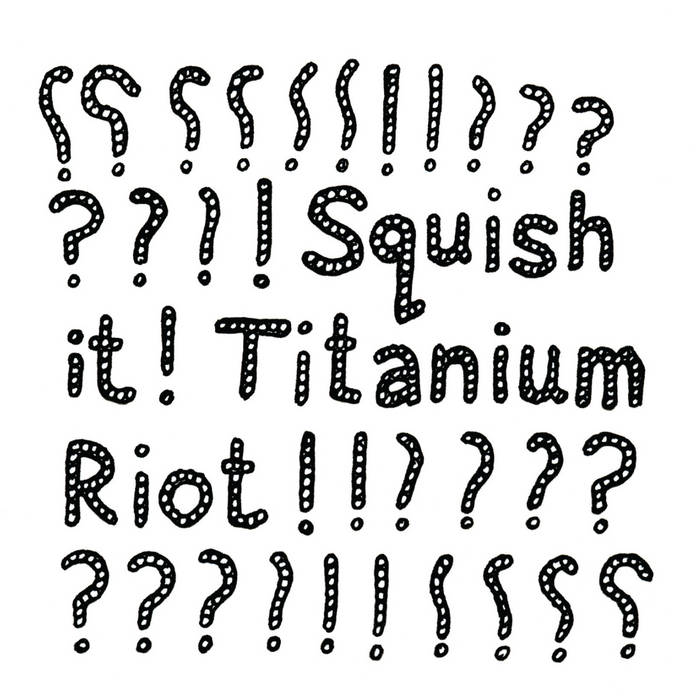
In that sonic world between two worlds, many things happen, but always with an element of surprise and wonder. The music hesitates sometimes, as if not daring to go where it is going, or phrases end with question marks, increasing the pitch ever so slightly, in strange anticipation of what might happen now. And it is only after having listened to this album many times, and wondering about the question marks, that I saw that they were on the cover of the album. There is no sense of urgency in the music. There is no urge to prove anything. The music flows. It flows full of contradiction and contrast, but warmly, gently, despite the atmosphere that something strange is going on. Strange and pleasant. 

You can listen and download the album from Bandcamp


Watch a concert by the band in Ulrichsberg, Germany, exactly a year ago. 


Monday, December 11, 2023

Lina Allemano - Canons (Lumo Records, 2023)

By Stef Gijssels

I will not write a full review of this album, as this has already been done by Sammy Stein, but just a short appreciation for the music, and some insights that I received from Lina Allemano herself. 

At first listen, the listener will be surprised by the form of the music, namely the use of the medieval "canon", a compositional technique that uses counterpoint and thematic repetition with a specified time delay, resulting in superimposing different voices creating a kind of sonic fabric of interweaving phrases. 

We have reviewed the influence of medieval music before in modern jazz 

Several albums also were directly influenced by composers such as Josquin Deprez (1450-1525), Guillaume de Machaut (1300), and several others (check our Search function). 

Already on Allemano's "Proof", the medieval influence was noticeable, but now she makes it the focus of the album. 

The power of this albums is that it expands it into a kind of special level of ear candy, nothing pretentious or too ambitious, but playful, solemn, fun, surprising and interesting. More poetic than epic, with the right balance between composition and improvisation. 

Here are Allemano's responses to my medieval references:

"Mostly I was just composing canons purely for fun and as a way to amuse and challenge myself - maybe other people would play Wordle or Sudoku for the same reasons…? I had no intention of them sounding like anything in particular but I think the very nature of the polyphonic compositional technique lends itself to sound a certain way, and of course that will reflect historical polyphonic music. I haven’t studied the music formally but I do spend a fair amount of time listening to contrapuntal and polyphonic music (mostly Bach piano works)". 

For her grant application, Allemano submitted the following description. 

"The Canon form is of course not new, but it is fairly new for me as a composer. I’ve always admired canons for the musical workmanship required to write one, but rarely tried to create my own as it's not a traditional form commonly used in my area of work. With my canons, I will not try to recreate the methods, goals or musical effects of traditional canons, but rather use the form in my own artistic context to create something new - for example: atonal canons, canons that reflect my own aesthetics of 'melody', canons that incorporate improvisation, etc. My prior compositional approach was to conceive of melodies and whole pieces in their entirety, making small adjustments only afterwards and then making further adjustments during collaborative development with my bands. With canons however, one must take an entirely different approach as a composer, as the ‘melody’ or line is the entire piece in itself and it must weave together with itself, displaced 2, 3, or 4 times, in some sort of logical/interesting way. I find this compositional approach to be fascinating and almost like some sort of musical chess game that develops slowly and incrementally as it goes, note by note. Each next note chosen in turn creates new meaning as it is stacked upon itself, displaced in the different voices. My aim with these canons is to essentially create through-composed pieces that also contain improvisation. The improvisations weave in with the canon to create an interesting effect: composed & improvised worlds meet & meld together. The listener at times detects the symmetry of the canon, perhaps only subconsciously, but it inherently creates a strong musical form. This is a departure for me as a composer, as I normally attempt to blur the line between composition and improvisation based on a compositional approach from the ‘song form’ tradition: short melodies with harmony and repeating form, along with collaborative input from band members."

And so is the music: smart, intellectually playful, with a compact aesthetic. In short ear candy? 

Listen and download from Bandcamp


Monday, November 26, 2012

Lina Allemano Four - Live At The Tranzac (Lumo, 2012) ****

 By Stef

Reviewers need to give some context and references for readers to understand through words what the music sounds like. This Canadian quartet consists of Lina Allemano on trumpet, Brodie West on alto saxophone, Andrew Downing on double bass, and Nick Fraser on drums. This "Ornette Coleman quartet" line-up says something about the band's roots, but then again not enough. The band indeed cherishes melody and rhythm, as the basis to start form, opening the compositions wide for further explorations, but never too far.

I'd been thinking at times about other modern OC quartets such as the Empty Cage Quartet, or Ideal Bread, yet these comparisons fail too. They don't have the broad aspirations of the former, nor the specific focus of the latter, ... or the Nordic IPA, with Magnus Broo, ... and no, that's not it either. It all sounds so familiar, so accessible though, so recognizable in a way, but then it is not. It's all so different too. Open themes, unison beginnings, and then playful explorations, sometimes soloing, sometimes layering the solos, but always lyrical, always contained, always playful, always joyful. And that's possibly the quartet's major strength : they really enjoy what they do. Or let me put it differently, the quality of the compositions invite the musicians to enjoy themselves, and the audience as a result, as you can experience from this live recording.

It is not expansive, nor is it intimate either. It is not loud and not quiet. It is absolutely not mainstream, but it is also not really free either. You get the feeling. It is lyrical with an edge, abstract lyricism if you want, for lack of a better word. But then that is not right either. It's far too emotional to be called abstract.

Sorry, I give up. It's too hard to describe. Lina Allemano and her band have created an eclectic sound that makes its own synthesis of tradition and avant-garde, of structure and freedom, of clever composition and emotional depth, of abstraction and warmth. It is not spectacular, it is just beautiful and moving and fun. And that's a lot.


Watch a video excerpt from the album


 You can buy the album from instantjazz.com.


© stef

Saturday, November 12, 2016

Lina Allemano's Titanium Riot - Kiss The Brain (Lumo Records, 2015) *****

By Stef

There is this backlog of music I still need to review. And among the albums that I listened to a zillion times over the past year, but without reviewing, is this one. And more will follow.

Canadian trumpeter Lina Allemano surprised us last year with this release, called "Kiss The Brain" with Ryan Drivers on analog synth, Rob Clutton on bass and Nick Fraser on drums. On her previous album, she explored the boundaries between inside and outside playing, "abstract lyricism" as I called it, hard to define actual themes, yet with structured and arranged parts anchoring the combined soloing.

She surprises us because the music on "Kiss The Brain" radically diverts from this approach into completely unknown territory, for a fully improvised performance. Drivers' synth is one of the most discerning sounds on the album, adding surprises all across the album, sometimes with flute-like beauty, sometimes raw and rough and brutal and ear-piercing, scraping, gnashing and grinding, supported by the wonderful free pulse of both bass and drums, who create fluent dynamics to support the wonderful beauty of Allemano's playing. Her voice is pure, in the sense that it is authentic, and she shows the breadth of her skills here, the incredible balance between muscular blasts and stutters and groans on the one hand and then the jubilating, moaning, singing, soaring lyricism on the other, sounding always right and surprising too, in a kind of miraculous contrast and harmony with the synth and the rhythm section. That results in a strange dynamic of expansion and contraction, or rather of the endless tension of trying to get liberated from confinement, a kind of musical chiaroscuro, especially on the dark "Fumes". The sounds hesitate, waver, tremble, oscillate ... and then they seem to break through this strange sonic universe with tenderness and soft warmth.

This is Allemano's album, and her voice is surely the strongest and most in the spotlight, yet the interaction among the four musicians is exceptional. The overall sound is contained, controlled and free, all tracks sounding like little stories, with rich suspence and shifting emotions. And it is especially this, the deep-felt emotions, that make this album so wonderful.

Don't miss it!


Sunday, March 8, 2020

Lina Allemano - Glimmer Glammer - Solo Trumpet (Lumo Records, 2020) ****½

By Stef

Canadian trumpeter Lina Allemano's first solo album was long awaited. At first listen, I was surprised and then I wasn't. To start with the latter: her music is inherently playful, full of the joy of creation, with rhythmic patterns and phrases on the first track inviting her to play around with, expanding them, as if she were a one man orchestra. There are moments of fun and humour, but also of deep emotions and technical bravura. And that's only the first track. It's no surprise because it's an obvious continuation of her ensemble work: a strong discipline in tone and structure with a wonderful balance between lyricism and abstraction.

The second track, "Clamour", offers a kind of internal dialogue, a strange creation of muffled multiphonics, dark growls leading to a self-generated response. She revels in this strange world, keeping its intensity till the end, focused despite the obvious changes.

So why was I suprised too? Because the solo setting allows her to go much further and deeper than on her ensemble work. "Shimmer" is a good example of this. The atmosphere is inherently sad, and her trumpet's crystal clear deep tones suddenly and unexpectedly get a reflection of multi-layered raspy undertones. It's a short piece, but very effective. On the title track she explores the nature of sound even more, with plosives, short percussive bursts, scrapings, whispers and toned notes. It's an exercise in explorative little surprises, in an effort to let the instrument speak for itself, allowing it to demonstrate what else it has to offer than the expected sounds.

The long last track is almost an instant standard, a modern gospel song with a warm tone and theme that suddenly starts to coil around itself, offering the theme's sonic mirror image, muted puffing and dark whispers, that suddenly evolve into human whistles, so intimate and near. A strange and very unique development.

Allemano enjoys her instrument, its tone and possibilities. Performing solo seems to offer her freedom, which she turns into a tight and focused and disciplined and varied listening experience.


Saturday, November 7, 2020

Jazzfest Berlin 2020: Day 2 (Berlin <--> New York City)

By Paul Acquaro

The connection between Berlin and New York for Jazzfest Berlin 2020 was fully realized today. Starting at 4 p.m. CET (Central European Time) or 10 a.m. EST (ya know, New York Time), WBGO's Nate Chinen introduced alto saxophonist Lakecia Benjamin who led her group through a set of John and Alice Coltrane's music. 
 
Lakecia Benjamin  ©Wolf Daniel
 
Suffice to say, Coltrane's sound filled the Roulette concert hall as drummer E.J. Strickland (replacing Darrell Green), bassist Lonnie Plaxico, and pianist Zaccai Curtis evoked a classic spirit. Benjamin took to the stage, playing to the robotic camera system and an audience attuned to their screens. She was ablaze. Within the first 15 minutes she and the band reached a level of intensity that set the bar high for the rest of her set. Though inspired by the Coltranes, Benjamin added her own sound, both reverent and modern, making it something new.

Then, switching to the stage in Silent Green, part-time Berliner Lina Allemano and her trio Ohrenschmaus offered a fascinating contrast. The fiery precision of Benjamin's set gave way to the precise firings of Ohrenschmaus' kinetic improvisations. To begin, Allemeno blew a fuzzy tone and Dan Peter Sundland drew a bow against the strings of his electric bass. Then, with drummer Michael Griener's help, the trio broke into a series of jittery syncopated passage. 
 
Lina Allemano and Ohrenschmaus © Camille Blake / Berliner Festspiele
 
Watching the concerts online does allow the mind to wander and to wondering: what does it mean to perform like this, sans living audience, but very much live in/to the world? Allemano captured this notion well when, after an intricate piece came to an end, she said "it's unnerving when there is silence ... in my imagination there are other things going on ...". Similarly, Benjamin introduced the band after their first tune as if there was a live audience there - and there was - but not able to provide feedback. New dynamics are at play.

Like what came next in the livestream. The performance from guitarist Philipp Schiepek Quartet was pre-recorded in Munich prior to the festival, but was premiering now. The piece “Meadows and Mirrors”, a sophisticated slice of modern jazz, was composed by Schiepek for the festival. This was followed by another pre-recorded concert, this time from Cologne, where trombonist Shannon Barnett led her quartet through a mix of modern jazz compositions, ending with a freely improvised piece.

Then, the concert moved back across the ocean to Roulette where woodwindist Anna Webber's group 'Clockwise' took the stage. They began by blowing a dissonant circular riff punctuated by sharp rhythmic hits. Reaching a peak of intensity, a solo passage on the cello opened up a new avenue of possibilities, eventually leading back to buzzing dissonance from the horns. Webber is a master of creating these knotty tunes. Her compositions often build in concentric layers, a mix of syncopated lines and fraught passages leading to gripping moments. (Check out her album Clockwise on Pi Recordings). 

Anna Webber's Clockwise ©Wolf Daniel

The group that followed, back at Silent Green, was actually the most "technically" advanced groups, so to speak. The duo TRAINING incorporated Işıl KarataÅŸ on live electronics, and playing from his apartment in the USA via Zoom, John Dieterich lent some guitar work (and also drank coffee for everyone). Performing against video backdrop, the group ran the gamut from fiery free jazz to digitally enhanced post-rock explorations with a little skronk mixed in. 

TRAINING feat. John Dieterich and Işıl KarataÅŸ (not in pic) © Camille Blake / Berliner Festspiele

This was the halfway mark, and having started at 4 p.m. and stretching until midnight, the amount of music was already staggering. Aside from the music, it is also interesting to watch how the musicians interacted - from performing to an empty hall to talking in real-time between Berlin and Germany, along with the interweaving of previously recorded performances, one gets the sense of more permanent transformation of the ideas of performance and festivals in the future.

... and it begins again on Saturday with Joel Ross live-casting from Roulette at 10 a.m. EST (NYC) and 4 p.m. CET (Berlin). For a full lineup, head here.