Click here to [close]
Showing posts sorted by relevance for query john sinton. Sort by date Show all posts

Monday, February 18, 2019

Three (more) from Christopher Hoffman

By Keith Prosk

Christopher Hoffman had a productive 2018. The cellist recorded on Henry Threadgill’s Double Up, Plays Double Up Plus and Dirt… And More Dirt as well as his own Multifariam and Arrow Of Light and Josh Sinton’s making bones..., the latter three of which are covered here. He’s already back at it in 2019, appearing on Anna Webber’s Clockwise.

Christopher Hoffman - Multifariam (Asclepius Records, 2018) ***


Multifariam is 16 vignettes across 37 minutes featuring the large cast of Aaron Kruziki (flute, bass, clarinet, loops), Tony Malaby (tenor sax), Christina Courtin (voice, violin, loops), Michael Bailey (synths, loops), Michael Pitt (voice), Frank Locrasto (Rhodes, Juno, Arp, Panther), Jeremiah Cymerman (clarinet, loops), Ari Chersky (guitar, loops), Craig Weinrib (Drums), and Gerald Cleaver (drums) alongside Christopher Hoffman (cello, loops, bass, keys). Explicitly influenced by MF Doom, Miles Davis, Terry Riley, and John Carpenter, these electroacoustic sketches utilize loops and tone rows to approach a result that in turns resembles hip hop beat tapes and action film scores, or sometimes a jazz-rock that reminds me of Face Ditch and Caveman Shoestore. It’s a fun collage. But its glossy production aesthetic that sometimes sounds like bad blockbuster narratives read might be too cheesy for some listeners. I’m a sucker for the stereotypical cathartic end of films - that feel-good moment after the storm - and tracks like “A Ghost,” “Frontier Surgeon,” and “In Higher Frequencies,” with their delicate, lullaby-like melodies and minor-key drones and bowed strings, fit that mood perfectly. Another standout is “The Upper Chambers,” where a flute drowned in delay and chorus effects is met with Hoffman’s bowing, like an espionage flick in the near east. Given that Hoffman is an aspiring film-maker and making headway into the realm of film (touting relationships with Martin Scorsese and Michael Pitt, whose voice appears on “Quieting”), this is an interesting and worthwhile step towards what will undoubtedly be an increased emphasis on film scoring when he’s not playing premier jazz ensembles.

Multifariam is a digital-only release available here.


Christopher Hoffman - Arrow Of Light (Asclepius Records, 2018) ***


Arrow of Light is a short (4 tracks, 18 minutes) acoustic trio with Adam Hopkins (bass) and Craig Weinrib (drums) accompanying Hoffman (cello). It almost feels staid. Hoffman’s often soloing over a fairly static rhythm section. “The Purge” and “The Election” are nearly head-improvisation-head structures. And the latter is an improvisation on “Oh! Susanna” teetering on the edge of feeling like a sterile Ayler take. However, the recording is nearly all bowed cello - pretty satisfyingly emotive bowed cello at that - which is a treat considering Hoffman more often plucks the instrument on most other recordings. And, despite my reservations previously stated, I find myself enjoying the “The Election” and “The Purge” most. The latter begins with Hoffman and Hopkins plucking a harmony and then some almost-eastern cello soloing over the rhythm section before moving to Hoffman and Hopkins bowing a harmony that transitions to bowed counterpoint before closing out with the plucked head.

Arrow Of Light is a digital-only release available here. Purchasing Multifariam from Hoffman’s site gets you a free copy of Arrow Of Light.


Josh Sinton’s Predicate Trio - making bones... (Iluso Records, 2018) ****


Josh Sinton’s Predicate Trio features the multi-reedist (on baritone saxophone and bass clarinet here) alongside Hoffmann on cello and Tom Rainey on drums, and it debuts on making bones, taking draughts, bearing unstable millstones pridefully, idiotically, prosaically . It’s 47 minutes across 9 tracks, recorded in single takes on a single day at Buckminster Forest. Sinton and Hoffman have recorded together before, on at least Yoni Kretzmer’s Months, Weeks and Days and The Tri-Centric Orchestra’s Agora, Questions of Transfiguration, Vogelfrei, and the synergy shows, with Hoffman often complimenting Sinton’s space when he’s not harmonizing with him. That harmonizing, like on “bell-ell-ell-ell-ells,” “unreliable mirrors,” or “propulse,” recalls the way harmony was used in the music of Steve Lacy, of whom Sinton is a disciple, except it will fluidly transform from and to counterpoint. Though it often seems Hoffman is playing with Sinton more than Rainey, rhythmic interludes on “bell-ell-ell-ell-ells” and “propulse” cast away any doubt that Hoffman/Rainey are a powerful rhythmic unit by the time Sinton returns to the fold. But the stand-out moments, of which there are several, most often come when the trio is playing all together or alone. Like the syncopated sax, punctuating bass drum, and bowed cello vamp recalling “Dogon A.D.” on “taiga” and hissed air notes and gurgling, bass rumbling, and plucked cello sounding like an insect crawling on “unreliable mirrors.” Or the sultry, multiphonic Sinton solos bookending the album - “mersible” on clarinet and “plumbum” on sax - and the fragile, plucked Hoffman solo beginning “a dance.” And, though complex compositions and bravura are present, the emphasis is always on emotivity. A very solid recording for each musician and the trio. Here’s to hoping the collaboration continues.

making bones is available digitally and on CD.

Saturday, February 24, 2018

Josh Sinton - krasa (Irabbagast Records, 2018) ****

 By Eric McDowell

When International Anthem released John McCowen’s Solo Contra in early December 2017, no one would have been blamed for assuming it was the only new solo contrabass clarinet album we’d be hearing for a while. And yet just weeks later came Josh Sinton’s krasa, on Jon Irabagon’s Irabbagast label. The stubborn expectation that their both being solo contrabass clarinet albums means they should be similar, though, comes more from the relative rarity of the featured instrument than from any fundamental overlap between the way the two musicians approach their project. In contrast to McCowen’s slender disc of streamlined acoustic drones, Sinton offers a (relatively) sprawling set of improvisations that ranges a territory both familiar in places and—more often—utterly alien.

Sinton front-loads the album with its longest track, the 16-minute monster “Sound.” It’s not what you’d call a hospitable gesture, but then again just because this might be your first exposure to the contrabass clarinet doesn’t mean the album is an introduction to the instrument. (It’s decidedly not.) In fact, without any contextual information, there’s a chance you could get through the whole of “Sound” under the mistaken assumption that you were hearing—what, a guitar? “Electronics”? An archaic machine doing some kind of grimy but vital work? Like saxophonist Matt Nelson and the rest of the GRID trio on their self-titled debut, Sinton (with the help of a few well-chosen tools and effects) pushes his instrument far outside the realm of reasonable expectation, somehow prompting us to split our attention between the end result of the music and the means, one moment looking beyond the contrabass clarinet altogether, the next seeing the instrument in a new light.

This can be something of a difficult—some might say tense, even painful—experience. As Sinton tests his instrument, he tests us, too. “And,” for example, sets up a relatively stable drone that’s ruptured two minutes in by a sudden snarl, after which tortured wails, squawks, and pops dominate the piece. With “Heard,” the album ends on almost ten minutes of temperamental distortion and vein-snapping strain. It’s tracks like “{prelude to),” taking a more or less recognizable approach to the clarinet, that throw the rest into relief. What ties it all together is the underlying human quality Sinton manages to draw out of his playing on krasa, whether he’s working in a conventional mode or fraying sonic boundaries. As mechanical and unearthly as the music can sound, it never comes across as anything less than living: Hear him on “Felt” sucking sharp air to recharge—or on “Sound” or “(now}” infusing the instrument with an unmistakably vocal character. While the words may be impossible to discern, they’re not meaningless: They express a terrible sense of desperation and struggle.

The album’s title is likewise ambiguous but evocative. Does it refer to a Czech word for “beauty”? Does it refer to the Czech composer Hans Krasa, who was murdered by Nazis in 1944? Or does it refer to something else altogether? Sinton draws mixed resonances together without resolving them, leaving the sounds that result more felt than heard.


Friday, February 9, 2024

Solo Sax

 By Stef Gijssels

It's time again for a solo sax review. Albums have been piling up again since our last overview in September 2022. And due to your humble servant's incredible slowness, some albums have in the meantime already been reviewed by more skilled - and faster - reviewers. Patrick Shiroishi's album was already reviewed here by Irina, Rob Brown by Gregg here, and Camila Nebbia by Jury here. All three come recommended, so it's a good thing they get multiple reviews. 

Patrick Shiroishi - I Was Too Young To Hear Silence (American Dreams, 2023)


My preference in this list of ten is this remarkable and very personal album by Patrick Shiroishi. Recorded in a "cavernous parking structure below a hot pot restaurant in Monterey Park" around 1.30 am in one take, the album has a unique voice, with sparse alto tones reverberating in the empty space. Shiroishi explains "the Japanese concept of 'Ma' or negative space, or the space in between. 'Ma' refers to the notion of negative space as a positive entity, rather than an absence of something else. The pauses between notes are not empty vacuums void of substance, but rather are full and present, valid contributions to a balanced composition'. 

Shiroishi uses this space to maximum effect, as a pause between bursts of sound, as a contrast to give deeper value to his often beautiful phrases, as a moment of reflection on what you just heard, or just to experience the silence. At times there is background noise in the silence (a car? a bus?). It gives the voice of the alto a sense of desolation, not always in a negative way, sometimes as positive solitude, yet also sometimes as shrieks of anguish. 

The single take and the unique sound makes this like a concept album, on which the different songs are all an integrated part of a much larger whole. Shiroishi also wonderfully manages to use his large array of technical skills to serve the ultimate sound he wants to achieve. No sound is cheap, but carefully crafted, balanced and paced, translating his deepfelt emotions into his own aesthetic. 

The vinyl version has already been sold out, but luckily the digital version is still available. 

Don't miss it!

Listen and download from Bandcamp. 


Josh Sinton - Couloir & Book of Practitioners Vol. 2 (Self-Released, 2024)


As one of our first album reviews for 2024 we can present this double album by Josh Sinton on baritone saxophone. 

The first one, "Couloir" is a set of fifteen short pieces that Sinton describes as 'thinking out loud musically'. He takes the listener to various corners of a very large musical room, with incredible and gentle decisiveness, often surprised himself at what he is showing us, yet the compactness of the pieces, their specific character, ranging from relative playfulness to improvisations with a gravitas that is more suitable for the instrument's sound, make this a wonderful listen. 

The second album is Book W by Steve Lacy, one of his 'Books of Practitioners', and Sinton's sequel to his "Book of Practitioners, Vol. 1" of last year. You can read the review and some more background on Lacy's books here. It's also fun to compare it with John Raskin's take of the same material last year. The pieces are what Lacy intended them to be: exercises for practice, more than artistic endeavours, but as it is, the naturalness and the playfulness that Sinton demonstrates, lift the six pieces to a higher level. 

Listen and download from Bandcamp. 


Rob Brown - Oceanic (RogueArt, 2023)


Another solo alto album was released earlier last year by Rob Brown, one of the mainstays of the New York jazz scene for decades. Performing on no less than 140 albums, this is his second solo release, since "Silver Sun Afternoon" from 2003, an album that I've never heard, so a comparison is not possible. 

It's great to hear him play solo. Brown has a very clear and warm tone, and a natural tendency to lyricism in his improvisations, which are also his core trademark here. His playing is relatively straightforward, with limited use of extended techniques or timbral explorations, and he does not need to, because his approach lies elsewhere, in a kind of natural storytelling through music, translating impressions and feelings into sonic narratives, with moments of urgency, calm, excitement or just joy. 

The eight tracks are inspired by the ocean, of which the first four form a suitelike sequence. It's hard to say whether the visual images of the ocean are directly reflected in the music, but the unpredictability, the various faces of the sea, its changing colours, the drifting on the waters, and the ever moving waves are easy to imagine through Brown's art. 

Listen and download from Bandcamp. 


Amalie Dahl - Memories (Sonic Transmissions Records, 2023)


Danish saxophonist Amalie Dahl is someone to look out for. She only ended her education at the Jazzdepartment at Norwegian University for Science and Technology in Trondheim in 2021. One year later she already released her first album as a bandleader, “Dafnie”, and now, another year later, her first solo album. 

She is an artist with a daring vision, presenting sounds that are sometimes hard to classify, such as the combined playing and singing on the first track, or the whispered sounds during the intro of the second. Her tone is steady, decisive while at the same time sufficiently fluid and versatile to let the music evolve almost naturally and organically. She is also not afraid to let silence play its role, which is surprising for such a young musician. She is one of those artists who clearly does her own thing, very personal and heartfelt. 

The theme of the album is a play on thoughts around the perception of time of "here and now", and of the memory that follows. "Life consists of a series of moments, a series of here and now, some of which remain as important events and discoveries that help to shape what is to come. Our identity is a sum of memories. These memories and moments can set off chain reactions that inspire and interact with new people in a constant flow". A moment can become a memory to revist time and again. 

The solo album finds its conceptual counterpart on Amund Stenøien Quartet's "Coming to pass", released on the same day by the same label. 

Listen and download from Bandcamp. 

Tom Chant - Solo (Hera Corp, 2023)


Irish saxophonist Tom Chant is a musician with many faces and musical genres. I first got to know him in the late '90s with the Cinematic Orchestra, in an earlier musical phase I was in, smooth, rhythmic, hypnotic music for imaginary movies. He also got to know the London free improv scene in the meantime, which has become his more natural habitat. Stuart Broomer reviewed another of his album recently with "A Bright Nowhere" (actually/coincidentally today when I write this). 

On this solo audio cassette, he presents his personal vision the solo genre: the pieces are all around five minutes long, whether on the tree tenor or three alto improvisations. This is really music that it 'in the moment', as you can expect from free improv. Chant explores the possibilities of multiphonics on his horn,  creating amazing sounds, some of which remain stable while others change pitch. The sound is raw and unpolished, direct and unadorned. 

As the liner notes adequately describe: "Like in a Pinter play, sounds are "just there", staring at you; better just take them as they are. They will stop when they are tired, or bored. "

Listen and download from Bandcamp. 

Camila Nebbia - Una Ofrenda A La Ausencia (Relative Pitch, 2023)


In sixteen relatively short improvisations, Argentinian saxophonist Camila Nebbia demonstrates her art in all its versatility and creativity. I think it's already her third solo album, and it is recommended listening for fans of this kind of musical exposure of personal feelings and sentiments. The quality of her work resides not only in the technical skills on her instrument - which are varied and at times astonishing - but in the self-assured power of her presence, and the courage to reveal herself in such a way with no place to hide. Even if most of the pieces are short, she manages to convey something deep and meaningful, giving herself fully to the music. The title means 'an offering to absence', the paradox for the wealth of her offering us her musical presence. 

Listen and download from Bandcamp. 

Audrey Lauro - Sous Un Ciel D'Ecailles (El Negocito, 2022) 

We've praised French altoist Audrey Lauro before on her albums with Giotis Diamandis "Dark Ballads" and here (2021), with Lauroshilau "Live At Padua" (2021), with Rachel Musson and Naoko Saito "点字呼吸の領域 [The Region of Braille Respiration]" (2020), with Giovanni di Domenico on "The Ear Cannot Be Filled With Hearing" (2018). 

Now she treats us to a twenty-four minute long solo album, with a title that roughly translates as "Under a sky of scales". The performance was recorded at la Chapelle du Grand Hospice, one of those well-hidden venues in Brussels, on April 6, 2022.

It is a subtle, sensitive and inventive record, with a sound that resonates in the space of the chapel, the ideal setting for her multiphonic skills. The music is slow and precious, with the occasional burst of power, but mostly disciplined, controlled and free. Every sound appears to be precious and valuable to her, and that's the way we like it. 

Listen and download from Bandcamp. 

Adam Pieronczyk - On The Way (Self-Released, 2023)


Without a doubt, Polish saxophonist can be called a virtuoso on his instrument, which he demonstrates to the full on this third solo soprano saxophone album recorded live at a concert in Gdansk in December 2022.  This year is also the 10th anniversary of his solo project, which started with "The Planet Of Eternal Life" (2013), and "Oaxaca Constellation" (2022). 

His music is pure and playful, and his artistry is concentrated in the search of aesthetic beauty rather than in timbral explorations and finding new ways of expression. Maybe the reference that best comes to mind is the poetry of birds: singing without any other pretense than the joy of announcing the day and the pleasure of life itself. Two tracks are little bit slower and at times more melancholy ("Philo" and "Little Beings From The Basswood"), yet never for long, and are equally impressive. 

For once, it's also good to hear the enthusiastic audience during the performance. 

Bruno Parrinha - Da Erosão (4DA Records, 2023) 


Portuguese altoist Bruno Parrinha is - at least to me - best known for his collaborations with his fellow countrymen Ernesto Rodrigues (seven albums together this year!), Sei Miguel and Luis Lopes, but here we find him on his frist solo album. 

Parrinha's tone is warm, soulful, welcoming and sad. The melancholy of his tone is well described in a poem he wrote,  which I let 'deepl' translate into English, which is possibly not the most accurate tool to translate poetry, but I'm sure it somehow captures the spirit. "The erosion of me" is a painful image, and that melancholy sense of things moving away from you captures the sound wel. 
The sound is direct, as if you were standing next to him, listening in to his private expressions of sadness. On some tracks, such as "Condição Eólica", he takes a more adventurous tone, expressing the sound of wind. The last track is an incredible feat of circular breathing, that not only shows his skills at the instrument, but also encapsulates the essence of the album through its kaleidoscopic yet coherent variation.

Music straight from the heart. 

Listen and download from Bandcamp. 

Nicolas Stephan - Null (Petit Label, 2023)


'Null' is a relatively short thirty minutes of solo improvisation by French saxophonist Nicolas Stephan. He wanted to strip his instrument of all superfluous things, and let it take the lead, accepting minor mistakes, and follow wherever the moment brings the sound. He plays tenor and straight alto, and at moments also synth and trumpet. His playing is good, warm, intimate, pleasurable, until he adds abrasive background taped sound to challenge his music. It distorts his original intention, and - in my opinion - reduces the quality of his playing. The best track on the album is the third, a moving, beautiful and very tightly controlled improvisation. On the last track, sample music creates the overall sound. I'm somewhat mystified what this adds to the music, but I'll let the reader decide. I'm sure the artist had a clear plan, but it's a missed opportunity. 

Listen and download from Bandcamp. 

Wednesday, January 9, 2019

Solo Saxophone

By Stef

A quick and dirty overview of all some solo sax albums that were released this year. We were already spoiled by the beautiful Victoriaville performance by Anthony Braxton, but there is a lot more to enjoy.


Joe McPhee - Seattle Symphony (Kye, 2017)


One of my preferred solo sax albums was actually released in 2017, but never reviewed (shame on us!. It is a solo performance by Joe McPhee, also on trumpet, recorded in August 2010. The performance and the album are dedicated to Bill Dixon (Side A) and Fred Anderson (Side B) who had just passed away in June of that year. McPhee is a formidable player, an artist who has the luxury to be able to translate almost every subtle feeling and spiritual insight into a musical expression. He plays with timbre, tone, pace and volume in a natural, free-flowing and soulful way, managing to be immediately rewarding while at the same time creating artistic novelty.

All pieces are subdued, solemn and reverent, even if the second piece is called "If I Had Drunk An Entire Bottle Of Scotch, I Still Wouldn't Have Understood A Fucking Thing You Said". Dedication to deceased friends does not mean that humour should be absent.

If you like McPhee's playing, this one should be in your library.


Kan Tae Hwan - Live At Café Amores (No Business, 2018)


Again a treasure trove find by No Business, now with a solo performance by South Korean altoist Kan Tae Hwan, recorded live on the 8th October 1995 at Café Amores, Hofu, Yamaguchi, Japan.

His tone is fascinating, as are his skills in altering the timbre of his horn. Musically, he includes jazz and folk elements to build his improvisations which are all quite distinct and with a unique voice. He makes the rare combination of lengthy timbral explorations and multiphonics à la John Butcher, while at the same time trying to add soul to the process, more in the style of McPhee. The mood shifts between sad melancholy and wel-paced spirituality, with the occasional - albeit rare - outburst of nervous energy, making this a very entertaining album.


John McCowen - Solo Contra (International Anthem, 2017)


We reviewed Josh Sinton's "Krasa" solo contrabass clarinet album earlier this year, and as mentioned, it was released only a few weeks after John McCowen's "Solo Contra". Highly coincidental, but such is the nature of chance happenings.

McCowen started with music as the singer of a hardcore band, and shifted to saxophone when his voice got affected. He took his new vocation seriously, studying the instrument at various schools, ending up studying with Roscoe Mitchell. Even if McCowen's voice was affected, apparently his lungs were well trained by the heavy metal singing. The feat he performs on this unwieldy instrument is exceptional and a real treat: he leads us on a real journey of sonic discovery of both the very deep tones and the spectacularly high vibrating and multiphonic tones that he manages to extract from his instrument. The artist's effort is one of high physical concentration and effort, especially in the long circular breathing moments, when even the listener is gasping for breath, yet McCowen plows on, uprooting sounds, and freeing them for the world.

It sounds impossible, but the whole performance is acoustic without overdubs, and was recorded with no less than thirteen microphones to capture the full sound and vibrations of McCowen's improvisations. The sound is unique, and it demonstrates that even music lovers with a broad and deep interest in improvised sonic adventures can still expand their horizon.


Patrick Shiroishi - Tulean Dispatch (Mondoj, 2017)


In a way it's amazing that we have not reviewed any music by Patrick Shiroishi, a Japanese American multi-instrumentalist based in Los Angeles. He has performed solo sax albums before, and "Tulean Dispatch" is really easy to recommend. He is a saxophonist in the style of John Butcher, creating intense resonating timbral explorations, but adding more melodic melancholy and raw anger to it.

The "Tulean Dispatch" is the name of the newspaper of the Tule Concentration Camp, where Japanese American citizens were relocated after Japan declared war to the United States at Pearl Harbor. Shiroishi's grandparents were placed at the camp. The narrative is reflected in the music, in all its power of indignation and sorrow. Calm and mourning moments alternate with ferocious outbursts, as in "The Screams Of A Father's Tears". The longest piece, "Form And Void", is by itself worth buying the album for, with its deep tones of unrest, powerlessness, agony and feeling of injustice: pure and authentic expressivity. The last track, "The Flowers and Candles are Here to Protect Us" brings the tone back to calmer and solemn spheres, full of sorrow and pain.

Listen and download from Bandcamp.


Patrick Shiroishi - Sparrow's Tongue (Bandcamp, 2018)


On "Sparrow's Tongue", the tonality and mood are completely different. Gone are the anger and the sadness, and replaced by more intimate and spiritual beauty. Shiroishi never raises his tone but develops long timbral explorations, overtones and circular breathing bouts, simplifying his melodic approach, and working around a core tone, adding subtle changes in pitch and colour. His mother, Uzuko Shiroishi, recites Japanese tanka poems as introduction to some pieces or as an integral part of others, poems written by Shiroishi's grandfater, Seiji Inoue. Field recordings provide the backdrop for some pieces. On two tracks he plays alto and soprano simultaneously, and on "The Crocodile's Dilemma", he plays his "soprano into a snare drum to create a kind of feed-back with the instrument interplaying with an audio recording of an atomic bomb slowed and reversed". On other pieces, and especially on the last track, silence or absence of sound also plays an important part. A wonderful reduction to the essence of sound.

Listen and download from Bandcamp.


Lea Bertucci ‎– Metal Aether (NNA Tapes, 2018)


Lea Bertucci is a composer, saxophonist and clarinetist. She also uses field recordings, ranging from Mayan pyramids to New York subways. On "Metal Aether" she explores what its title suggests: the paradox of sound, the physical impact of something intangible, the effect of sound on the brain, the vibrations of sound that penetrate your body. Unlike the other albums, her performance is layered, with more interest in the overall sound of the piece than on the actual power of the instrument itself. She creates interesting and fascinating harmonic structures, but also dramatic effects as on the long "Sustain And Dissolve". Clever and imaginative.

Listen and download from Bandcamp.


Marco Colonna - Sketches for Victor Jara (Self, 2018) & Foraminifera (Plus Timbre, 2018) & Prometheus (Bandcamp, 2018)


After last year's "Bushido", on baritone sax solo, Italian saxophonist Marco Colonna offers us several solo albums, and of a quite different nature.

"Sketches For Victor Jara"is a very lyrical tribute to Chilean poet, singer and political activist Victor Jara who was killed during the Pinochet regime. Colonna performs the compositions by Jara and a few others on alto, clarinet and bass clarinet. The music is very accessible, reverent, jubilant, dancing and weeping: it sounds simple, but Colonna's beautiful tone and lyricism makes this a very unpretentious and nice album.

"Foraminifera" is much more avant-garde, a solo perfomance on clarinet and bass clarinet only. Colonna looks for unique sounds, with lots of whispers, tongue clacking, howls, circular breathing, and polyphonic explorations, but always built around focused linear improvisations, which maintain a kind of implicit lyricism, including some folk elements. The music has an overall deep organic quality, something intimate and close to earth and nature.

"Prometheus" is again of a totally different nature, and not really a solo sax album, since he also plays flute, alto flute, clarinet, bass clarinet, baritone sax, Sicilian tambourine, pandeiro, bendir, riq, glockenspiel, analogue synthetizers and low mbira. It's an album full of variation, often with strong rhythmic explorations, including the joke of the stuck record needle, and with a multi-layered density that also creates interesting harmonic interplay, as on the last track, "Sketches Of The Future", where his horns collaborate like a real ensemble.

Interesting and prolific work, and I recommend readers to check first which side of Colonna will please them most.

Listen and download from Bandcamp.


Florian Walter - Bruit Botanic (Umland, 2017)


Florian Walter is a young German saxophonist from Essen, whom we know as one of the musicians on the Umland label, with "Bruit 4" and as a member of "The Dorf". On this album he plays alto, baritone, contrabass clarinet and reed trumpet.  He is an artist with a very clear idea of what he wants to do and how, combining intellectual curiosity in new sounds with a pleasure to also share them. The label writes that "Based on the idea of amplifying the low-end dynamics of his horns, he developed an uncommon way to produce dense and microscopic fields of sound which aesthetically blur the borders between drone, noise and musique concrète", which is a good description of the music ... or put differently: you will be treated to a journey into the unknown, with Walter as your assertive and determined guide. He seems to love all these weird sounds that come out of his various instruments, and then he paints with them, abstract canvases, in broad strokes, or in energetic lines, in pointillist gurgles, or in stretched tones, spliced even, circular, with growling and screaming and steaming at the same time, as if through some unknown magic his instrument has become an orchestra of the unusual, an ensemble of the extraordinary, a band of the unexpected. He enjoys it, he loves it, and his enthusiasm is infectious.

Listen and download from Bandcamp.


Watch a fourty minute performance by Walter on various known and unusual horns:


Saturday, December 7, 2019

Interview with John McCowen

John McCowan. Photo by Peter Gannushkin.

By Keith Prosk

We’ve fondly reviewed clarinetist and composer John McCowen’s Solo Contra, 4 Chairs In Three Dimensions, and Mundanas I-V. With his nuanced approach to the multiphonics of the clarinet family, he’s surely one of the most exciting players to have developed in the past decade. Here, we touch on the thought behind his music, where he’s coming from, and where he’s going.

K: One aspect of your work is exploring the “dimensionality” of the clarinet. I interpret this as anything from multiphonics from a solo clarinet, to using clarinets in duo or quartet, to cataloging the techniques and timbres of the clarinet. Maybe the physicality of it too, from how air and sound physically acts at a certain point on or in the instrument to interactions with the environment and resonances. What do you actually mean by this? And why choose the clarinet?

J: You're pretty dead on. I use "dimensionality" to describe the layers of sound and the interactions between those layers. An aspect of this type of playing that I love is those interactions(which include beating patterns and pitch fluctuation), and how they vary depending on air pressure. I guess these are common aspects of what can be considered drone music.

I chose the clarinet because I was a saxophone player with an amazing clarinet teacher, Eric Mandat. I didn't feel I had a distinct voice on the saxophone, and my attitude was pretty set in thinking the ground had all been paved in regards to the sax. But as Eric opened me up to the possibilities and I kept experimenting, I found my own voice and saw a lot of possibilities. Everyone reading this should check out the music of Eric Mandat. My approach is directly related to his. His work is extremely deep and unique. He's influenced me greatly.

K: A decent chunk of Mandat's work focuses on clarinet duos, trios and so on up to sextets, a path that you appear to be following at this point. I'm guessing this is primarily to create layers that are physically difficult or impossible for one player to create simultaneously, opening up new possibilities for layer interactions. But is there something else Mandat is trying to achieve with these ensembles? Is there something else that you're trying to achieve with these ensembles? And do you think you'll compose for clarinet ensembles and solo clarinet for some time, or are you already thinking of incorporating other instruments in the near future?

J: I’ve been most influenced by Mandat’s solo music, pieces like The Jungle, Illinois Central, and Chiral Symmetries.

I’m always trying to expand the layers one clarinet can create. That’s my main focus. But my duo music for instance, was due to the limitations of one instrument as well as ideas of counterpoint in that style.

I’ve mainly composed for clarinet due to my immediate access to the instrument. But I don’t have any interest in being a “clarinet composer” exclusively. I’ve written works that don’t involve the instrument and I am working on music for chamber situations. I’m also trying to hear what a working group for my music would be like. I just try to follow what I’m hearing.

K: Beyond mentioning the dimensionality of the clarinet, you've also likened it to an acoustic synthesizer. Some of your work does sound like the undulating sine waves of early analog synths, but is there another meaning there?

J: The acoustic synthesizer is essentially a polyphonic tube based on the interactions of a fundamental and it’s partials. “Dimensionality” is a descriptor of these relationships. This is essentially additive synthesis within a tube controlled by air pressure. The relationships between partials can create combination tones, etc. I’m way into it.

K: Ah, OK. But just to drive the point home and clarify for both me and our readers, you can play a tone (a fundamental) with overtones (it's partials) and the waveforms of those overtones interact to produce new waveforms (combination tones, etc.), which is the definition of synthesis (an aspect of dimensionality). I was hung up on the image of a Roland TR or something, but now I'm thinking any polyphonic instrument can be a synthesizer.

It's my understanding that partials and their interactions become more difficult and eventually impossible to hear or consciously sense. But, of course, they're still occurring and interacting. Is this where your use of Boethius' musical classifications comes in, with some of your work referring to musica humana and mundana, which I understand to refer to the unsounded yet felt vibrational harmony between humans and the unheard vibrations of the natural world respectively? Or is there another reason that you refer to this classification system?

J: I should clarify that this begins with multiphonic playing. This phenomenon occurs when the air is allowed more than one exit point in the tube, then through air speed and pressure, air can be guided through multiple exit points. I’m referring to a multiphonic as having a fundamental and proceeding partials (aka harmonics, overtones). Due to the long tube of the contrabass clarinet, the ability to create dense and multifaceted multiphonics is increased. The partials I can access only go up into the 20s or 30s at most. Which isn’t really that high because the clarinet, due to it being a cylinder, only has access to odd harmonics. But the most partials I can access simultaneously is around 5-6, but this is only a few, more commonly 2-3.

My interest in the concepts of Boethius doesn’t go beyond audible sound, really. It has more to do with my interest in what may constitute “music of the spheres” or “human music”. I’m very interested in sounds that have nothing to do with human creation. For instance, those videos on YouTube of what are supposedly the sounds of tectonic plates moving that sound like brass from the gates of hell. But also the idea of “human music” as sounds from the industrialized world, like the spectral drones of U.S. muscle cars from the mid-20th century.

K: That's super interesting. I feel like I would characterize the car as an instrument. And that human music comes from the body, like what a body communicates to an audience with a rapid or a resting pulse, a heavy or a light footfall, a yawn, a sigh, a laugh, grinding teeth (for audible examples) - the dynamics of our movement. Imagining what music of the spheres could be leads you down interesting paths for sure; since we talked about waveforms, I'm currently imagining the "compositions" that the earth writes, like a tsunami wave from a marine earthquake, when a terrestrial earthquake writes its waves on the surface or in a fence, how a river becomes increasingly sinusoidal as it approaches the coast, or the ripples of a tidal flat preserved in rock, for instance.

Since you've mentioned tectonics and Eric Mandat, I'll mention that I actually attended Southern Illinois University in Carbondale, which is your hometown, for some graduate work in geology (never finished though). Beyond the mentorship of Mandat, does your music reflect southern Illinois or your experience there in any way? The geography, culture, climate, history, people, etc?

J: Oh whoa! Such a small world. Go Salukis.

Being from Southern Illinois is a big influence for me. I had a lot of space and time to develop. Most people think of Illinois as corn fields, and for suuuure we have those. But, we also have the Shawnee National Forest.

Carbondale had a bustling DIY scene the whole time I lived there. It was a regular touring stop for a lot of bands from all over. So, the scene I came out of was DIY eccentrics improvising and playing in bands. I booked a regular improv series there for a year or so. Which was groups of all local musicians doing free improv. The local radio station had a DJ named Dave X, who also booked a regular noise/improv festival. He also had a weekly 4am-6am slot where he played noise, improv, field recordings, etc. A good number of musicians I grew up with there have continued to develop awesome work to this day.

K: Unfortunately, I never visited Shawnee or the other parks and forests in the area but I spent some time paddling the beautiful lakes there. And I wasn't even aware of this kind of music when I was there, but it sounds like a rich scene.

I understand you started as a vocalist in that scene. Do you carry your experience as a vocalist over to your clarinet technique in any way, or have any interest in doing so? Like through non-traditional embouchures (something like Nate Wooley's Syllables comes to mind) or speaking/sounding through the instrument (for example Josh Sinton's krasa). Or do you have any interest in composing for vocalists in the future?

J: Yeah I started out as a vocalist in a hardcore band. I did that for maybe four years? I feel like the main lessons I took away from that time are the dangers of being egocentric. After that period I became a quieter person and wanted to focus on wind playing. Which was a less painful way to express myself. I heard Albert Ayler and didn’t see much difference between what he was doing and what I was doing in a punk band. But even when I was a vocalist, I was listening to a lot of late John Coltrane and Sun Ra. I think I was just interested in extreme music no matter what the style.

I don’t really see that vocal style influencing the playing I do now. I don’t use that vocalizing-while-playing style of multiphonic, either.

I have composed for vocalists in the past, but I currently don’t have any plans to do. But I am interested in the voice for sure; whether it’s madrigals, modern auto-tuned pop, or what Charmaine Lee is developing.

K: I'll have to check out Lee, I haven't listened to her before.

Beyond Lee, Mandat, Ayler, Coltrane, and Sun Ra, are there any musicians or specific recordings or performances that have particularly inspired your work, especially recently? And beyond what you've mentioned about southern Illinois, anything outside of music and sound that has inspired your work, especially recently?

J: A lot of recordings by the late recorder player, Frans Brüggen. Especially his recordings of the Handel Recorder Sonatas and Jacob Van Eyck's Der Fluyten Lust-hof.

Besides that, seeing live music is incredibly inspiring for me. A good performance leaves me focused and inspired for days.

As far as influence goes, I have to give respect to Roscoe Mitchell. He was an equivalent mentor just like Eric Mandat. Roscoe really helped me clarify what I was trying to do. He’s a true master of structure and form.

Others that have really influenced me is the glacial patience and development of Elaine Radigue, and the work ethic of athletes like Steph Curry and Kobe Bryant.

K: I've been spending some time with Radigue's Occam Ocean 1 & 2 recordings lately (and saw Nate Wooley perform his occam earlier this year). It's an absolutely breathtaking project, and I particularly enjoy the focus on the individuality of the performers and their technique. And you studied with Mitchell while attending Mills College. Between her legacy with the school and collaborations with Radigue, I feel like there's a connection to Pauline Oliveros somewhere...
But I suppose my final official question is, who are you rooting for in the 2019-2020 NBA season?

J: Oh, for sure. Pauline has also been an influential person. I had the privilege of taking a few classes with her. I’m a huge fan of the early electronic music she did (like II of V, etc) while in Toronto.
Hah! As far as basketball goes, I mean, I was living in Oakland during the reign of the Warriors, and now I live in Brooklyn and the Nets have Kevin Durant, Kyrie Irving, and Deandre Jordan. But I’m also rooting for teams like the Clippers and the Trailblazers. Just anyone but the Lakers, really. I just wish tickets to NBA games were cheaper.

K: The Nets certainly have the capacity to blow up. And all those western conference teams are looking great - they all have ex-Spurs talent on them ;)

Thank you so much for your time, John!


Friday, September 2, 2022

John McCowen - Models of Duration (Astral Spirits & Dinzu Artefacts, 2022)


By Stef Gijssels

On "Models Of Duration", we get treated to the unusual sound of John McCowen's contrabass clarinet in four lengthy pieces. 

McCowen's skill on the instrument is second to none, and as is often the case at a first listen, the listener will wonder of how the sound is produced - with no electronics or amplification involved - to have this sustained and multiphonic effect at the same time. I share the video below to show his circular breathing skills. 

Apart from a technical feat, this is also an incredible physical achievement. The album's title is well chosen in this respect because the minor vibrations and shifts in the otherwise monotonous sound take their time to develop, to grow into and to fully appreciate. Apart from the technique and the physical effort, the album's main quality is musical. The unusual sounds create a unique sonic universe that is hypnotic, soothing and terrifying at the same time. It requires concentrated listening to become part of the sound, and doing so is both rewarding as stupefying. 

Colleague Keith Prosk interviewed John McCowen two years ago. For those interested, McCowen is not the only artist who releases solo contrabass clarinet albums. Josh Sinton also released one in 2017, called Krasa. 


Listen and download from Bandcamp. 


Saturday, October 27, 2018

Three Solos from Astral Spirits

By Keith Prosk

I love solo recordings. They provide an undistorted view to the intimate communion between player, instrument, and environment and, through a dialogue with silence, provide a foundation for the listener to better understand a player’s communication in ensemble. I enjoy when oeuvres have a significant strain of solo work - like Anthony Braxton’s, Evan Parker’s, Ned Rothenberg’s, and fortunately many others in free music - and I enjoy trying to relate one solo recording to a player’s other solo recordings and in turn relate that player’s personal development in solo to what they’re doing in ensemble at a given time. So I enjoy being able to write about these three solos from Astral Spirits.

Astral Spirits is an Austin, Texas-based label started by Nate Cross (of Marriage, USA/Mexico, When Dinosaurs Ruled The Earth) in 2014 that releases improvised music and adventurous jazz. If you utilize labels to discover players and music, you could do a lot worse than keeping up with the Astral Spirits catalog. It provides a platform for established players in beloved ensembles (e.g. Ballister and Survival Unit III), new ensembles (e.g. Icepick and the upcoming Vandermark/Alcorn/McPhee trio), and solo (e.g. Rob Mazurek and Mike Majkowski) and, perhaps most importantly, a great variety of newer players that began recording this decade. Much to my joy, it has a healthy dose of solos from these newer voices.

These are three such solos from this year that I believe establish each player as someone to keep an eye on, if you’re not already.

Brandon Lopez - quoniam facta sum vilis (Astral Spirits, 2018) ****½


Bassist Brandon Lopez has recorded alongside Steve Swell, Nate Wooley, Chris Corsano, Gerald Cleaver, and other masterful players just within the past two years, he’s just coming off of this year’s excellent The Industry of Entropy, and he’s showing no sign of slowing down with this 40-minute, 8-track release. The title of this recording means “I have become vile,” referring to the book of Lamentations in which Jerusalem is destroyed for the sins of its people; the track title “Lamed” is a Hebrew letter present in the acrostic poetic form of Lamentations and means the stick that prods the ox or, metaphorically, something that gets creation going; I suspect track titles like “Bea” and “Lay” (as in samak) can be interpreted through the Hebrew lens as well to mean “to seek” and involve ritual sacrifice, respectively; “Vanitas” refers to a still-life painting genre containing symbols of death and change and their inevitability; I am reaching, but I wouldn’t be surprised if “For Sal” refers to Salmoneus or Salmacis rather than a friend; and finally Lopez has stated that this recording was “created as an answer to the musical ‘reason’ of the Bach cello suites… [and] seeks to… create something florid and beautiful from the violent and erratic.” However the pieces fit together, it is a picture of violence/death, metamorphosis, and what is created from that process. The bassist here is unlike the bassist on his previous two solo recordings.

Lopez’ style is a Hawthornian caricature, highly physical, lumbering and violent, whose closest analogue is Peter Kowald or Peter Jacquemyn. He bows, saws, scrapes, taps, knocks, rubs, and plucks the entire instrument. You can hear him grunt, groan, moan, and hum while he works. And the communion between instrument, player, and environment is made clear when the reverb from the chapel in which this is partially recorded is used to create a call-and-response effect on “Pa.” It’s difficult to mention other standout tracks without mentioning the entire album. “Vanitas” and “For Sal” are incredibly strong, emotive openers and closers showcasing his dark romantic style. “Lay” shows off his agile but ominous or melancholy plucking that reminds me of something from Dave Holland or Barre Phillips. The bowing in the last two and a half minutes of “Gruppo” is simply transcendental. This is highly recommended and I wouldn’t blink an eye if someone told me it was the their favorite solo bass recording they’d ever heard.

quoniam facta sum vilis is available digitally, on CD, and on cassette.


Signe Dahlgreen - Kunki Snuk (Astral Spirits and Insula Music, 2018) ***


Kunki Snuk is the solo debut of Signe Dahlgreen. Across 45 minutes and 6 tracks, she runs the gamut of extended techniques on her tenor sax: gurgling; tongue slapping; key clicks; multiphonics; overblowing; Aylerian vibrato. Her style is often wild and aggressive and will likely draw comparisons to Brötzmann and Gustafsson. However, my favorite aspect of the recording is her breath. The relationship between breath and the reed/horn/flute-player is an arranged one. Taking a breath can be acknowledged and embraced as necessary punctuation as in the case of Steve Lacy (Josh Sinton, Sound American Issue 9), it can be seemingly ignored as in the case of a blistering side-long Evan Parker solo, or it can even become the art itself as in the case of Michel Doneda, to use three soprano players. Dahlgreen’s relationship with breath is as tumultuous as her playing. Here, she is mic’d so that you hear her breathe in away from the saxophone, you hear her circular breathing when it occurs, and you hear her breath through the saxophone (air notes), particularly bookending the sections of gurgling. For the first four tracks, she goes through very short bouts of circular breathing before seemingly running out of breath, only to demonstrate on “Stannet” that she can do so for an extended period, making you realize that what you might have thought of previously as shortfalls are in fact statements. The last track, “Nò,” is a highly recommended, climactic, all-out attack punctuated by great big gasps.

Kunki Snuk is available digitally and on cassette.


John McCowen - 4 Chairs in Three Dimensions (Astral Spirits, 2018) ****


Those with an ear for solo clarinet improvisation most frequently have to settle for tracks and on a blue moon get full albums, like Ned Rothenberg’s World of Odd Harmonics, Alex Ward’s Cremated Thoughts, and Josh Sinton’s recent Krasa, often from multi-reedists and multi-instrumentalists. They would be glad to know John McCowen because he is, at least for now, completely dedicated to the clarinet family and loves a solo. 4 Chairs in Three Dimensions is his fourth solo outing, his previous recordings include a clarinet quartet, and he has a clarinet duo recording in the works. As the title of this recording and the nature of his collaborative clarinet works suggests, McCowen is interested in the dimensionality of the instrument, which is mirrored in the music by a circular-breathing, multiphonic approach that presents multiple facets of the clarinets timbre at once, like a cubist painting. “White Trash” demonstrates this with a relatively static low hum, some more actively played skronky tones, and a high hum that seems to react to those tones, all at once. McCowen also states he views the clarinet as an “acoustic synthesizer;” modulation, phasing, and perhaps additive/subtractive elements seem to be present in some degree throughout the 24-minute, 4-track recording, and are probably responsible for a cool Doppler effect-like sound part way through “Birds of Jamaica,” but I am not knowledgeable enough to discuss the intricacies of sound waves. In practice, the approach reminds me of a louder Stéphane Rives except for the possible standout, “Fu-e,” in which McCowen conjures up a tabla-like rhythm by gurgling a bass clarinet while simultaneously producing chirps.

4 Chairs in Three Dimensions is available digitally and on cassette.

Monday, August 29, 2022

Solo sax - The Overview I

By Stef Gijssels

All these solo sax albums! They keep coming, possibly as a result of Covid-19, possibly because they're fun. 

This year we've already had three solo sax reviews with Masayo Koketsu's "Fukiya", Robbie Lee's "Prismatist", and Joe McPhee's "Route 84 Quarantine Blues." Last year we've been spoiled, with Evan Parker's "Winns Win", Darius Jones' "Raw Demoon Alchemy", Patrick Shiroishi's "Hidemi", Dave Rempis 's "Scratch and Sniff", Erin Rogers' "2000 Miles", Jon Irabagon's "Bird with Streams & Legacy", Jean-Luc Guionnet's "l'épaisseur de l'air", Rachel Musson's "Dreamsing", which brings us to our previous "Solo Sax" overview from April last year. 

I'm sure we missed some, so please inform us if we did. The reviews are short, just trying to capture in a few words what you can expect. 

Alexandra Grimal - Refuge (Relative Pitch, 2022)

A beautiful album by French reedist Alexandra Grimal - here only on soprano - recorded in the famous double revolution staircase in the castle of Chambord in France. 

On eight improvised tracks, she explores sound and space, including some multiphonic wizardry. Strangely enough, the sound is often damped, despite the stone surroundings, with little echo or spacial resonation, giving a very intimate and fragile closeness to the listener. Her improvisations can vary from the lyrical, as in "Salamandre" to the unexpected, as in the short bursts of surprise in "Martinets". 

She again confirms her skills as well as the power of her imagination. She has a daring vision on music, and has tried several approaches in the past, some of which I truly liked and others less, but this one is a winner.

Listen and download from Bandcamp. 


Ken Vandermark – The Field Within A Line (Corbett vs. Dempsey, 2021)


Despite Vandermark's humongous output - 670 albums on which he appeared, if we can believe Discogs - this is just his fifth solo album, after "Furniture Music" (2003), "Mark In The Water" (2011), "Site Specific" (2015) and the "Snapshots" (2021) series on Kilogram records. And it is a welcome one. Very few saxophonists have the versatility, the mastery of so many reed instruments, and the musical archival knowledge to expand and to be build on the great work of other artists. 

Like on most of his other albums, all compositions/improvisations are dedicated to artists he admires (not necessarily musicians, but also movie directors, painters and poets. 

The liner notes capture the album well: "The compositions, which are platforms for invention, are dealt with in relatively economical, almost stripped-down fashion, ringing with a kind of bell-like clarity and focus". Yet, the title of the album can also mean the opposite: a simple linear structure (a phrase, a core concept, a chord progression, ...) can expand into a broader field of exploration, opening up the simple form to a more elaborate but coherent creation. 

Whatever the concept, there is much to enjoy here, and a must-have for Vandermark fans, of which I'm sure, there are many. 

Listen and download from Bandcamp. 


Josh Sinton - b. (Form is Possibility, 2021) 

Josh Sinton’s b., his first solo saxophone album, is a record that "took two days to record but thirty years to prepare for" according to the liner notes. The b. stands for baritone, the sax that has Sinton's preference. Sinton is a well-recorded musician, but less so as a leader. To listen to him here, in perfect isolation, is interesting, especially because he uses some basic forms for the different tracks to elaborate on, to develop and to improvise on. He refers to some inspiration words by Charles Olson, a poet who also wrote an influential essay called Projective Verse in 1950: "He discusses writing poetry as an act of venturing into an 'open field' and the form of a poem being an extension of its content. This immediately struck me as a very practical approach to both improvising and making music generally." Sinton does the same here: using personal insights, feelings and ideas that are confined by self-imposed format, scales and techniques. 

His playing is very personal, with apparently no objective to perform for an audience, but rather to work on the material as a individual quest. This gives the overall sound its intimate and unhurried nature, with barely any use of power or force or even energy. There is nothing to show, only music to explore, and silence. Some of the tracks have moments of silence around which his baritone 

Listen and download from Bandcamp. 


Stephen Gauci - Solo Improvisations (Gaucimusic, 2022)


New York tenor saxophonist made a great decision to start his own label, called Gaucimusic, to get some more exposure. This has resulted in quite a list of albums on Bandcamp over the past years, including this solo album by him, which is I think his first. We are used to his playing in smaller ensembles, in duo or trio format. This album is the direct result of the covid-19 lockdown. 

Gauci's playing is true free jazz, authentic, intimate, personal and soaring. 

Listen and download from Bandcamp. 


Lao Dan - Self-destruct Machine (Hou Wa Records, 2022)


Chinese virtuoso alto saxophonist and flautist Lao Dan presents his fourth or fifth solo album. He is a classically trained musician, who was admitted with the highest score to Shenyang Conservatory of Music in 2007, and who served as the principal flute player of Youth Chinese Orchestra thoughout his college years. He was titled the outstanding graduate in 2011.

I am not sure what his teachers may think of his music today, but for free jazz fans there is a lot to appreciate and admire. The first track brings fierce and fluttering, often bird-like sounds, but full of intensity and anguish, and is in stark contrast with the calmer nature of the second piece, starting on flute (dizi) and voice for a meditative introduction, but changing in nature when he switches to alto. 

Apart from mixing different levels of intensity and power, he also alternates between authentic and deep emotional outbursts, pure lyricism and moments of fun, a little rebellious in nature. 

The concert was recorded live concert in Hakodate, Hokkaido, Japan in 2019. 

Listen and download from Bandcamp. 


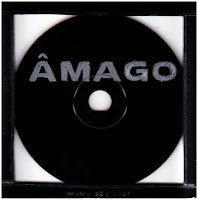
Albert Cirera & MuMu - Âmago (MuMu, 2021)


We get another great treat from tenor and soprano saxophonist Albert Cirera and the mysterious MuMu who is responsible for half the compositions. MuMu's only other findable album is "Five Pieces For Stones" but with no further information available. Cirera's four extensive and intense circular breathing improvisations bookend the album, while the shorter, sound art by MuMu is concentrated in the middle section. 

Readers familiar with "Lisboa’s Work" (Multikulti Project, 2017), Cirera's other solo album, will find this one more welcoming and accessible. 

Listen and download from Bandcamp. 


Catherine Sikora - Corners (Self, 2021)


I have once been in the situation that I was the only member of the audience when a free improv trio was expected to perform. Something must have gone wrong with the promotion of the concert, or people had other things to do, I don't know. The musicians were friendly and agreed to give me a private audition, not an entire concert but half an hour, which I thought was more than generous on their part, and also a unique experience as a listener. 

On "Corners", saxophonist Catherine Sikora does the same, but here deliberately: on a beautiful Sunday in May 2021, she gave 14 private improvisations at the Brooklyn Navy Yard, each time for only one person. It's a long album, with each piece clocking around 7 to 8 minutes, but worth listening to. I imagine the open space of the room, the interested and possibly somewhat uncomfortable listener, and Sikora's effort to bring her music, the listener and the space into a coherent whole. 

It was her first concert since her performance in Paris in 2020 at the Centre Culturel Irlandais, released as "Sanctuary". With "Jersey" (2016) and "Warrior" (2019), this makes it her fourth solo album. Performing solo is the backbone of her work, even further reinforced by the digital single track release of "Backbone" on Bandcamp last year. 

Her skills are excellent, navigating complex runs with agility and determination, with a warm and pure tone, but her strongest quality is the lyricism and melodiousness of her improvisations. Her music sings, soars, sometimes jubilates, and all this in a very gentle and welcoming tone. There are meditative moments, sometimes a little sadness or melancholy, but more often than not there is a feeling of joy, possibly because of being able to perform after lockdown, and probably because that's in her nature of her music. There are never violent outbursts of very expressive moments of overblowing. Her style is more intimate, focused on the miniatures of her art, the play with form and structure. 

The 14 listeners on that Sunday in May must have had a great listening experience. We can be happy to be part of it now. This is an excellent album. 

Listen and download from Bandcamp. 

Aaron Burnett - Correspondence (Relative Pitch Records, 2022)

Possibly best known as the saxophonist of bassist Esperanza Spalding's band, Aaron Burnett deserves wider recognition for the quality of his playing and his sense of musicality. The fact that he performed with Wynton Marsalis, may be good evidence of his technical skills in traditional jazz. 

Aaron Burnett began studying classical saxophone at the age of 9 and became interested in jazz music around the age of 16. He studied classical and jazz performance at the University of North Carolina at Greensboro from 1999 - 2001, then studied classical composition at the Berklee College of Music, graduating in 2008.

"Correspondence", his first solo album, is nothing less than fascinating: his compositions/improvisations are complex, with lots of counterpoint, as if he's dialoguing with himself, and creating a kind of natural tension in the music, and the incredible speed at which he plays makes it even more exhilirating to listen to. 

Even if all the pieces are improvised, they are still structured around musical concepts that remain for the length of each track. 

Somehow, he mentions that "this is his final avant-garde record", which is in itself a bizarre statement, and one we also deplore. This is a very promising record and I wish we could hear more from him in this abundant and exploratory environment. 

Listen and download from Bandcamp. 


Massimo Magee - Toneflower (577 Records, 2022) 


Massimo Magee is a British writer, visual artist and musician, whose artistic output is abundant and diverse. As a musician, he is equally versatile, performing on sax, clarinet, piano, trumpet, electronics and percussion. His first solo album, called "Seven Solos" dates from 2009, with each solo played on another instrument. Other solo albums are "Music in 3 Spaces" (2016), "Tenor Tales" (2018), and "Poussez" from 2014 is his first solo alto album. 

This is his second solo album, clearly the horn that he is most comfortable with. His playing is intense and focused, exploring the legacy of great jazz saxophonists and musical innovators. Even if all tracks are improvised, they are still built around a core structural concept that gives the pieces solid anchor points around which to explore. This gives the album both variation and freedom. 

Listen and download from Bandcamp. 


Adam Pierończyk - Oaxaca Constellation (Self released, 2021)


Adam Pierończyk is among those virtuoso Polish musicians who feel at home in any context, and who thrive in the various forms of jazz. 

There are 35 tracks on this album, each one a few seconds longer than the previous one, starting at 1 minute and ending at 3 minutes. It was recorded in 2016 at a 16th Century Dominican monastery of Oaxaca, Mexico. Like in the music of John Butcher, the actual space of the performance plays an important role, resulting in a strong resonance of Pierończyk's crystal clear pure tones. The reverberation adds a strong quality to the music, and a more timeless quality to his playing, in contrast to the more intimate closed space of his previous solo soprano album "The Planet Of Eternal Life" (2013). The inspiration for this performance is now also to be found in nature and the stellar universe.

Pierończyk is not a timbral explorer. He stays within the sonic boundaries of traditional jazz soprano, but the real treat is the lyrical and melodic power of his musical poems. 

Available from the label. 


JD Allen - Queen City (Savant, 2021)


JD Allen is not a real free jazz player, but this album still nicely fits in this list of solo albums. JD Allen is possibly best known as a sideman with many jazz ensembles - and when you hear him play you understand why - and his own work is strong and high quality modern jazz. It is therefore a pleasure to hear him in a solo setting, the first of his career. 

His playing is jazzy, rhythmic often, with a warm round tone. His playing is gentle, unhurried and relaxed.  The compositions are nice, the sound quality is great. "Queen City" (named afer Cincinnati, where the album was recorded, makes for pleasant listening. 

Will Vinson - Solo (Whirlwind Recordings, 2021)


British altoist Will Vinson offers us his ninth solo album (although I could not find any information about the other eight), a gentle and welcoming record with 18 tracks that were composed/improvised and recorded during the lockdown, while he was visiting his family in Australia. The quality of the playing is excellent, yet it stays on the safe side. He writes in the liner notes that the music was created duing"an intense period which began with the death of my beloved father and was closely followed with an intense and wretched 31 days of solid police-guarded hotel isolation". I wish the music expressed that intensity and sense of grief and revolt.

Listen and download from Bandcamp.