Click here to [close]

Thursday, September 22, 2022

The Bad Plus - The Bad Plus (Edition Records, 2022)

By Sammy Stein

American quartet, The Bad Plus comprises bass player Reid Anderson , drummer David King , guitarist Ben Monder and tenor saxophonist Chris Speed. Relaunching as a quartet (previously a trio with several changes in personnel around the founders Anderson and King), The Bad Plus is still delivering dynamic, ever-evolving music.

Twenty-one years after their landmark debut as a genre-exploding piano-bass-drums trio, the Bad Plus have reinvented themselves with the addition of guitarist Ben Monder and saxophonist Chris Speed. The Bad Plus sees the group continuing to challenge convention and push their unique jazz toward boundary-breaking directions. The band is undertaking a tour, taking in North America, Indonesia, the UK, and Europe.

Though the lineup may have changed, The Bad Plus remains unique in delivery and sound, and the group's unique musical language and undeniable drive and intent remain.

Now the lineup has no pianist, which makes for a different sound. However, new additions Monder and Speed come with a wealth of experience. Monder is known for his work as leader and sideman with David Bowie (Blackstar), Theo Bleckmann, Guillermo Klein, and Paul Motian, to name but a few–and saxophonist Chris Speed, an award-winning leader/co-leader of numerous modern ensembles and long time musical running buddy of both King and Anderson.

Intense rehearsals in the summer of 2021 saw the quartet poring over compositions by Anderson and King, emerging with a singular group sound that retains all of The Bad Plus's vaunted adventurousness while simultaneously setting them on a new pathway of genre-agonistic musical exploration. Working with engineer Brett Bullion, the band has fully maximized the sonic and dynamic possibilities of the new lineup, showcasing the virtuosity and musicality of Speed and Monder while maintaining their trademark pursuit of relentless invention and excellence, blazing with the very same attitude that has defined the group for over two decades.

'Motivations' is a beautiful track with the tenor sax and bass in counterpointed harmony while the steady keys and drums develop a supportive backdrop. The percussion is outstanding. There is immediately in this track a sense of maturity, settlement, and comfort. The unhurried essence of the melodies alongside the occasional changes is somehow reassuring.

'Sun Wall' is delightfully bonkers. In a controlled manner, the musicians develop rhythms around a central seven-spot uneven rhythm pattern, which works devilment with the listening brain in a wonderful way. The guitar is allowed free rein, which it seems to delight in, and the bass line is interesting, so a lot is going on in this track.

'Not Even Close to Far Off' is powerful, darker than the previous track, concentrating on the lower notes in the bass line, contrasting with the tenor line, and permeating the track with intensity. Speed then does a little unleashing of his own as he powers down a truly mesmeric solo over the top. A great number with a lovely change of feel around the four-minute mark - be prepared.

'You Won't See Me Before I come Back' is lyrical, melodic, and features an almost tender guitar solo section, while 'Sick Fire' pulls out the stops and is a foray into free playing. The sax is delirious over drums that sway and lean into the tempo, slowing it, pushing it on, and the number feels like a collective exploration. The verging on the manic soloing of Speed is grin-making material.

'Stygian Pools' contrasts with that which has gone before and is a well-developed, progressively deeper layer number with changing tempos, rhythms, and interactive reflections from sax, guitar, and percussion. Once again, Speed picks up the free potential, and his sax wails itself into other realms at times, while the rest of the band feels decidedly grounded, and Speed returns to melodic formats by the finish.

'The Bright Future' is ethereal, atmospheric, and tempered throughout by the percussive effects, from shimmering cymbals to dynamic powered threads. This is the track on the album where the cohesiveness of the quartet is strongest, each musician intensely picking up cues, developing lines and working harmonics to cerate something extraordinary, worthy of the class of musican here. The sax picks lines to develop and takes them up and away, while the centering bass and percussion allow spaces into which the guitar works.

'The Dandy' closes out the album and is almost minimalistic at the outset, with simple lines and short phrases interwoven to create a belying complexity. However, the track develops as layers are added; each musician gives an ingredient until the fullness of the track can be heard.

This album is engaging and pulls the listener in, but it has a tentativeness throughout it, which I could not shake off. At times, there is a true sense of collectiveness, while at others, there is a sense of still gelling, working out who is going where, and that intrinsic intuition that makes a natural blend was not there in spades. However, given the class of musicians here and the fact we are emerging from a pandemic situation s they have not played often together, it will be interesting and potentially incredible when the intuitiveness kicks in, and the true blending happens. The Bad Plus has a different sound than they did in 2019 ( check out the impressive Boffadem live studio session of that time), but they are getting used to a different format - so it is quite right they are re-setting The Bad Plus are back.

Tuesday, September 20, 2022

Cameron/Horne/Flaten/Thomson - Place Is The Space (Personal Archives, 2022)

By Keith Prosk

Lisa Cameron, Jonathan Horne, Ingebrigt Håker Flaten, and Joshua Thomson freely play six tracks with percussion, electric guitar, contrabass, and alto saxophone on the 53’ Place Is The Space.

Cameron and Flaten have previously recorded together on Tau Ceti with Tom Carter. And Horne and Flaten have appeared together in The Young Mothers with Stefan González, Jason Jackson, Frank Rosaly, and Jawwaad Taylor, most recently on Morose , in Flaten’s Village Songs ensemble on Den Signede Dag , and with John Dikeman and Stefan González on Texas Butt Biters from 2022.

Loose elements coalesce into grooves smooth and peaceful. A plucked low end lyricism lends honeyed melodies as much as any rhythmic character. Catch small glimpses of guitar’s ecstatic attack as gestural as musical through its clean tones in snaking lines or its harmonic sustain for an organ-like haze. An interlude of music box lullabies from kalimba’s twinkling plucks. Saxophone sounds smoky and sultry, discrete notes smoothed to soft curves. And the kit sets the energy, skipping klang for cheery play, shimmering cymbals with bathing harmonies, hiccuping kicks and tapped snare and cymbal trance for meditative moments. Sometimes the group plays pointillistic dialogues and the closer “Welding An Inverted Flap” boils over the energy bubbling under the entire set, but more often the group approaches a space together and simmers, permutating there. In a calm mood that could be triangulated from In A Silent Way and the first half of Atlantis. Transporting the ear to other worlds in the outer and inner mind.

Monday, September 19, 2022

Butcher/ Davies/ Davis/ Lash/ Lazaridou-Chatzigoga – nodosus (Empty Birdcage Records. 2022)

By Stuart Broomer

Recorded at Café Oto in December 2017, this CD presents the quintet of saxophonist John Butcher, violinist Angharad Davies, trumpeter Matt Davis, bassist Dominic Lash and Dimitra Lazaridou-Chatzigoga on zither. The term “nodosus”, previously unknown to me, would seem, given the character of the music, to refer to potamogeton nodosus, “a species of aquatic plant known by the common names longleaf pondweed and Loddon pondweed…the inflorescence is a spike of many small flowers arising from the water on a peduncle” (wikipedia). The design of the jacket, an aquatic watercolour by Beverey Waller, enhances the theme as does an accompanying text by Helen Frosi in which phrases describing water, creatures, plants and trees seem to radiate on a square sheet of paper, at the centre of which is the phrase “symptoms of epiphany”.

Apart from the quality of the musicians, nodosus is immediately distinguished by the presence of three string instruments in the group, among them the unusual zither, lending the music a distinctive texture. More significant, of course, is the way the instruments are being played. Central elements include high harmonics from Davies’ violin and contrastingly gritty, almost industrial bowed textures from Lash. Butcher and Davis, as well, frequently contribute sustained tones, and Davis, it should be noted, contributes tones so subtle that trumpet might elude identification. Butcher occasionally suggests a quiet quorum of small woodland creatures.

While most of the band members are familiar figures in the English improvising community, Lazaridou-Chatzigoga’s name was new to me. She plays amplified zither, evidently with extended techniques because there is literally nothing here to make an enthusiast of traditional zither music suddenly exclaim, “Now that’s the zither I came to hear!” She previously recorded a duet CD with Martin Küchen, Bauchredner on Cathnor, and more recently a duet with Ferran Fages on Another Timbre, both of which I’ll be seeking out. Her contribution here must include much of a wealth of otherwise unattributable sounds -- rapid amplified, percussive strings, some bowing, some light rasping electronics, and some of the various bird-like sounds – all sounding perfectly apt.

The music is so rare and so calm, so deliberate and yet unpredictable in the evolution of its textures and events, including the organically arising passages of near-silence, that it might be the sacred music of an unknown creed, the state music of a eutopia, the dance music of an unknown species.

________________

A word on Empty Birdcage Records: The label is a project of the guitarist Daniel Thompson who launched it in 2020, situating its activity in the period since the Covid-19 pandemic. After arriving in London in 2006, he studied with John Russell for two years, absorbing much of Russell’s wisdom, dynamism and wit in developing his own voice, all apparent on a brief solo tribute called John available as a download on the label’s Bandcamp page. Thompson has played with a broad spectrum of the London improvising community, and the label includes his duo recordings with saxophonist Colin Webster and violist Benedict Taylor as well as a trio with violinist Philipp Wachsmann and analogue synthesist Martin Hackett. Other releases so far include a solo recording by percussionist Steve Noble and Crunch, a Mopomoso performance by the trio of Hutch Demouilpied, trumpet and flutes; Matt Hutchinson, piano; and Sue Lynch, tenor saxophone and clarinet. Thompson is a conscientious curator and all the releases reward close listening.

Sunday, September 18, 2022

Power Nap Trio - djape mare coa (s/r, 2022)

By Ron Coulter

The Serbian free jazz group, Power Nap Trio is Predrag Okilljević (tenor saxophone), Marko Čurčić (bass guitar/FX), and Aleksandar Škorić (drum set). djape mare coa is their first album, a digital release from December 2021; its six tracks come in at 46’58” in total duration.

The album can be summarized as alternating between rhythmic, Albert Ayler-esque melodicism (see track 1, djudja) and contemplative, melancholic soundscapes (see track 2, imam jednu zelju); in addition to the occasional combination of the two (see track 3, ceremonial shirts).

The trio really shines on the tracks featuring the more rhythmically active and folk-like melodicism (short, repetitive, singable melodic material) such as tracks 1 and 3. There is a sense of exuberance and joy in the playing, exemplified by the occasional vocal exclamation from one of the players (most likely Aleksandar Škorić on the drums). The interplay of the musicians is readily noticeable; they listen closely to each other and create accordingly, generating a smooth, coherent flow of ideas and sounds. This is a like-minded trio with a focused musical purpose. The result is an album with a cohesive musical statement.

Listeners will likely find themselves putting select tracks on repeat and enjoying them on many return listenings.

Saturday, September 17, 2022

Matsumoto / Shiroishi / Watanabe - Yellow (Dinzu Artefacts, 2022)

By Keith Prosk

Kozue Matsumoto, Patrick Shiroishi, and Shoshi Watanabe play five pieces for koto, alto & tenor saxophones, and shakuhachi on the 46’ Yellow.

This is the first time these three have released a recording together. And it is the most recent point in a line through Shiroishi’s work that grapples with racism against Asian-Americans, including Descension for solo tenor saxophone, effects, and voice, No​-​No / のの for alto and tenor saxophones with percussionist Dylan Fujioka, i shouldn’t have to worry when my parents go outside for multi-instrumental arrangements, and Hidemi for solo multi-tracked saxophones, the last of which was accompanied by a chapbook titled Tangled that featured perspectives on the Asian-American experience from Tashi Dorji, Jason Kao Hwang, Susie Ibarra, Amirtha Kidambi, and many others.

The titles of Yellow convey racist concepts - “Skin,” “Peril,” “Fever” - and while the notes imply a positive turn in “Gold” and “Dandelion” because the music never brightens my interpretation recalls California’s gold rush coincident with the abuse of Chinese immigrants and the weed’s use in Chinese medicine which despite a growing turn towards holistic wellness is dubiously still considered dubious in western corners. Of course, the players are not Chinese but racism doesn’t parse nuances. But rather than songs of despair or hope the notes - and I concur - guide towards a navigation of identity. Where instruments deeply rooted in folk musics like koto and shakuhachi can play with but are not shackled by the expectations around how they sound.

Shakuhachi’s hardblown shoots and ghostly vibrato appear but less often than sustained sinelike whistles and the textured pulse of breath mediated through the instrument. Koto’s characteristic clusters of strummed chords in increasing density appear too but not as much as the harmony of its reverberating decay as deep as a piano’s and textural rhythms in soundboard scratching. Maybe there can be an Asian identity draped over an approach to the saxophone too, with many Japanese players’ sometimes generalized to austere articulation and shrill registers, but again more time is in effervescent whorls of triadic spirals and a deflating moaning Maneri-like vocal multiphonic that respectively illuminate the harmonics between tones and confuse tone movement. Instrumental identities are not allowed to be leveraged against themselves and tradition is neither abandoned nor limiting but instead provides springboards for a profound excavation of the elements of sound.

Friday, September 16, 2022

Paul G. Smyth / John Wiese - The Outlier (Weekertoft, 2022)


Until now, John Wiese was known to me - even if his music is well documented - only from C-Section, a recording with Evan Parker, which presents him rather as a sound berserker who can really let it rip. I was all the more surprised that his new album with pianist Paul G. Smyth goes in a completely different direction. On the one hand, the music here is more related to avant-garde or industrial music bands (think 23 Skidoo or Current 93) than the noise workout of C-Section. On the other hand, Smyth and Wiese evoke memories of the minimalist improvisations of AMM during the almost hour-long acoustic narration.

The beginning of the concert opens with circuitous textures of ambient sounds suspended in the vastness of a large concert hall and sparse, focused clatter of piano hammers, which deliver percussive accents. A rather dark atmosphere is created. Then, the sounds become more, louder and attack the listener from all sides, as if you were helplessly lost in an acoustic ambush. With closed eyes, one can definitely get scared here. The improvisation, however, is varied, rich in sounds and dramatic ideas. The musicians don’t present extreme highs and lows, they don’t look for reasons for escalation as far as loud/quiet passages are concerned, instead they concentrate on atmospheric, almost tender, acoustic soundscapes. To this end, they consistently build up an atmosphere of sensual electroacoustics. For this they often use subtle drones, hissing and creaking noises and small melodic explosions, for example when the piano is subtly dissonantly linked with electroacoustic noises. Here the somber and frightening atmosphere is also broken, especially when this minimalist phrasing approaches the realm of silence. Almost the entire section in the first third of the improvisation of the concerto is woven through with these dark details and dramatic undercurrents, but only to startle listeners again with purposefully placed clusters of noise. In this way, Smyth and Wiese succeed in condensing their sonic universe. The electronics then seek out more noise and post-industrial connotations, while the prepared piano counteracts this tension.

This ultimately creates multi-layered post-ambient music. The last eleven minutes in particular tear you back and forth between melancholic tones, post-industrial electronics, echo noises, synthetic stalactite cave sounds, and bumpy, atonal free jazz piano. You might cringe when the applause starts, it’s a sharp return to the reality of the concert and the real world.

The Outlier was recorded on 26 February, 2015 at Kevin Barry Room in the National Concert Hall in Dublin. It’s emphasis on free-form sound exploration and lack of a sturdy framework provides a subtle intense listening experience. Very recommended.

The Outlier is available as a CD and as a download. You can listen to it and buy it here:

Thursday, September 15, 2022

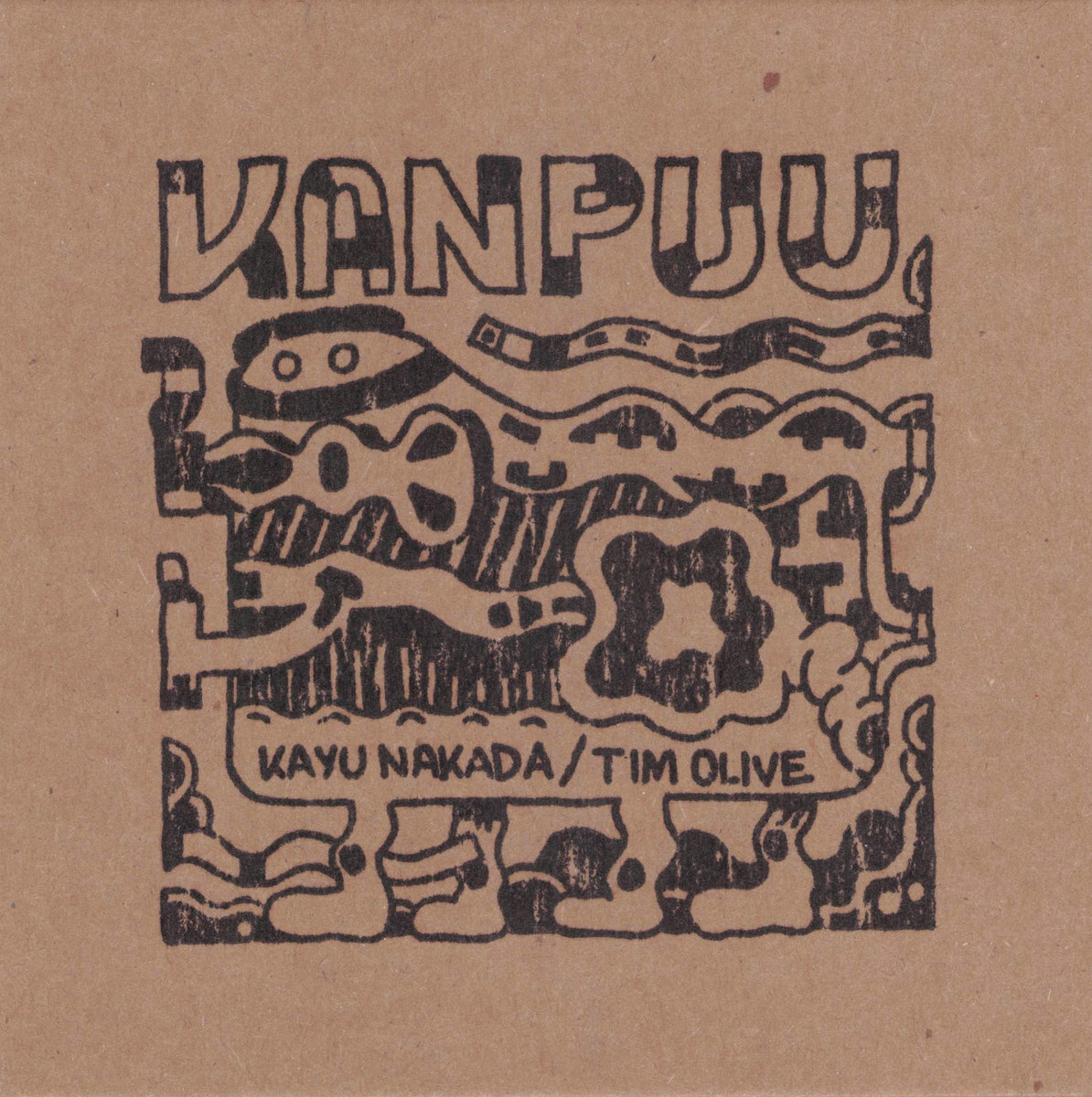
Kayu Nakada and Tim Olive – Kanpuu (845 Audio, 2022)

By Nick Ostrum

Tim Olive has as busy as ever. Just since October, he has released albums on Notice Records, MRM Recordings, Steep Gloss, Chocolate Monk, Verz Imprint and his own 845 Audio. Many of these have been solo efforts, which range from the barren (Okay Dependable) to his more characteristic blend of pick-ups, metallic noises and playback (Ribbon) to the strangely, smoothly ambient (Eye Hill, Arm River) to radio feed distortions (Chocolate Radio Band, The Golden Sceptre). Others have been duos, both Covid/distance efforts (Dissipatio with Matt Atkins) and, as reviewed here, live. Knapuu is a collaboration between Kayu Nakada on rhythm machine circuit boards and Olive on radios, magnetic pickups, and undokai.* I am tempted to say this one is a triumphant return to form, but I am not sure Olive really abandoned this style – just listen to Ribbon. Rather, it seems he has seized the pandemic moment to take detours, explore other tunnels he previously had just touched on and, as the solo output indicates, spend more time examining his own art in isolation, before reaching out again.

I am less familiar with Kayu Nakada’s work, though he and Olive had collaborated on 2021’sEntenka (Tsss Tapes), which is a strong recording in its own right and Olive’s first live collaboration release since the pandemic began. Kanpuu is his second.

Kanpuu runs just under 29 minutes. It begins with what muffled but festive undokai recordings over which Nakada and Olive project sizzles, buzzes and other mechanical whirrs. The festivities subside into the second minute as the industrial clatter and drones take over and take the listener through a relatively linear progression through the end. What matters, however, is not just the progression, but the textures, the distortions, the odd crackle and pop here, the odder modem-like proto-melodies there, and the fluttering in and out of those field recordings. It paints a picture, but a grainy one and a mysterious one. The dynamic range is minimal, but the depth seems almost endless. Likely because of the voices and smeared radio sounds, some of this does sound like a sound collage. However, it also sounds more interactive, improvised and alive than composed, as many of sound collages are. Nakada and Olive were likely unsure where exactly this session would take them. That curiosity, unpredictability and playfulness (especially on the second track) shines through.

Kanpuu is available as a download and CD. You can hear it and order it here:

* Undokai are recordings of Japanese school track meets that Olive has chopped up, stretched and woven throughout portions of this release. These mark Olive’s first use of “field recordings,” though, as he told me, that term seems too passive, whereas Olive conscientiously employs them as a malleable instrument rather than just a predetermined and rigid structural element.

Tuesday, September 13, 2022

Slight Deform - Inside (Self Produced, 2022)

By Eyal Hareuveni

Slight Deform is the Barcelona-based experimental duo of guitarist Ferran Fages and pianist Clara Lai. Fages, known from the free improvising bands like Phicus and Tàlveg, is a composer and sound artist with a keen interest in minimalist and austere approaches as well as decontextualizing the relationship between soft acoustic and electronic sounds. Lai, who plays in a trio with Phicus’ double bass player Àlex Reviriego, is a classically trained pianist describing herself as interested in exploring the subtle bridges between improvisation and composition.

Inside is the debut album of Slight Deform, and is released independently by the duo in a very limited edition of only 80 discs, only 50 of them are available on the duo's Bandcamp page and the rest in selected record stores and live performances. Fages uses here two different electric guitars, one of them with changeable tuning versus one with fixed tuning. Lai plays on an apparently divided piano approach, where the use of specific extended and prepared piano techniques differs from another more melodic and harmonic approach within the keyboard. Inside was conceived as two sonic blocks and narrative chapters (Inner and Sided) in order to open different expressive ways where both instrumental treatments complement each other and coexist within a contemporary sound language. The album was recorded at Rosazul studio in Barcelona in November 2020.

You can hear on Inside echoes of Fages’s composition for pianist Lluïsa Espigolé, From Grey To Blue (Inexhaustible Editions, 2020, in which Fages quoted Catalan poet Carles Camps Mundó’s line: “Barely anything: deformities of silence”), and in a way Inside is an extension of that minimalist composition. Inside, like From Grey To Blue, is informed by Morton Feldman's school of minimalism (and the cover art suggests capturing the minimalist essence of Inside), focuses on quiet, reserved playing, and investigates how the resonant timbres of the piano and the electric guitars blend into one dream (and, often, also unsettling nightmares)-like entities and float gently in space. The Inner Pieces slowly develop more tangible, restless kind of sonic deformities of sounds but remain minimalist. The Sided pieces are even more intriguing and dramatic, highlighting the close affinity between Fages and Lai’s inquisitive and idiosyncratic sonic approaches.

All of Fages and Lai’s slight deforms of sounds and silence are captivating with their suggestive, sometimes provocative power. These Inner and Sided pieces radiate a sense of melancholy. They stress the transient, poignant essence of all sounds as if these sounds are metaphors for life itself, with its fascinating but sometimes chaotic and distressing soundtrack.

Monday, September 12, 2022

Hermann Nitsch – Weinviertel Symphonie (Trost, 2022)

By Nick Ostrum

“Hermann Nitsch, the notorious Austrian performance artist whose elaborate and grisly ‘actions,’ as they were called, often involved slaughtered and disemboweled animals, blood, feces and viscera and evoked Christian and pagan rituals...” So begins the New York Times obituary of Nitsch, who died in April of this year.

Fortunately, Weinviertel Symphonie, disaggregated from a physical “action” like those described above, spares the weak-stomached listener (such as myself) the gristle and gore and shock of some of Nitsch’s performance pieces and visual artworks. That said, knowing a little about Nitsch’s other artistic pursuits may help one get a better sense at the primal-numinous-ecstatic boundary that he dedicated his artistic life to exploring.

Weinviertel Symphonie was performed by the Radio Symphony Orchestra Vienna in the able hands of conductor Michael Mautner in August of last year. It is reminiscent of other of Nitsch’s works – Albertina Quartet, Orgelkonzert – in musical devices: long plangent overlain drones that send the listener into a trance always skirting the line between a constructive examination of the inner, atavistic regions of the self and a bad trip. These commonalities may be part of the point, as the ritual is essential to the experience of Nitsch’s music. And as much as rituals require repetition, that repetition is never perfect and necessarily changes in presentation and precise meaning over time, while retaining some core practice and theme.

In several of the movements of this symphony, an entire string orchestra plays the role of a droning organ. The first two consist of finely hewed and glimmering extended crescendo falls into dramatic emphatic, overlain tones. This sounds like menacing and unadorned devotional music. The third movement, however, breaks the tension with a surprisingly sprightly (for Nitsch) though sharp series of glissando, followed by an onslaught of alternately shrieking, cutting and humming strings. The fourth further develops this non-melodic taste on sacred music with softer, floating lines that evolve into a chord that is both sinister and triumphant before retreating to more striated and discordant lines. The fuller tones inevitably follow, in a tug of war between dread, acceptance and redemption. Movement five begins with a jaunty dance, clapping and all, that would be fitting in the stuffiest of debutante socials, but is quickly overtaken by those same foreboding, at times almost lurid, tones. It seems redemption, or even a brief escape into the trappings of celebration, must be short-lived. It inevitably gets pummeled by an overwhelming wave of sound. The dance survives and returns, but at that point it is entangled with the resurging dark wave in an almost Hitchcockian sequence of delirium. The final movement starts dark and ascends from there, elongated tone by elongated tone, until it reaches lighter, softer and more hopeful territory.

This dark journey means something. Maybe it was ultimately edifying, even if it feels oppressive and even violent. There is some light or respite or something at the end of the ritual. Doubtlessly there is something deeply human about all these drones and shrieks and this ambivalence. Whether I can put my secular finger on it or not, there is something to this music. There is actually a lot to it. Moving and disturbing, which are part and parcel of the liminal spaces squeezed between the sacred and the profane, the primeval and the present, with which Nitsch engages.

Weinviertel Simphonie is available as a download: https://nitsch.bandcamp.com/album/weinviertel-sinfonie

Sunday, September 11, 2022

Julius Hemphill - The Boyé Multi-National Crusade For Harmony (New World, 2022)


I’m not going to say Julius Hemphill (1938-1995) is unappreciated (at least by those who matter) or even underappreciated. I will say he is under-recorded. I mean that in the sense that if you ask me if there’s “enough” Julius Hemphill music out there—music by my literally favorite saxophonist/composer of the AACM/BAG new jazz nexus of the 1970s—the answer will be an unironic “no.” This boxed set of seven discs releasing 35 curated tracks found in Hemphill’s archives fills a real need, and, not coincidentally, improves my quality of life.

The Boyé Multi-National Crusade For Harmony was the name Hemphill gave to a variety of his touring bands. Disc one shows us a few of those on the road. Two horns, cello and drums. Hemphill, Olu Dara on Trumpet, Abdul Wadud on Cello, Warren Smith on drums. Then Bakida Carroll—Hemphill’s “right hand man”—takes the trumpet spot, Philip Wilson on drums, and Jehri Riley playing guitar instead of Wadud’s cello. Finally, you bring in John Carter on clarinet, Alex Cline on drums, and Roberto Miranda on bass. So many familiar pieces of the Hemphill puzzle showing up right at the beginning.

All 35 tracks in the box are Hemphill compositions, making a point that didn’t maybe need to be made. 25 of them have never been heard on record before. Like other greats of this music, Hemphill’s genius included finding partners who could see the connection between interpretation and great improvisational voice. Both Bakida Carroll and Olu Dara, just for two examples are essential voices in Hemphill’s work. No one else could add to the pieces in the way that they did.

Disc two presents us with the Hemphill/Wadud duo, one of the all time great partnerships in music. Wadud is all over this set, but when it’s just the two of them, starting at the tunes, but getting broad very quickly, something unique happens. Wadud wasn’t the first cellist in improvised music, but his example is still sine qua non. These six tracks are from who knows where and who knows when. For tapes found among some papers, the sound quality is excellent.

Disc three gives us another Hemphill ensemble—a trio with Bakida Carroll and Alex Cline—with Wadud joining on two tracks. Long collective improvisations fill this time, with a few compositions also. One of those is the much beloved “Dogon A.D.” It’s the grooving-est piece in eleven you will ever hear and it changed the landscape when first heard. This performance is wilder (and shorter) than the Arista/Freedom record that shook the world in 1972. There can never be enough Dogon A.D.

Disc four is titled “Chamber Music,” and features other ensembles playing Hemphill music under the composer’s direction (conduction). Interesting here are three envisionings of Mingus tunes (including “Better Get Hit in Your Soul”) by the Daedalus String Quartet, and a solo piano piece played by Hemphill’s life-partner Ursula Oppens. This came as such a surprise in its gentleness among all the horns in the box. It’s as if Hemphill took all the lessons of impressionism and translated them through the lens of mid-20th century black St. Louis. I stopped and listened a few times.

Disc five is Hemphill in duo with two poets. First K. Curtis Lyle, and then Malinké Elliott. Both poets are excellent and compelling and work wonderfully in conversation with Hemphill. I am reminded of Joseph Jarman’s poetry. Lyle is quoted in Marty Ehrlich’s extraordinary liner notes, “Julius and I had long literary conversations. Ellison, Baldwin, the Harlem Renaissance. He was the first musician I talked with in this way. He in turn taught me how to use rhythm and cadence to make room for interaction. He taught me to read these poems from a musical point of view, to open up the space.”

Disc six returns to the changing ensembles of the Boyé Multi-National Crusade For Harmony. Nel Cline and Jerome Harris show up, among the stalwarts playing Hemphill’s small group book. Disc seven is perhaps the most extraordinary of all, a home recording done on cassette by Bakida Carroll, recorded at Woodstock, NY, where Hemphill and Carroll lived at the time, along with two of their neighbors, Jack DeJohnette and Dave Holland. Four tracks at just about 45 minutes, but it was, as Ehrlich says, “an on night.”

Get this boxed set at New World Records.