Click here to [close]
Showing posts with label Solo Sax. Show all posts

Friday, May 22, 2026

Lonely Woman ... female artists and solo horn performances

By Stef Gijssels

On May 22nd, 1959, Ornette Coleman recorded "Lonely Woman", after 67 years still one of the most beautiful pieces ever composed, with its conflicting sentiments of sadness, darkness and hope. I am close to having collected 200 versions of it by various musicians and in a huge variety of styles, and happy to get to know even more. 

Today, the tune itself is not the subject, but the many albums on which female horn-players (sax and trumpet) give a solitary performance, also in a variety of styles. We received some of these albums, and this made me search for other recent work by female saxophonists. It's quite a list, and one worth mentioning. I guess that solo albums by male horn-players will be for another occasion. 


Amelia Ya'el - Voices 1 (Signbearer, 2026)

When I first heard this brief album, I was struck by its raw yet delicate polyphonic sound. Through circular breathing on the baritone saxophone, Amelia Ya’El manages to express tension and tenderness, rhythm and lyricism, all at once. What surprised me even more was discovering that this is not only her debut album, but also an entirely solo performance. Ya’El stresses that the music is fully acoustic and free of overdubs, underlining how important it is to her that the listener recognises the sheer virtuosity of her playing.

The four short compositions/improvisations each have their own specific character and recognisable sonic signature. "Mechanics of Anger", the first track is indeed brutal, direct, with no restraints, yet excellent. "Song of Peace" is built on a repetitive phrase, as the backbone for her improvisation, oscillating between joy and agony, and it's hard to believe that the total sound is just generated by one single instrument. 

“No Evil But Ignorance” is equally intricate in its solo voice, unfolding through broad, sweeping passages that at times seem almost to sing. Its sheer force even made me laugh in disbelief — the piece is absolutely ferocious.

“Beneath The Waves” closes the brief album with another recurring motif, its hypnotic repetition recalling Philip Glass. That pattern forms the backbone of the improvisation: there are moments of slight hesitation, perhaps, but the music continues to flow — singing, surging, and shouting.

Chicagoan Amelia Ya’El is unquestionably one of the standout newcomers of the year, and she deserves full credit for releasing a solo debut that is so pure and uncompromising. This album serves as her artistic calling card: physical, virtuosic, expressive, and deeply sensitive.

A real treat. 

Listen and download from Bandcamp. 


Caroline Kraabel - Translation Trials (Self-Released, 2025)


American saxophonist Caroline Kraabel found her artistic home in the UK’s free improvisation scene, where she has long been an active and influential presence, including as one of the leaders of the London Improvisers Orchestra. On this solo album, she offers twelve improvisations recorded at home during the summer of last year, capturing both the intimacy and spontaneity of her approach to improvised music.

As she writes in the liner notes: "As documents, these pieces may present what occurred with less lacking than is the case on many audio recordings of improvised music, because there was relatively little extra-sonic content to be missed: just me, alone in my body in a room with my saxophone." And that is precisely the impression that emerges: an artist 'playing' with her instrument in the truest sense — experimenting, exploring, delighting in discovery, allowing herself to be surprised, and enjoying the interaction. She sings through the horn, conjures multiphonics, and answers to nothing beyond the ideas in her mind, the brass in her hands, and the physical intensity of the encounter between the two.

In this sense "Translation Trials" is a very personal album, a translation of the artist's being into sound, it is pure, and a for it's a privilege to be witness of this process. 

Listen and download from Bandcamp. 


Adia Vanheerentals - Taking Place (Relative Pitch, 2025)


Adia Vanheerentals is a young Belgian saxophonist - although a little older than the picture on the cover - and one of the country's newcomers in improvised music. This is her sophomore solo album, after "Here Are 5 Reasons To Meditate" from 2024. Credit also to the "Relative Pitch" team, who invited her to release this album on their label, just like they asked several other female musicians to do the same, including the already reviewed and highly recommended "Holy Trinity" by clarinetist Laura Altman. 

Vanheerentals is active in various ensembles, including participating in some Fire! Orchestra shows earlier this year. She started playing saxophone at the age of 9, and switched later to jazz, having a degree from the conservatory of Antwerp. She says in an interview: "My real influence is Steve Lacy, from a very early age. I prefer to play the soprano saxophone myself, and Lacy opened up a whole new world for me, ranging from traditional jazz and classical to free jazz, and especially Thelonious Monk and modern jazz. I find Ingrid Laubrock impressive on both the soprano and tenor saxophones. She gave a masterclass at the conservatoire and writes original compositions in which she attempts to approach standard jazz in a different way" (with thanks to Jazz'Halo for the quote).

For this album she chose several external environments to act as the background for her improvisation: a chicken coop, a resonating silo, flowing water (rain?), cars on the street, ... It's fun to hear, especially when the chickens get all excited, as they should be. Her music has a striking directness, placing greater emphasis on lyricism and tone than on timbral experimentation or sonic exploration. In that sense, it feels very much in the tradition of Steve Lacy — marked by a clarity, purity, and understated simplicity that define her sound.

As a special gift, here is a video of the artist spending playing on Tram 10 in Antwerp at the beginning of last year. 

Listen and download from Bandcamp. 


Katie Porter - Conversation No. 1 - Collecting Rocks from the Places We've Been (Relative Pitch, 2025) 


Another album in the Relative Pitch series, is this album by bass clarinetist Katie Porter. In essence it's actually a duo album, in the sense that one bass clarinet line has been pre-recorded and serves as the background or foundation for the further expansion of her sound, which is exceptionally strong, and juxtaposing the high-pitched with the deep-toned, usually fluctuating around a tonal center, resulting in very long stretched notes, welcoming and slow, repetitive and well-paced. 

She describes her music as an open invitation for others to join, like a a sonic landscape in which other 'rocks' can be added. 

Her music has its own aesthetic, one that requires close listening, and that offers a unique, rewarding and hypnotic listening experience. 

Listen and download from Bandcamp. 


Berlinde Deman - Plank 9 (Relative Pitch, 2025) 


We've met Belgian tuba-player Berlinde Deman before, on Dave Douglas's "Secular Psalms" from 2022. 

On this album, her main instrument is the 'serpent', one that we only knew from French musician Michel Godard, and his collaboration with Lebanese oud-player Rabih Abou-Khalil. Deman started playing tuba at the age of eight, and is classically trained. In an interview with Jazz'Hallo she explains her fascination for the serpent: "My serpent sound is melancholic, full of character and very dark. The serpent naturally has a warm tone. People sometimes associate the sound with a womb or with deep roots. Melancholy is also a pitfall; it’s easy to evoke that feeling with the serpent. Three notes and everyone is moved. For me, the challenge lies in making the sound dangerous. I do that with effects pedals." (with thanks to Jazz'Hallo). 

Her music is melancholy, and not in a cheap way. Her sound is deep, often sustained with the use of pedals, giving a level of resonance or depth, further increased by electronic effects that multiply the voices, and add layers of sound. This is not jazz, often more ambient music, quietly moving waves of sound, sensitive and rich. My preference goes to those tracks on which the serpent has its simplest and original acoustic sound, as on the beginning of "Three Trees", which offers a higher level of authenticity and musicianship. 

Listen and download from Bandcamp. 


Camila Nebbia – Rastro O Vacío (Self-Released, 2025)


My search for female solo saxophone albums inevitably brought me to the Argentinian artist Camila Nebbia, who delivers seventeen mostly brief but vividly varied tenor explorations: sharp, agile, expressive, playful, direct, sensitive, brutal, blues-inflected, and consistently charged with energy and intensity.

Some of the longer pieces, such as “El color de un río desconocido” and “Algo que solía conocer que ya no puedo identificar o recordar,” are multi-layered and heavily post-produced, with overlapping saxophone lines unfolding into slow-moving sonic textures before descending into bursts of chaos and noise toward the album’s conclusion. As a result, the record seems to present two distinct identities, which somewhat undermines the coherence of the listening experience.

Listen and download from Bandcamp. 


Alexandra Grimal - Interspaces (Self-Released, 2025)


One of France's top saxophonists is without a doubt Alexandra Grimal, a musician with a strong personal sound and voice, whose albums we reviewed and appreciated before on this blog. 

This album is very short - a little longer than 14 minutes - and only available digitally. Interested readers can also check out the video of her performance in the art gallery where the exhibition took place. As a kind of joke at the entrance, there is a copy of Gustave Courbet's (in)famous painting "L'Origine Du Monde" (1966), on which the names of all famous painters of the previous century are presented with female first names. 

The music itself is quiet, intimate, fragile and sensitive. Her soprano cautiously thrills the air, touching it, sensing it, appreciating it, in the same mode as the paintings on the wall, light touches of colourful poetry in a white and empty space. 

Short, but excellent. 

Listen and download from Bandcamp. 

Anna Piosik - In The Absence of Gods (4DaRecord, 2026)


Anna Piosik is a Polish trumpeter, singer and ceramics artist living in Portugal. She is a member of the all female group Lantana, and also collaborated with Ernesto Rodrigues and with the Variable Geometry Orchestra. 

She explains the title of her first solo album: "Without really meaning to, I think it reflects my sadness about the state of the world today. It was during the recording sessions. João Madeira said something to me at one point that really stuck with me; he said: “Let it flow and play as if no one were listening”. It sounds like a cliché, but somehow I thought: “Yes, that’s exactly what I’ve been doing all this time in Alfafar (where she lives in Portugal)”. Just me and my goats in the woods, in the absence of my “gods” — my idols, my musician friends and collaborators." 

She is her own self on this album, playing without an audience, except for the occasional dog or goat bells, or the orchestra of crickets on the last track, intimate and close, expressing her deepest feelings, stripped from all influences, preconceived notions, expectations and other distractions that create barriers between the self and the sound. 

Yet however personal and intimate, her heart belongs also to the entire world. "And then, when we were working on the album and it came to choosing a name, the title really resonated with the state of the world. As if we were living in times when nothing matters anymore — neither ethics nor morality." (with thanks to Jazz.pt)

The overall mood is undeniably melancholic and sad, yet she brings an authentic voice and a refreshing sound—shaped not by a pursuit of perfection of sound, but by a search for emotional depth, that can also offer moments of wonder and surprise, of pain and joy, of struggling and hope. 

We hope to hear much more from her. 

Listen and download from Bandcamp. 


Signe Emmeluth - Lonely Woman (Self-Released, 2025)


... and we end our list with Danish saxophonist Signe Emmuth, most appropriately giving a solo sax performance of "Lonely Woman" (with thanks to Jeff Sackmann for the tip!). She was recently reviewed by us for "With Love", "The Hyperboreal Trio", "Everything that shines, everything that hurts", "Banshee", "Bonanza of Doom", "Nonsense", and these were only released in the last few years. 

The single track can be listened to and downloaded from Bandcamp. 


Monday, February 23, 2026

Ken Vandermark - October Flowers for Joe McPhee (Corbett vs. Dempsey, 2025)

By Stef Gijssels

In 1976, Joe McPhee released "Tenor", a solo album of ... well yes, tenor saxophone, that appears to have been an eye-opener at that time for Ken Vandermark, showing how the single instrument could combine sonic experimentation with a kind of natural lyricism, an approach which has been deeply ingrained in the musical approach of both musicians. If anyone deserves a tribute album, it's the now 86 year old icon of free jazz. 

Vandermark does it with style and class. Six pieces are partly composed, the other five are spontaneous improvisations, and to create even more variation, he switches instruments frequently: bass clarinet, tenor, Bb clarinet and baritone sax. The music is intimate, gentle, warm and welcoming while at the same time refreshing and innovative. All tracks are named after flowers, put together as a bouquet for McPhee. Like McPhee, Vandermark is a story-teller, taking the listener into the logic of each piece, moving them along with his singular dynamics of shifting intensity, speed and volume, combining emotional power with an avant-garde sense of abstraction, with deep bluesy feelings - as on the goosebumpy "Sunflowers" - and more exuberant excursions such as on "Queen Anne's Lace". 

The music is Vandermark's, without a doubt, yet the sensitivity for McPhee's sound is present in every piece.

In 2017, McPhee released a solo alto album, called Flowers, dedicated to musicians he admired. I guess Vandermark continued the tradition with a deep bow of respect and gratitude. 

What a treat. 

Listen and download from Bandcamp. 

Tuesday, October 21, 2025

Simon Rose - Vienna Solo (Small Forms, 2024)

By Stef Gijssels

Recorded in the Château Rouge venue in Vienna in June 2024, British baritone saxophonist Simon Rose gives his best.  

It is an incredibly strong and powerful feat. Even if the fourteen pieces are short - between one and four minutes - the playing is astonishing: energetic, deeply felt, and still offering the capacity to each to have their own unique character and story. Rose's circular breathing on the instrument is one of the main characteristics of his playing, not only because he clearly eschews moments of silence, but mostly as a technical skill to create mesmerising multiphonics. The result is staggering, the fullness of the sound, its density and intensity. 

"Dorseth Heath" is a little slower and calmer, as are "Purple Loosestrife", "Bee Rose", and "Dog Rose" also has a quieter moment. On "Lungwort", he explores timbral techniques through different embouchures and power stops. By the way, all titles refer to plants, and I am not a botanist, but I think they are all growing in the wild. 

On this album, he really goes all out. Young musicians are often taught not to just play the music, but to be the music, to give themselves completely, without inhibitions, without fear of going too far. I recommend they listen to Simon Rose. He is his music: expressive, bold, unrestrained, profound, and with a story that immediately appeals, without frills, without attempts to please the audience, but which succeeds in making that emotional connection that characterises good art. 

Rose is not a screamer; his sound is always controlled despite his exuberant expressiveness: he cries, he weeps, he cheers, he sings, he howls, he wails, he groans, he roars. But above all: he keeps surprising and captivating us with every note. You can only be blown away by his music. 

Brilliant! 

Listen and download from Bandcamp. 


Anaïs Tuerlinckx & Simon Rose - Parle (scatterarchives, 2025) 


Now that we're reviewing Simon Rose, I would like to add this album, a duo with my fellow compatriot Anaïs Tuerlinckx, who performs on string-box and synthesizer. Tuerlinckx, a pianist by training, moved from Brussels to Berlin in 2008, where she is a member of the avant-garde musical scene. I add a picture of Tuerlinckx performing on her string box, which she manipulates with a few dozen sticks and metal objects. As on the previous album, Rose plays exclusively on baritone.


This albums give three fully improvised pieces, recorded during two performances a little less than a year apart, but that does not diminish the coherence of the album.

Tuerlinckx is a little more 'out there' than Rose, sometimes quite unexpected in the use of her instrument, at times even disrupting her own compositional build-up. Rose is very agile in moving along and together they weave a wonderful sonic narrative with different story-lines and subplots, shifting between moments of quiet contemplation to ominous darkness. 

Listen and download from Bandcamp. 


Friday, February 9, 2024

Solo Sax

 By Stef Gijssels

It's time again for a solo sax review. Albums have been piling up again since our last overview in September 2022. And due to your humble servant's incredible slowness, some albums have in the meantime already been reviewed by more skilled - and faster - reviewers. Patrick Shiroishi's album was already reviewed here by Irina, Rob Brown by Gregg here, and Camila Nebbia by Jury here. All three come recommended, so it's a good thing they get multiple reviews. 

Patrick Shiroishi - I Was Too Young To Hear Silence (American Dreams, 2023)


My preference in this list of ten is this remarkable and very personal album by Patrick Shiroishi. Recorded in a "cavernous parking structure below a hot pot restaurant in Monterey Park" around 1.30 am in one take, the album has a unique voice, with sparse alto tones reverberating in the empty space. Shiroishi explains "the Japanese concept of 'Ma' or negative space, or the space in between. 'Ma' refers to the notion of negative space as a positive entity, rather than an absence of something else. The pauses between notes are not empty vacuums void of substance, but rather are full and present, valid contributions to a balanced composition'. 

Shiroishi uses this space to maximum effect, as a pause between bursts of sound, as a contrast to give deeper value to his often beautiful phrases, as a moment of reflection on what you just heard, or just to experience the silence. At times there is background noise in the silence (a car? a bus?). It gives the voice of the alto a sense of desolation, not always in a negative way, sometimes as positive solitude, yet also sometimes as shrieks of anguish. 

The single take and the unique sound makes this like a concept album, on which the different songs are all an integrated part of a much larger whole. Shiroishi also wonderfully manages to use his large array of technical skills to serve the ultimate sound he wants to achieve. No sound is cheap, but carefully crafted, balanced and paced, translating his deepfelt emotions into his own aesthetic. 

The vinyl version has already been sold out, but luckily the digital version is still available. 

Don't miss it!

Listen and download from Bandcamp. 


Josh Sinton - Couloir & Book of Practitioners Vol. 2 (Self-Released, 2024)


As one of our first album reviews for 2024 we can present this double album by Josh Sinton on baritone saxophone. 

The first one, "Couloir" is a set of fifteen short pieces that Sinton describes as 'thinking out loud musically'. He takes the listener to various corners of a very large musical room, with incredible and gentle decisiveness, often surprised himself at what he is showing us, yet the compactness of the pieces, their specific character, ranging from relative playfulness to improvisations with a gravitas that is more suitable for the instrument's sound, make this a wonderful listen. 

The second album is Book W by Steve Lacy, one of his 'Books of Practitioners', and Sinton's sequel to his "Book of Practitioners, Vol. 1" of last year. You can read the review and some more background on Lacy's books here. It's also fun to compare it with John Raskin's take of the same material last year. The pieces are what Lacy intended them to be: exercises for practice, more than artistic endeavours, but as it is, the naturalness and the playfulness that Sinton demonstrates, lift the six pieces to a higher level. 

Listen and download from Bandcamp. 


Rob Brown - Oceanic (RogueArt, 2023)


Another solo alto album was released earlier last year by Rob Brown, one of the mainstays of the New York jazz scene for decades. Performing on no less than 140 albums, this is his second solo release, since "Silver Sun Afternoon" from 2003, an album that I've never heard, so a comparison is not possible. 

It's great to hear him play solo. Brown has a very clear and warm tone, and a natural tendency to lyricism in his improvisations, which are also his core trademark here. His playing is relatively straightforward, with limited use of extended techniques or timbral explorations, and he does not need to, because his approach lies elsewhere, in a kind of natural storytelling through music, translating impressions and feelings into sonic narratives, with moments of urgency, calm, excitement or just joy. 

The eight tracks are inspired by the ocean, of which the first four form a suitelike sequence. It's hard to say whether the visual images of the ocean are directly reflected in the music, but the unpredictability, the various faces of the sea, its changing colours, the drifting on the waters, and the ever moving waves are easy to imagine through Brown's art. 

Listen and download from Bandcamp. 


Amalie Dahl - Memories (Sonic Transmissions Records, 2023)


Danish saxophonist Amalie Dahl is someone to look out for. She only ended her education at the Jazzdepartment at Norwegian University for Science and Technology in Trondheim in 2021. One year later she already released her first album as a bandleader, “Dafnie”, and now, another year later, her first solo album. 

She is an artist with a daring vision, presenting sounds that are sometimes hard to classify, such as the combined playing and singing on the first track, or the whispered sounds during the intro of the second. Her tone is steady, decisive while at the same time sufficiently fluid and versatile to let the music evolve almost naturally and organically. She is also not afraid to let silence play its role, which is surprising for such a young musician. She is one of those artists who clearly does her own thing, very personal and heartfelt. 

The theme of the album is a play on thoughts around the perception of time of "here and now", and of the memory that follows. "Life consists of a series of moments, a series of here and now, some of which remain as important events and discoveries that help to shape what is to come. Our identity is a sum of memories. These memories and moments can set off chain reactions that inspire and interact with new people in a constant flow". A moment can become a memory to revist time and again. 

The solo album finds its conceptual counterpart on Amund Stenøien Quartet's "Coming to pass", released on the same day by the same label. 

Listen and download from Bandcamp. 

Tom Chant - Solo (Hera Corp, 2023)


Irish saxophonist Tom Chant is a musician with many faces and musical genres. I first got to know him in the late '90s with the Cinematic Orchestra, in an earlier musical phase I was in, smooth, rhythmic, hypnotic music for imaginary movies. He also got to know the London free improv scene in the meantime, which has become his more natural habitat. Stuart Broomer reviewed another of his album recently with "A Bright Nowhere" (actually/coincidentally today when I write this). 

On this solo audio cassette, he presents his personal vision the solo genre: the pieces are all around five minutes long, whether on the tree tenor or three alto improvisations. This is really music that it 'in the moment', as you can expect from free improv. Chant explores the possibilities of multiphonics on his horn,  creating amazing sounds, some of which remain stable while others change pitch. The sound is raw and unpolished, direct and unadorned. 

As the liner notes adequately describe: "Like in a Pinter play, sounds are "just there", staring at you; better just take them as they are. They will stop when they are tired, or bored. "

Listen and download from Bandcamp. 

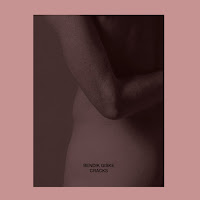
Camila Nebbia - Una Ofrenda A La Ausencia (Relative Pitch, 2023)


In sixteen relatively short improvisations, Argentinian saxophonist Camila Nebbia demonstrates her art in all its versatility and creativity. I think it's already her third solo album, and it is recommended listening for fans of this kind of musical exposure of personal feelings and sentiments. The quality of her work resides not only in the technical skills on her instrument - which are varied and at times astonishing - but in the self-assured power of her presence, and the courage to reveal herself in such a way with no place to hide. Even if most of the pieces are short, she manages to convey something deep and meaningful, giving herself fully to the music. The title means 'an offering to absence', the paradox for the wealth of her offering us her musical presence. 

Listen and download from Bandcamp. 

Audrey Lauro - Sous Un Ciel D'Ecailles (El Negocito, 2022) 

We've praised French altoist Audrey Lauro before on her albums with Giotis Diamandis "Dark Ballads" and here (2021), with Lauroshilau "Live At Padua" (2021), with Rachel Musson and Naoko Saito "点字呼吸の領域 [The Region of Braille Respiration]" (2020), with Giovanni di Domenico on "The Ear Cannot Be Filled With Hearing" (2018). 

Now she treats us to a twenty-four minute long solo album, with a title that roughly translates as "Under a sky of scales". The performance was recorded at la Chapelle du Grand Hospice, one of those well-hidden venues in Brussels, on April 6, 2022.

It is a subtle, sensitive and inventive record, with a sound that resonates in the space of the chapel, the ideal setting for her multiphonic skills. The music is slow and precious, with the occasional burst of power, but mostly disciplined, controlled and free. Every sound appears to be precious and valuable to her, and that's the way we like it. 

Listen and download from Bandcamp. 

Adam Pieronczyk - On The Way (Self-Released, 2023)


Without a doubt, Polish saxophonist can be called a virtuoso on his instrument, which he demonstrates to the full on this third solo soprano saxophone album recorded live at a concert in Gdansk in December 2022.  This year is also the 10th anniversary of his solo project, which started with "The Planet Of Eternal Life" (2013), and "Oaxaca Constellation" (2022). 

His music is pure and playful, and his artistry is concentrated in the search of aesthetic beauty rather than in timbral explorations and finding new ways of expression. Maybe the reference that best comes to mind is the poetry of birds: singing without any other pretense than the joy of announcing the day and the pleasure of life itself. Two tracks are little bit slower and at times more melancholy ("Philo" and "Little Beings From The Basswood"), yet never for long, and are equally impressive. 

For once, it's also good to hear the enthusiastic audience during the performance. 

Bruno Parrinha - Da Erosão (4DA Records, 2023) 


Portuguese altoist Bruno Parrinha is - at least to me - best known for his collaborations with his fellow countrymen Ernesto Rodrigues (seven albums together this year!), Sei Miguel and Luis Lopes, but here we find him on his frist solo album. 

Parrinha's tone is warm, soulful, welcoming and sad. The melancholy of his tone is well described in a poem he wrote,  which I let 'deepl' translate into English, which is possibly not the most accurate tool to translate poetry, but I'm sure it somehow captures the spirit. "The erosion of me" is a painful image, and that melancholy sense of things moving away from you captures the sound wel. 
The sound is direct, as if you were standing next to him, listening in to his private expressions of sadness. On some tracks, such as "Condição Eólica", he takes a more adventurous tone, expressing the sound of wind. The last track is an incredible feat of circular breathing, that not only shows his skills at the instrument, but also encapsulates the essence of the album through its kaleidoscopic yet coherent variation.

Music straight from the heart. 

Listen and download from Bandcamp. 

Nicolas Stephan - Null (Petit Label, 2023)


'Null' is a relatively short thirty minutes of solo improvisation by French saxophonist Nicolas Stephan. He wanted to strip his instrument of all superfluous things, and let it take the lead, accepting minor mistakes, and follow wherever the moment brings the sound. He plays tenor and straight alto, and at moments also synth and trumpet. His playing is good, warm, intimate, pleasurable, until he adds abrasive background taped sound to challenge his music. It distorts his original intention, and - in my opinion - reduces the quality of his playing. The best track on the album is the third, a moving, beautiful and very tightly controlled improvisation. On the last track, sample music creates the overall sound. I'm somewhat mystified what this adds to the music, but I'll let the reader decide. I'm sure the artist had a clear plan, but it's a missed opportunity. 

Listen and download from Bandcamp. 
Tuesday, December 26, 2023

Camila Nebbia - una ofrenda a la ausencia (Relative Pitch, 2023)

By Jury Kobayashi

Camila Nebbia is one of my favourite artists. An amazing saxophonist, composer, visual artist, Nebbia is making some of the most interesting music and art out there. She is a well sought after musician working in a variety of contexts. Her YouTube channel, (which does not get nearly enough views), is an incredible portfolio of her work.

Although I have listened to Nebbia playing with many different groups, I have always been particularly drawn to her unaccompanied sax playing. Her sound is incredible, and she has developed a distinctive and sophisticated language of saxophone playing. una ofrenda a la ausencia is one of Nebbia’s most recent albums featuring her on solo tenor saxophone (with spoken word, and effects) and is a perfect display of her solo sax work.

una ofrenda a la ausencia, meaning an offering to absence, is explained in the album description as an exploration of the “depth, the rawness, harshness and roughness of sound embracing the intense and unfiltered expressions that emerges from absence.” Nebbia truly does embrace harsh sounds and through that embrace builds a beautiful and complex piece of music that feels like a sonic meditation on space and the possibilities of performance without others. Nebbia crafts beautiful lines with her sax that swoops and arcs like drawing shapes of sound in the air. At other times, she growls omitting blistering multiphonics.

The depth and diversity of articulations is astounding - I love the way Nebbia builds long melodies and then contrasts them with what seem to be meditations on a cellular-like riff. I would compare it to unit structures but that isn’t quite right in this case. Instead, it feels like a deconstruction of a discreet sonic area made possible through articulation or a meditation on sounding and breathing notes into a tenor saxophone. The multiphonic passages are particularly captivating with worlds of sounds emerging from the plumage of harmonics singing from the saxophone.

una ofrenda a la ausencia is a spectacular album by one of today’s most important artists. It is a gorgeous, visceral, and moving work that needs to be listened to.

Saturday, December 23, 2023

Rob Brown - Oceanic (Rogueart, 2023)

By Gregg Miller

A solo alto sax record from Rob Brown is very, very welcome, and a long time coming. If you know his playing, it is everything and more than you’d expect, minus the little heads and outros he uses to organize his compositions. Here we get only the inside game. Each of these pieces is a pattern study, very classical in its way, but also very out.

Rob Brown’s tone is immediately identifiable—dry and insistent, commanding the tone center, but ready to push his alto to its edges. The playing exhibits tremendous focus and concentration. Brown studies the logical puzzles of intervals. He moves at the speed of logic, and this includes half-tones, quarter tones and split tones as part of his sound palette. All of his lines sing songs, but his songs are not the blues. They feel like the play between sense-making and the disorder that fuels the quest for ordering, giving voice and respect to that disorder, too.

The record title Oceanic, and the track titles are all nautical, though I don’t get a very “wet” sense to any of what he plays. If there’s a link to the sea in the sounds Brown makes here, it’s like handling a delicate, intricate sea shell: dry as bone, though a creature of the sea.

The final tune, Gathering Breeze, has a somewhat different air: just a hint of swing, a gesture toward sentimentality. Just a hint, though. 

A major figure in the New York avant scene, Brown has played on so many crucial records over the last 3 decades, often with Matthew Shipp, William Parker, Whit Dickey and/or Steve Swell. If you don’t know his work, here is just a handful to get your ears wet:

Rob Brown Quartet - The Big Picture (Marge, 2003) with Roy Campbell, William Parker and Hamid Drake. https://futuramarge.bandcamp.com/album/the-big-picture

Rob Brown Ensemble - Crown Trunk Root Funk (AUM Fidelity, 2008) with Craig Taborn, William Parker and Gerald Cleaver. https://aumfidelity.bandcamp.com/album/crown-trunk-root-funk

Rob Brown Trio - Breath Rhyme (Silkheart, 1989) with William Parker and Dennis Charles. https://silkheart.bandcamp.com/album/breath-rhyme

Whit Dickey Trio - Expanding Light (Tao Forms, 2020) with Brandon Lopez. https://whitdickey.bandcamp.com/album/expanding-light

Rob Brown - Unexplained Phenomenon (Marge, 2010) live at VisionFest 2010 with Matt Moran on vibes, Chris Lightcap, and Gerald Cleaver. https://futuramarge.bandcamp.com/album/unexplained-phenomena

Matthew Shipp, Rob Brown - Then Now (RogueArt 2020).

Stone House - Likewise (Riti Records, 2003) with Joe Morris (bass) and Luther Gray. https://joemorrisritiglacialeratic.bandcamp.com/album/likewise

Thursday, September 1, 2022

Solo sax - Steve Lacy's Book for Practicioners H, W and P - The Overview IV

 By Stef Gijssels

Intended initially for his own practice, Lacy wrote three books of etudes, comprising six pieces each. He only recorded the first such collection, Book H, written in winter and fall of 1983 (released as "Hocus Pocus—Book 'H' of "Practitioners" (Crépuscule, 1986)). In the late fall of that year he wrote Book W and then, in 1985-86, Book P. To date, this last book had only been recorded by the Belgian-based violinist Mikhail Bezverkhny ("Cross Purposes" (2022)).

It so happens that two saxophonists, Josh Sinton and Jon Raskin, independently ventured to take on the challenge of performing Lacy's études, and by coincidence without duplicating, with as a result that we have all three books now available, of course in the rendition of two other saxophonists. Sinton takes on Book H on baritone, and Raskin Books P and W, the former on baritone too, the latter on alto, which is by itself already strange, considering the works were written for soprano.

Josh Sinton - Steve Lacy’s Book of Practitioners, Vol. 1 “H” (Form is Possibility Recordings, 2022)

For once I will let the artist review the album. 

Sinton says: “Steve said that each piece was a ‘portrait’ of somebody to whom he owed a debt of gratitude for their inspiration. I spent several years trying to hold a musical image of these people in my mind as I played each piece, but that didn’t seem to get me anywhere. The pieces still sounded inert.” 

What seemed to “crack the code” of these etudes was the element Lacy always advocated for: time. Sinton says, “I spent a lot of time just playing the pieces. When I moved to NYC I used them as busking material in the subways, I used them as warmup material and I tried playing them as duos with saxophonists, drummers, all sorts of musicians. I made a couple of stabs at recording them. I would take several months off and then come back to them. I played them and then I played them again. I tried to approach them the way Steve said he approached music, as a materialist. And somehow, I found versions I could live with.” 

I began working on these pieces in 2002 while attending the New England Conservatory and performed one of them ("Hustles") at a recital. Steve helped me as much as he dared that year. He wasn't sure if they were performable on the baritone saxophone, but after hearing my initial attempts he gave it his blessing. I've been whittling away ever since. Twenty years of the same little phrases played over and over and over again. In 2021 I decided to force myself to record them so I could move on to other vistas. At this point in my life and in my relationship to these 6 compositions, "mastery" is neither the point nor a consideration. Only point-of-view and relationship-to-the-materials are."

It is bizarre to have a review with so much text by the artist, but I think Sinton gives great insights in the music of Lacy, which helps us understand the effort he put in this album too. This is not a quickly recorded solo album by someone who happens to be in lockdown. 

Let me add some more text by Sinton about Lacy, this time from the book "Steve Lacy (Unfinished)". Sinton's article on Lacy is much longer, but I selected these excerpts because they are also relevant for this album. 


This explains amongst others why tracks are dedicated to for instance Karl Wallenda (a circus artist), or Harry Houdini, the magician, next to musicians such as Sonny Stitt and Niccolo Paganini. 

It is telling that Sinton mentions Peter Sellers, the actor, as an example, because he gets his tribute on "Whoops", in Book W. 

Listen and download from Bandcamp. 

Jon Raskin - Book 'P' Of "Practitioners" By Steve Lacy (Temescal, 2021) & Jon Raskin - Book 'W' Of "Practitioners" By Steve Lacy (Temescal, 2021)


As a member of the ROVA Saxophone Quartet (with Larry Ochs, Bruce Ackley and Steve Adams), his own quartet and other ensembles, Jon Raskin needs no further introduction, apart from the fact that 

On "Book P", Raskin's uses his baritone to play the études. His mastery is more than just managing to play the pieces, by itself already a feat because of their complexity and repetitiveness-with-minor-changes, but by the calm and self-assured way he makes them his own, enjoying the playing, and literally dancing with Lacy's compositions.  

On "Book W", he uses his alto to perform the six pieces. These are indeed exercises, like working up and down scales on "Willy Nilly", and never meant to be anything else than practice for Lacy's own soprano. The music has the same kind of austerity of Bach partitas: one naked instrument exploring form, going through endless repetitions that alter, turn, switch and expand. It becomes mesmerising for both player and listener. Despite the rigorous nature of the core compositions, they leave the performer the opportunity to work with them, rather than just blindly play them, and Raskin's long time experience as an improvisor gives these exercises the necessary dose of human warmth and pleasure to make it a real treat. 

Listen and download from Bandcamp. 

Needless to say that I'm quite enthusiastic about all three albums. They are not only great tributes to the music of Lacy, but also wonderful saxophone albums in their own right, delivered by two artists who fully master their instrument and have made a strong personal investment in bring us Lacy's music with a deep respect for the material, even if they ad their own individual angle and voice.  

Wednesday, August 31, 2022

Solo sax - The searchers - The Overview III

 Most of the music reviewed yesterday was still in the realm between modern jazz and free jazz. Today, we give you an overview of solo sax albums that go beyond style and genre, integrating electronics and studio effects. 

Bendik Giske - Cracks (Smalltown Supersound, 2021)


Norwegian saxophonist Bendik Giske works within his own musical universe, characterised by the "expressive use of physicality, vulnerability and endurance". On "Cracks" he is assisted by the studio environment set up by producer André Bratten. If I understand it well, the space is full with mics who respond to the sound of the sax, depending on Giske's position and movement in the space. 

The liner notes speak about "the new “resonant” space of Bratten’s reactive studio tuned to his original sounds. If this new studio-as-an-instrument process has brought Giske one step closer to the man-machine, it’s also a way to bridge the separation – or crack – between the two. This kind of liminal space, according to Giske, is to be treasured. “The tracks wedge themselves into the cracks of our perceived reality to explore them for their beauty,” explains Giske. “A celebration of corporeal states and divergent behaviours.” 

As a listener you get treated to some first class saxophone playing, with lots of circular breathing, which - in combination with the electronic loops, result in mesmerising soundscapes. 

Watch the beautiful "Flutter" video. 

Listen and download from Bandcamp. 

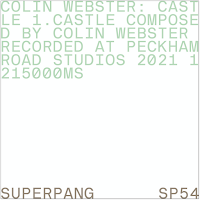
Colin Webster - Castle (Superpang, 2021)


Colin Webster treats us to a 20-minute sonic tidal wave of baritone saxophone and synth-generated loops and layers. It requires some effort to listen to this with attention, as the massive sound appears montonous at first listen yet it contains myriads of slight variations and changes. As a listener you are swept up by this, to become part of the inexorable and primal force, or possibly crushed by it. 
Listen and download from Bandcamp. 


José Lencastre - Inner Voices (Burning Ambulance, 2022)


This is not a pure solo album, since José Lencastre plays alto and tenor with many overdubs, sounding like a quartet or more, with electronic alterations made during production. The focus is on the harmonic structures, and 'edifice' might even be a better word, because the relatively short pieces are sonic constructions with sounds produced by one musician, carefully crafted, finalised with precision. The melodies and themes have a naive quality, and could often come from simple folk songs, rather than jazz, yet they bring the polyphonic complexity of modern classical music (at times Michael Nyman comes to mind). 

The last two tracks bring a complete change in the musical environment. If the first eight tracks are compact musical jigsaw puzzles, the the last two present more open-ended improvised music that has become electronically altered with additional synth sounds. By itself both pieces are worth listening to, but the stylistic break with the rest of the album is too big to make the whole a coherent endeavour. It can be that it shows the difference between "Inner Voices" that are rational and organised (Appolonian in nature) whereas other 'inner voices' can be emotional and chaotic (Dionysan in nature). 

Whatever the reason, it is an album worth looking for. 

In light of his career in improvised music so far, this is an outlier. 


Tuesday, August 30, 2022

Solo Sax - The Overview II

By Stef Gijssels

One more overview of solo sax albums, in random order, but we start again with a female saxophone player. 


Catherine Sikora - Corners (Self, 2021)


I have once been in the situation that I was the only member of the audience when a free improv trio was expected to perform. Something must have gone wrong with the promotion of the concert, or people had other things to do, I don't know. The musicians were friendly and agreed to give me a private audition, not an entire concert but half an hour, which I thought was more than generous on their part, and also a unique experience as a listener. 

On "Corners", saxophonist Catherine Sikora does the same, but here deliberately: on a beautiful Sunday in May 2021, she gave 14 private improvisations at the Brooklyn Navy Yard, each time for only one person. It's a long album, with each piece clocking around 7 to 8 minutes, but worth listening to. I imagine the open space of the room, the interested and possibly somewhat uncomfortable listener, and Sikora's effort to bring her music, the listener and the space into a coherent whole. 

It was her first concert since her performance in Paris in 2020 at the Centre Culturel Irlandais, released as "Sanctuary". With "Jersey" (2016) and "Warrior" (2019), this makes it her fourth solo album. Performing solo is the backbone of her work, even further reinforced by the digital single track release of "Backbone" on Bandcamp last year. 

Her skills are excellent, navigating complex runs with agility and determination, with a warm and pure tone, but her strongest quality is the lyricism and melodiousness of her improvisations. Her music sings, soars, sometimes jubilates, and all this in a very gentle and welcoming tone. There are meditative moments, sometimes a little sadness or melancholy, but more often than not there is a feeling of joy, possibly because of being able to perform after lockdown, and probably because that's in her nature of her music. There are never violent outbursts of very expressive moments of overblowing. Her style is more intimate, focused on the miniatures of her art, the play with form and structure. 

The 14 listeners on that Sunday in May must have had a great listening experience. We can be happy to be part of it now. This is an excellent album. 

Listen and download from Bandcamp. 


Aaron Burnett - Correspondence (Relative Pitch Records, 2022)

Possibly best known as the saxophonist of bassist Esperanza Spalding's band, Aaron Burnett deserves wider recognition for the quality of his playing and his sense of musicality. The fact that he performed with Wynton Marsalis, may be good evidence of his technical skills in traditional jazz. 

Aaron Burnett began studying classical saxophone at the age of 9 and became interested in jazz music around the age of 16. He studied classical and jazz performance at the University of North Carolina at Greensboro from 1999 - 2001, then studied classical composition at the Berklee College of Music, graduating in 2008.

"Correspondence", his first solo album, is nothing less than fascinating: his compositions/improvisations are complex, with lots of counterpoint, as if he's dialoguing with himself, and creating a kind of natural tension in the music, and the incredible speed at which he plays makes it even more exhilirating to listen to. 

Even if all the pieces are improvised, they are still structured around musical concepts that remain for the length of each track. 

Somehow, he mentions that "this is his final avant-garde record", which is in itself a bizarre statement, and one we also deplore. This is a very promising record and I wish we could hear more from him in this abundant and exploratory environment. 

Listen and download from Bandcamp. 


Massimo Magee - Toneflower (577 Records, 2022) 


Massimo Magee is a British writer, visual artist and musician, whose artistic output is abundant and diverse. As a musician, he is equally versatile, performing on sax, clarinet, piano, trumpet, electronics and percussion. His first solo album, called "Seven Solos" dates from 2009, with each solo played on another instrument. Other solo albums are "Music in 3 Spaces" (2016), "Tenor Tales" (2018), and "Poussez" from 2014 is his first solo alto album. 

This is his second solo album, clearly the horn that he is most comfortable with. His playing is intense and focused, exploring the legacy of great jazz saxophonists and musical innovators. Even if all tracks are improvised, they are still built around a core structural concept that gives the pieces solid anchor points around which to explore. This gives the album both variation and freedom. 

Listen and download from Bandcamp. 


Adam Pierończyk - Oaxaca Constellation (Self released, 2021)


Adam Pierończyk is among those virtuoso Polish musicians who feel at home in any context, and who thrive in the various forms of jazz. 

There are 35 tracks on this album, each one a few seconds longer than the previous one, starting at 1 minute and ending at 3 minutes. It was recorded in 2016 at a 16th Century Dominican monastery of Oaxaca, Mexico. Like in the music of John Butcher, the actual space of the performance plays an important role, resulting in a strong resonance of Pierończyk's crystal clear pure tones. The reverberation adds a strong quality to the music, and a more timeless quality to his playing, in contrast to the more intimate closed space of his previous solo soprano album "The Planet Of Eternal Life" (2013). The inspiration for this performance is now also to be found in nature and the stellar universe.

Pierończyk is not a timbral explorer. He stays within the sonic boundaries of traditional jazz soprano, but the real treat is the lyrical and melodic power of his musical poems. 

Available from the label. 


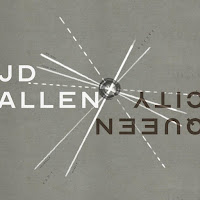
JD Allen - Queen City (Savant, 2021)


JD Allen is not a real free jazz player, but this album still nicely fits in this list of solo albums. JD Allen is possibly best known as a sideman with many jazz ensembles - and when you hear him play you understand why - and his own work is strong and high quality modern jazz. It is therefore a pleasure to hear him in a solo setting, the first of his career. 

His playing is jazzy, rhythmic often, with a warm round tone. His playing is gentle, unhurried and relaxed.  The compositions are nice, the sound quality is great. "Queen City" (named afer Cincinnati, where the album was recorded, makes for pleasant listening. 

Will Vinson - Solo (Whirlwind Recordings, 2021)


British altoist Will Vinson offers us his ninth solo album (although I could not find any information about the other eight), a gentle and welcoming record with 18 tracks that were composed/improvised and recorded during the lockdown, while he was visiting his family in Australia. The quality of the playing is excellent, yet it stays on the safe side. He writes in the liner notes that the music was created duing"an intense period which began with the death of my beloved father and was closely followed with an intense and wretched 31 days of solid police-guarded hotel isolation". I wish the music expressed that intensity and sense of grief and revolt.

Listen and download from Bandcamp. 


Monday, August 29, 2022

Solo sax - The Overview I

By Stef Gijssels

All these solo sax albums! They keep coming, possibly as a result of Covid-19, possibly because they're fun. 

This year we've already had three solo sax reviews with Masayo Koketsu's "Fukiya", Robbie Lee's "Prismatist", and Joe McPhee's "Route 84 Quarantine Blues." Last year we've been spoiled, with Evan Parker's "Winns Win", Darius Jones' "Raw Demoon Alchemy", Patrick Shiroishi's "Hidemi", Dave Rempis 's "Scratch and Sniff", Erin Rogers' "2000 Miles", Jon Irabagon's "Bird with Streams & Legacy", Jean-Luc Guionnet's "l'épaisseur de l'air", Rachel Musson's "Dreamsing", which brings us to our previous "Solo Sax" overview from April last year. 

I'm sure we missed some, so please inform us if we did. The reviews are short, just trying to capture in a few words what you can expect. 

Alexandra Grimal - Refuge (Relative Pitch, 2022)

A beautiful album by French reedist Alexandra Grimal - here only on soprano - recorded in the famous double revolution staircase in the castle of Chambord in France. 

On eight improvised tracks, she explores sound and space, including some multiphonic wizardry. Strangely enough, the sound is often damped, despite the stone surroundings, with little echo or spacial resonation, giving a very intimate and fragile closeness to the listener. Her improvisations can vary from the lyrical, as in "Salamandre" to the unexpected, as in the short bursts of surprise in "Martinets". 

She again confirms her skills as well as the power of her imagination. She has a daring vision on music, and has tried several approaches in the past, some of which I truly liked and others less, but this one is a winner.

Listen and download from Bandcamp. 


Ken Vandermark – The Field Within A Line (Corbett vs. Dempsey, 2021)


Despite Vandermark's humongous output - 670 albums on which he appeared, if we can believe Discogs - this is just his fifth solo album, after "Furniture Music" (2003), "Mark In The Water" (2011), "Site Specific" (2015) and the "Snapshots" (2021) series on Kilogram records. And it is a welcome one. Very few saxophonists have the versatility, the mastery of so many reed instruments, and the musical archival knowledge to expand and to be build on the great work of other artists. 

Like on most of his other albums, all compositions/improvisations are dedicated to artists he admires (not necessarily musicians, but also movie directors, painters and poets. 

The liner notes capture the album well: "The compositions, which are platforms for invention, are dealt with in relatively economical, almost stripped-down fashion, ringing with a kind of bell-like clarity and focus". Yet, the title of the album can also mean the opposite: a simple linear structure (a phrase, a core concept, a chord progression, ...) can expand into a broader field of exploration, opening up the simple form to a more elaborate but coherent creation. 

Whatever the concept, there is much to enjoy here, and a must-have for Vandermark fans, of which I'm sure, there are many. 

Listen and download from Bandcamp. 


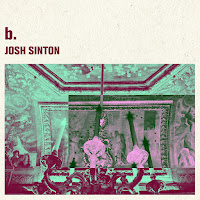
Josh Sinton - b. (Form is Possibility, 2021) 

Josh Sinton’s b., his first solo saxophone album, is a record that "took two days to record but thirty years to prepare for" according to the liner notes. The b. stands for baritone, the sax that has Sinton's preference. Sinton is a well-recorded musician, but less so as a leader. To listen to him here, in perfect isolation, is interesting, especially because he uses some basic forms for the different tracks to elaborate on, to develop and to improvise on. He refers to some inspiration words by Charles Olson, a poet who also wrote an influential essay called Projective Verse in 1950: "He discusses writing poetry as an act of venturing into an 'open field' and the form of a poem being an extension of its content. This immediately struck me as a very practical approach to both improvising and making music generally." Sinton does the same here: using personal insights, feelings and ideas that are confined by self-imposed format, scales and techniques. 

His playing is very personal, with apparently no objective to perform for an audience, but rather to work on the material as a individual quest. This gives the overall sound its intimate and unhurried nature, with barely any use of power or force or even energy. There is nothing to show, only music to explore, and silence. Some of the tracks have moments of silence around which his baritone 

Listen and download from Bandcamp. 


Stephen Gauci - Solo Improvisations (Gaucimusic, 2022)


New York tenor saxophonist made a great decision to start his own label, called Gaucimusic, to get some more exposure. This has resulted in quite a list of albums on Bandcamp over the past years, including this solo album by him, which is I think his first. We are used to his playing in smaller ensembles, in duo or trio format. This album is the direct result of the covid-19 lockdown. 

Gauci's playing is true free jazz, authentic, intimate, personal and soaring. 

Listen and download from Bandcamp. 


Lao Dan - Self-destruct Machine (Hou Wa Records, 2022)


Chinese virtuoso alto saxophonist and flautist Lao Dan presents his fourth or fifth solo album. He is a classically trained musician, who was admitted with the highest score to Shenyang Conservatory of Music in 2007, and who served as the principal flute player of Youth Chinese Orchestra thoughout his college years. He was titled the outstanding graduate in 2011.

I am not sure what his teachers may think of his music today, but for free jazz fans there is a lot to appreciate and admire. The first track brings fierce and fluttering, often bird-like sounds, but full of intensity and anguish, and is in stark contrast with the calmer nature of the second piece, starting on flute (dizi) and voice for a meditative introduction, but changing in nature when he switches to alto. 

Apart from mixing different levels of intensity and power, he also alternates between authentic and deep emotional outbursts, pure lyricism and moments of fun, a little rebellious in nature. 

The concert was recorded live concert in Hakodate, Hokkaido, Japan in 2019. 

Listen and download from Bandcamp. 


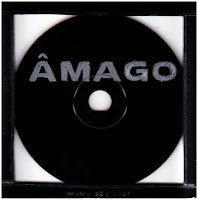
Albert Cirera & MuMu - Âmago (MuMu, 2021)


We get another great treat from tenor and soprano saxophonist Albert Cirera and the mysterious MuMu who is responsible for half the compositions. MuMu's only other findable album is "Five Pieces For Stones" but with no further information available. Cirera's four extensive and intense circular breathing improvisations bookend the album, while the shorter, sound art by MuMu is concentrated in the middle section. 

Readers familiar with "Lisboa’s Work" (Multikulti Project, 2017), Cirera's other solo album, will find this one more welcoming and accessible. 

Listen and download from Bandcamp. 


Catherine Sikora - Corners (Self, 2021)


I have once been in the situation that I was the only member of the audience when a free improv trio was expected to perform. Something must have gone wrong with the promotion of the concert, or people had other things to do, I don't know. The musicians were friendly and agreed to give me a private audition, not an entire concert but half an hour, which I thought was more than generous on their part, and also a unique experience as a listener. 

On "Corners", saxophonist Catherine Sikora does the same, but here deliberately: on a beautiful Sunday in May 2021, she gave 14 private improvisations at the Brooklyn Navy Yard, each time for only one person. It's a long album, with each piece clocking around 7 to 8 minutes, but worth listening to. I imagine the open space of the room, the interested and possibly somewhat uncomfortable listener, and Sikora's effort to bring her music, the listener and the space into a coherent whole. 

It was her first concert since her performance in Paris in 2020 at the Centre Culturel Irlandais, released as "Sanctuary". With "Jersey" (2016) and "Warrior" (2019), this makes it her fourth solo album. Performing solo is the backbone of her work, even further reinforced by the digital single track release of "Backbone" on Bandcamp last year. 

Her skills are excellent, navigating complex runs with agility and determination, with a warm and pure tone, but her strongest quality is the lyricism and melodiousness of her improvisations. Her music sings, soars, sometimes jubilates, and all this in a very gentle and welcoming tone. There are meditative moments, sometimes a little sadness or melancholy, but more often than not there is a feeling of joy, possibly because of being able to perform after lockdown, and probably because that's in her nature of her music. There are never violent outbursts of very expressive moments of overblowing. Her style is more intimate, focused on the miniatures of her art, the play with form and structure. 

The 14 listeners on that Sunday in May must have had a great listening experience. We can be happy to be part of it now. This is an excellent album. 

Listen and download from Bandcamp. 

Aaron Burnett - Correspondence (Relative Pitch Records, 2022)

Possibly best known as the saxophonist of bassist Esperanza Spalding's band, Aaron Burnett deserves wider recognition for the quality of his playing and his sense of musicality. The fact that he performed with Wynton Marsalis, may be good evidence of his technical skills in traditional jazz. 

Aaron Burnett began studying classical saxophone at the age of 9 and became interested in jazz music around the age of 16. He studied classical and jazz performance at the University of North Carolina at Greensboro from 1999 - 2001, then studied classical composition at the Berklee College of Music, graduating in 2008.

"Correspondence", his first solo album, is nothing less than fascinating: his compositions/improvisations are complex, with lots of counterpoint, as if he's dialoguing with himself, and creating a kind of natural tension in the music, and the incredible speed at which he plays makes it even more exhilirating to listen to. 

Even if all the pieces are improvised, they are still structured around musical concepts that remain for the length of each track. 

Somehow, he mentions that "this is his final avant-garde record", which is in itself a bizarre statement, and one we also deplore. This is a very promising record and I wish we could hear more from him in this abundant and exploratory environment. 

Listen and download from Bandcamp. 


Massimo Magee - Toneflower (577 Records, 2022) 


Massimo Magee is a British writer, visual artist and musician, whose artistic output is abundant and diverse. As a musician, he is equally versatile, performing on sax, clarinet, piano, trumpet, electronics and percussion. His first solo album, called "Seven Solos" dates from 2009, with each solo played on another instrument. Other solo albums are "Music in 3 Spaces" (2016), "Tenor Tales" (2018), and "Poussez" from 2014 is his first solo alto album. 

This is his second solo album, clearly the horn that he is most comfortable with. His playing is intense and focused, exploring the legacy of great jazz saxophonists and musical innovators. Even if all tracks are improvised, they are still built around a core structural concept that gives the pieces solid anchor points around which to explore. This gives the album both variation and freedom. 

Listen and download from Bandcamp. 


Adam Pierończyk - Oaxaca Constellation (Self released, 2021)


Adam Pierończyk is among those virtuoso Polish musicians who feel at home in any context, and who thrive in the various forms of jazz. 

There are 35 tracks on this album, each one a few seconds longer than the previous one, starting at 1 minute and ending at 3 minutes. It was recorded in 2016 at a 16th Century Dominican monastery of Oaxaca, Mexico. Like in the music of John Butcher, the actual space of the performance plays an important role, resulting in a strong resonance of Pierończyk's crystal clear pure tones. The reverberation adds a strong quality to the music, and a more timeless quality to his playing, in contrast to the more intimate closed space of his previous solo soprano album "The Planet Of Eternal Life" (2013). The inspiration for this performance is now also to be found in nature and the stellar universe.

Pierończyk is not a timbral explorer. He stays within the sonic boundaries of traditional jazz soprano, but the real treat is the lyrical and melodic power of his musical poems. 

Available from the label. 


JD Allen - Queen City (Savant, 2021)


JD Allen is not a real free jazz player, but this album still nicely fits in this list of solo albums. JD Allen is possibly best known as a sideman with many jazz ensembles - and when you hear him play you understand why - and his own work is strong and high quality modern jazz. It is therefore a pleasure to hear him in a solo setting, the first of his career. 

His playing is jazzy, rhythmic often, with a warm round tone. His playing is gentle, unhurried and relaxed.  The compositions are nice, the sound quality is great. "Queen City" (named afer Cincinnati, where the album was recorded, makes for pleasant listening. 

Will Vinson - Solo (Whirlwind Recordings, 2021)


British altoist Will Vinson offers us his ninth solo album (although I could not find any information about the other eight), a gentle and welcoming record with 18 tracks that were composed/improvised and recorded during the lockdown, while he was visiting his family in Australia. The quality of the playing is excellent, yet it stays on the safe side. He writes in the liner notes that the music was created duing"an intense period which began with the death of my beloved father and was closely followed with an intense and wretched 31 days of solid police-guarded hotel isolation". I wish the music expressed that intensity and sense of grief and revolt.

Listen and download from Bandcamp.